About The Fontana Maggiore
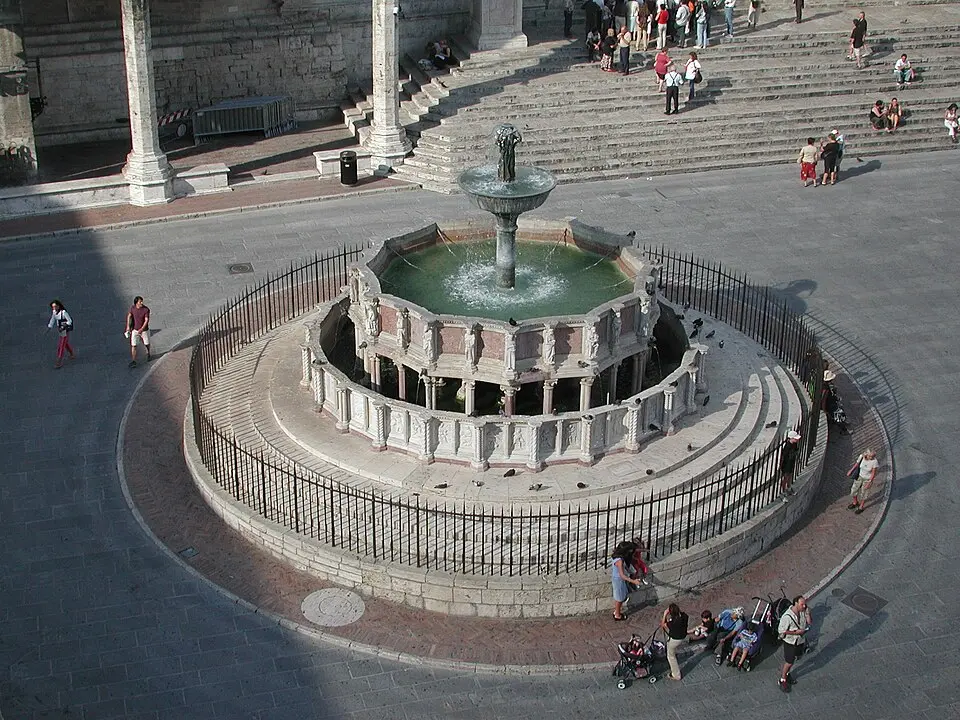
The Fontana Maggiore in Perugia is considered the most famous medieval fountain in Italy. It was designed between 1277 and 1278 by the sculptors Nicola and Giovanni Pisano and marked the end point of a complex aqueduct system that carried water from Monte Paccino into the city. The fountain has a three-tiered structure made of marble and bronze. The lowest basin is a 25-sided polygon, while the middle bowl is supported by numerous columns. On the uppermost, bronze level stand three graces holding an amphora. The extensive pictorial program on the lowest level includes reliefs depicting human history, manual trades, and the liberal arts. The upper level shows personifications, angels, and historical figures symbolizing a higher world order. This iconographic variety was unique in the history of public fountains. The fountain served not only as a water supply but also as a stately symbol of the city, which, as an independent trading metropolis, had placed itself under the protection of the pope. Despite repeated restorations and the effects of weather, the monument remains an impressive testament to medieval art and engineering.
At a glance
- Category
- Sight › Historic sites
- Rating
- no reviews yet · write a review
- Address
- Piazza IV Novembre
06123 Perugia, Italy - Phone
- —
- Website
- nl.wikipedia.org
- —
- Coordinates
- 43.11212° N · 12.38887° E
- Data quality
- confidence 0.98
- Identifier
- ID 51062edc-7a4…
Part of the tour
Perugia in One Day: Etruscans, Palazzi and Panoramas →Location & surroundings
Toggle layersRatings & comments
none yetNear The Fontana Maggiore
closest 5 per category · 2 kmSights
Restaurants
Museums
Hotels
More:Historic sites in Perugia (58)All sights in Perugia (71)
201 places within 2 km loaded.
You need a free account to leave reviews and photos – that keeps comments genuine and lets you edit them later.
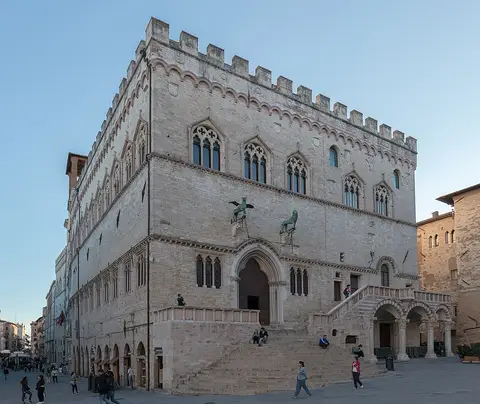
This large medieval fountain is found between the cathedral and the Palazzo dei Priori. It was made between 1277 and 1278 by Nicola and Giovanni Pisano as part of Perugia's celebrations of its independence. On the twenty-five sides of the basin are sculptures representing prophets and saints, the work of the seasons, signs of the zodiac, Bible scenes and events from Roman history.
Source: Wikivoyage, „Perugia“ · authors per page history · CC BY-SA 4.0 · as of 1/30/2016