About Ratto delle Sabine
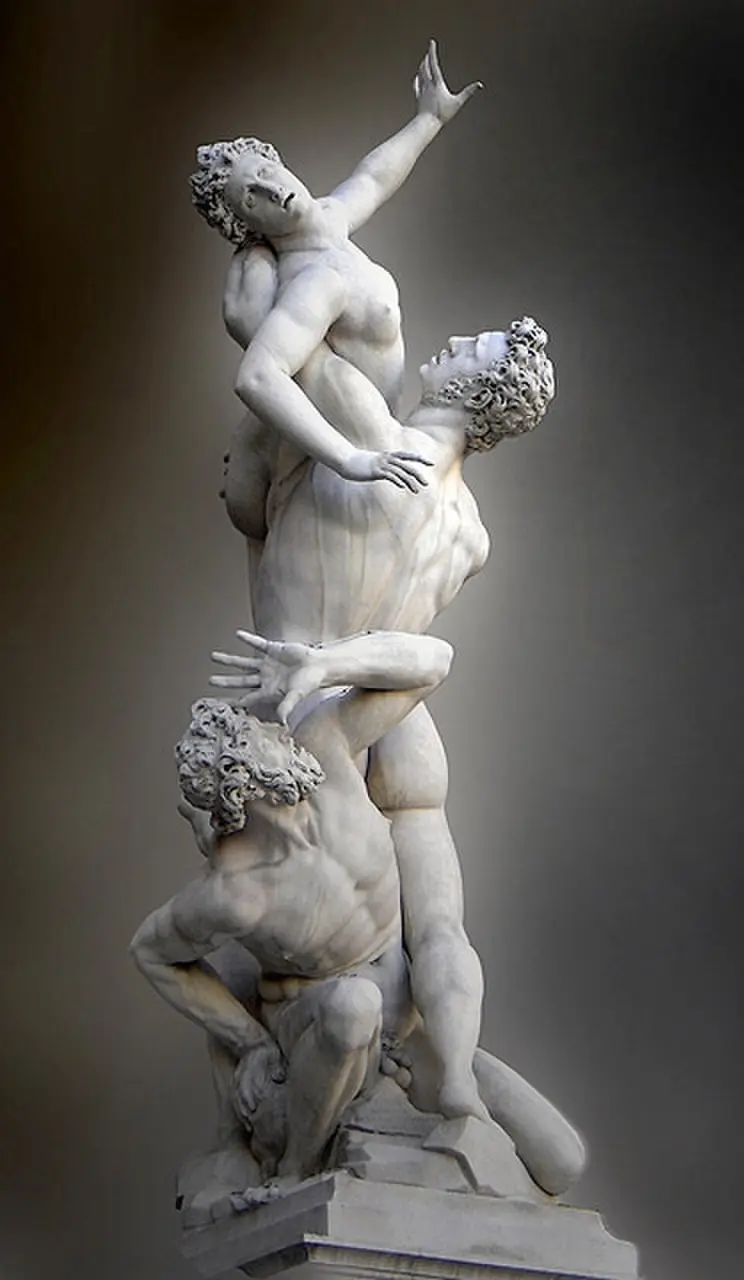
In the Loggia dei Lanzi in Florence stands one of the most famous sculptures of the Renaissance, known as The Abduction of a Sabine Woman. The work by the Flemish sculptor Giambologna was created between 1579 and 1583 for the Grand Duke of Tuscany, Francesco I de' Medici, and is considered his masterpiece. Carved from a single block of white marble, the statue stands over four meters (13 feet) tall, making it considerably larger than life-size. With this monumental work, the artist aimed above all to demonstrate his technical virtuosity and mastery of form rather than to tell a specific historical story. The piece received its title only after it was completed, when the art historian Vincenzo Borghini suggested a connection to the Roman legend of the abduction of the Sabine women.
The composition follows the style of the figura serpentinata, meaning that the figures twist upward in a dynamic, spiral motion. Three nude figures are intertwined: a young man lifts a young woman high, while an older man is pressed to the ground beneath them. The woman stretches out her hand as if calling for help, while the older man, whose expression is meant to convey shame and despair, appears defeated. Giambologna conceived the sculpture so that it does not have to be viewed from any one fixed perspective, since the impression changes depending on where you stand. The heads of the figures are arranged so that they alternate depending on the angle of view, which underscores the work's spatial dynamism.
Visitors experience the sculpture as a masterpiece of Mannerist form that pushes the limits of marble. The base bears a bronze relief inscription identifying the artist as Johannes of Boulogne. The work had a great influence on later sculptors such as Bernini and Puget. Although the title refers to a historical legend, the artist's focus was on pure composition and the physical tension between the figures. The sculpture was restored in 2001 and 2007 and remains a central highlight of Florentine art history, impressively showcasing Giambologna's technical brilliance.
At a glance
- Category
- Sight › Monuments
- Rating
- no reviews yet · write a review
- Address
Florence, Italy- District
- Quartiere 1
- Phone
- —
- Website
- www.minube.com
- —
- Coordinates
- 43.76927° N · 11.25551° E
- Data quality
- confidence 0.53
- Identifier
- ID 0b56369f-4d4…
Location & surroundings
Toggle layersFAQ about Ratto delle Sabine
quick answersWhat is the Ratto delle Sabine in Florence?
The Ratto delle Sabine, in English "The Rape of the Sabine Women," is one of the most famous marble sculptures of the Renaissance in Florence. The Flemish sculptor Giambologna created it between 1579 and 1583 for Francesco I de' Medici, Grand Duke of Tuscany, and it is considered his masterpiece. The group of figures is carved from a single block of white marble and stands more than 4 meters (13 feet) tall.
Where is the Ratto delle Sabine sculpture in Florence?
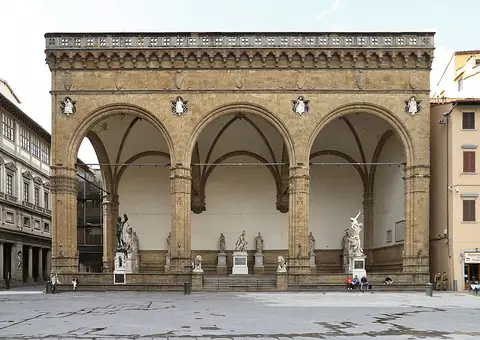
The Ratto delle Sabine stands in the Loggia dei Lanzi in the historic center of Florence (District 1). The sculpture is part of an open arcaded hall, where you can view it from different angles. The base bears a bronze relief inscription identifying the artist as Johannes of Boulogne, another name by which Giambologna was known.
Why is Giambologna's sculpture in Florence called "The Rape of the Sabine Women"?
The title of the Ratto delle Sabine in Florence was only assigned after the work was finished. Giambologna was mainly interested in showing off his technical virtuosity and mastery of form, not in telling a particular story. The art historian Vincenzo Borghini subsequently suggested the connection to the Roman legend of the abduction of the Sabine women.
What should you look for when viewing the Ratto delle Sabine in Florence?
When you visit the Ratto delle Sabine in Florence, it's worth walking all the way around the sculpture, since it wasn't designed for a single fixed viewpoint. Three nude figures spiral upward in the style of the figura serpentinata: a young man lifts a woman who reaches out her hand for help, while an older man is pressed to the ground beneath them. Depending on where you stand, the figures' heads seem to alternate, which heightens the sense of spatial dynamism. The work influenced later sculptors such as Bernini and Puget and was restored in 2001 and 2007.
What can you see around the Ratto delle Sabine in Florence?
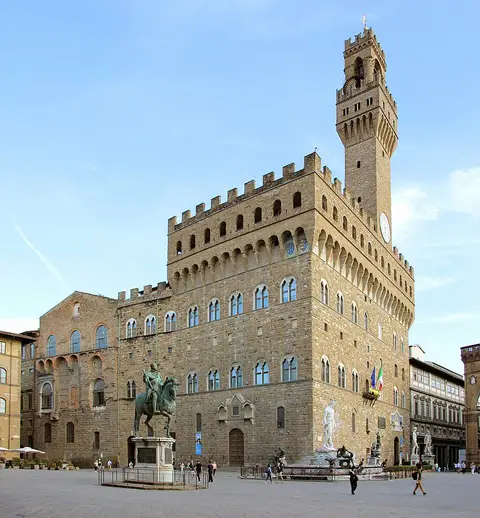
Numerous sights are packed into the immediate surroundings of the Ratto delle Sabine in Florence. travelguide195 lists, among others, the Loggia dei Lanzi (about 4 meters away), the sculpture group Patroclo e Menelao (about 17 meters), the Cortile di Michelozzo (about 28 meters), the Torre di Arnolfo (about 42 meters), the Palazzo Vecchio (about 50 meters), the Statua del David (about 55 meters), and the Uffizi Gallery (about 73 meters). Within a 500-meter radius, travelguide195 also lists around 425 restaurants.
Ratings & comments
none yetNear Ratto delle Sabine
closest 5 per category · 2 kmSights
Restaurants
Museums
Hotels
More:Monuments in Florence (47)Sights in Quartiere 1 (320)All sights in Florence (418)
300 places within 2 km loaded.
You need a free account to leave reviews and photos – that keeps comments genuine and lets you edit them later.