About Palazzo Vecchio
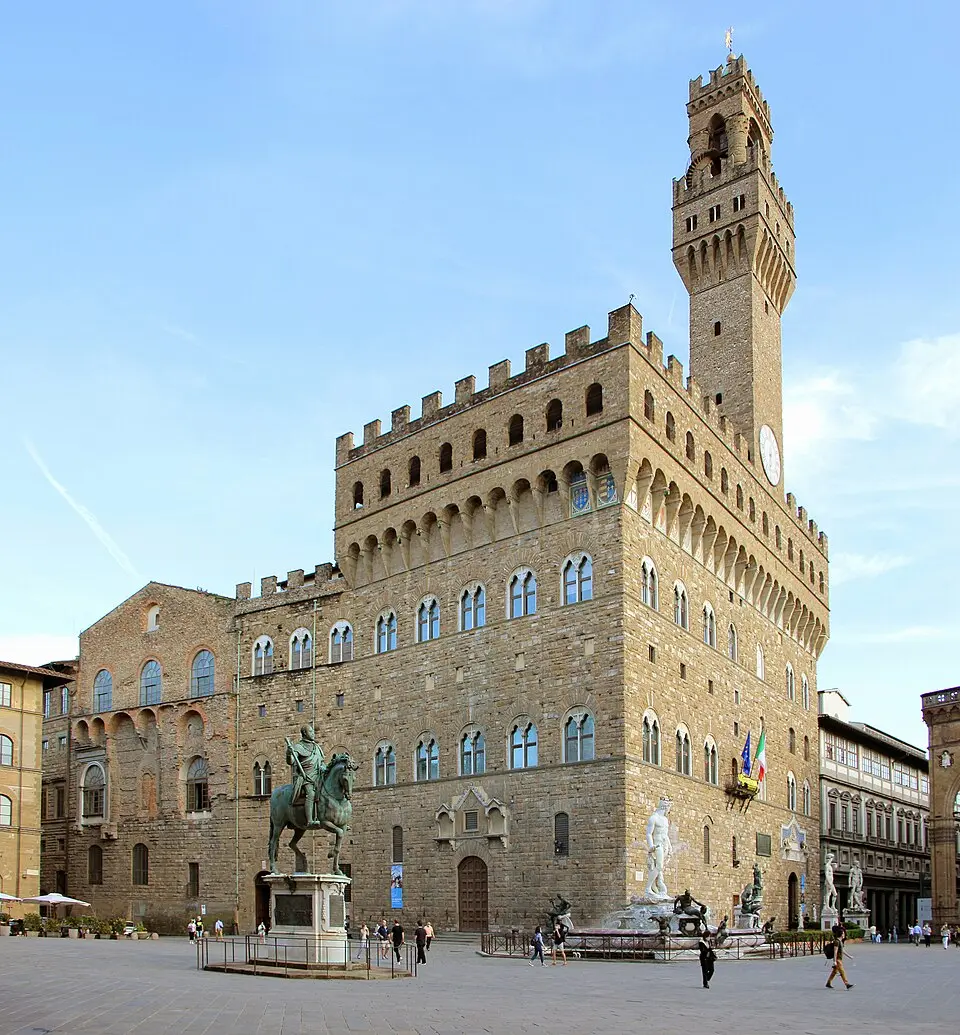
The Palazzo Vecchio in Florence is the historic heart of the city and today houses city hall. Originally built as the seat of the Signoria, the government of the Republic, the building embodies the secular power of Florence's citizenry in the 14th century. The foundation stone for the palace, then known as the Palazzo della Signoria, was laid in 1299, and by 1314 the building was largely complete. The design was the work of Arnolfo di Cambio, the cathedral's master builder, since there were no architects in the modern sense at that time. The irregular floor plan results from the fact that the palace was built on the site of previously demolished houses, in order to respect the existing course of the streets. The striking tower, the Torre di Arnolfo, rises 94 meters into the sky and, together with the city's many other towers, shaped the Tuscan skyline until these were gradually torn down.
The building is divided into several levels that served different functions. The great council of citizens met on the ground floor, while the Council of the Hundred assembled on the second floor. The upper floors offered living quarters and offices for the Signori and their families. In the 16th century, Duke Cosimo I de' Medici had the palace converted into his seat of government. In the process, large halls such as the Salone dei Cinquecento were transformed into audience chambers, and numerous apartments were created. Artists such as Giorgio Vasari and Giovanni Stradano took part in these extensive renovations. The palace dominates the Piazza della Signoria, where important sculptures stand in front of the main portal, including copies of Michelangelo's David and Donatello's Judith beheading Holofernes.
Inside the palace, you will find impressive testimonies to the Renaissance. The huge Hall of the Five Hundred, built at the instigation of Girolamo Savonarola, once housed commissions for Leonardo da Vinci and Michelangelo that were never completed. The room was later redesigned by Vasari. A particular jewel is the Studiolo, a small study for Duke Francesco I de' Medici, decorated with fine paintings and small sculptures of Mannerism. The Hall of Maps is also worth seeing, where cabinet doors display detailed maps of the world created under the direction of Egnazio Danti. This décor also included large terrestrial and celestial globes equipped with a special rotating mechanism.
The palace's inner courtyard captivates with frescoes on its walls depicting cities of the Habsburg Monarchy. These were created by Giorgio Vasari for the wedding of Francesco I de' Medici to the Austrian Archduchess Joanna. The places depicted include Vienna, Prague, and Innsbruck, among others. The Palazzo Vecchio is not only a political center but also a cultural treasure that reflects the history of Florence from the Republic through the Medici era to the modern city administration. Here you will experience a unique blend of architectural history, political significance, and artistic excellence that makes the palace one of the city's most important sights.
At a glance
- Category
- Sight › Historic sites
- Rating
- no reviews yet · write a review
- Address
- Piazza Della Signoria
50122 Florence, Italy - District
- Quartiere 1
- Phone
- +390552768325
- Website
- cultura.comune.fi.it
- ofeliablue@puabook.com
- Coordinates
- 43.76942° N · 11.25609° E
- Data quality
- confidence 0.99
- Identifier
- ID 61674875-4ab…
Part of the tour
Florence in One Day: Duomo, David and Piazza della Signoria →Location & surroundings
Toggle layersFAQ about Palazzo Vecchio
quick answersWhat is the Palazzo Vecchio in Florence?
The Palazzo Vecchio is the historic heart of Florence and now houses the city's town hall. It stands on the Piazza della Signoria in the historic center of Florence and was originally built as the seat of the Signoria, the government of the Florentine Republic. The building embodies the secular power of Florence's citizens in the 14th century and tells the story of the city from the Republic through the Medici era to the modern city administration.
When and by whom was the Palazzo Vecchio in Florence built?
The foundation stone for the Palazzo Vecchio in Florence, then known as the Palazzo della Signoria, was laid in 1299, and by 1314 the building was largely complete. The design was the work of Arnolfo di Cambio, the cathedral's master builder, for whom the 94-meter-high tower, the Torre di Arnolfo, is also named. In the 16th century, Duke Cosimo I de' Medici had the palace remodeled as his seat of government, with artists such as Giorgio Vasari and Giovanni Stradano involved in the work.
What can you see inside the Palazzo Vecchio?
In the Palazzo Vecchio in Florence, you can see important Renaissance rooms, above all the enormous Salone dei Cinquecento (Hall of the Five Hundred), which Giorgio Vasari redesigned. A particular jewel is the Studiolo of Duke Francesco I de' Medici, with Mannerist paintings and small sculptures. In the Hall of Maps, you'll find world maps on cabinet doors, created under the direction of Egnazio Danti, and the courtyard displays Vasari frescoes depicting cities of the Habsburg Monarchy such as Vienna, Prague, and Innsbruck.
What can you see around the Palazzo Vecchio in Florence?
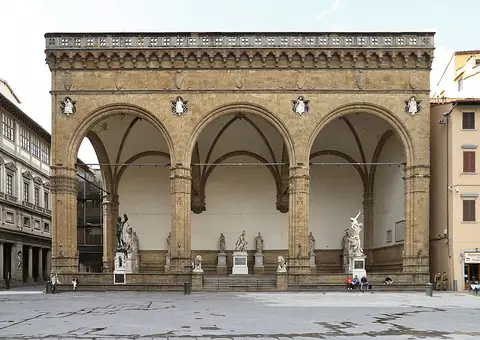
Directly in front of the Palazzo Vecchio on the Piazza della Signoria in Florence stand copies of Michelangelo's David and Donatello's Judith Slaying Holofernes. Only about 47 meters away is the Loggia dei Lanzi, with sculptures such as Patroclus and Menelaus and, about 50 meters away, the Rape of the Sabine Women. travelguide195 lists the Uffizi Gallery about 56 meters away.
Are there restaurants and tours near the Palazzo Vecchio?
Yes, travelguide195 lists around 428 restaurants within 500 meters of the Palazzo Vecchio in Florence. The Palazzo Vecchio is also part of the tour "Florence in One Day: Cathedral, David, and Piazza della Signoria."
Ratings & comments
none yetNear Palazzo Vecchio
closest 5 per category · 2 kmSights
Restaurants
Museums
Hotels
More:Historic sites in Florence (306)Sights in Quartiere 1 (320)All sights in Florence (418)
300 places within 2 km loaded.
You need a free account to leave reviews and photos – that keeps comments genuine and lets you edit them later.
Old city palace/city hall, adorned with fine art. The replica of Michelangelo's "David" is placed outside the main door in the original location of the statue, which is a symbol of the Comune of Florence. The site displays an important collection of Renaissance sculptures and paintings, including the Putto by Verrochio and the series of murals by Giorgio Vasari at the Salone dei Cinquecento (Hall of the Five Hundreds) - the hall which used to display the now lost Renaissance masterpiece, that is, the so-called Battaglia di Anghiari, by Leonardo da Vinci.
Source: Wikivoyage, „Florence“ · authors per page history · CC BY-SA 4.0 · as of 8/29/2022