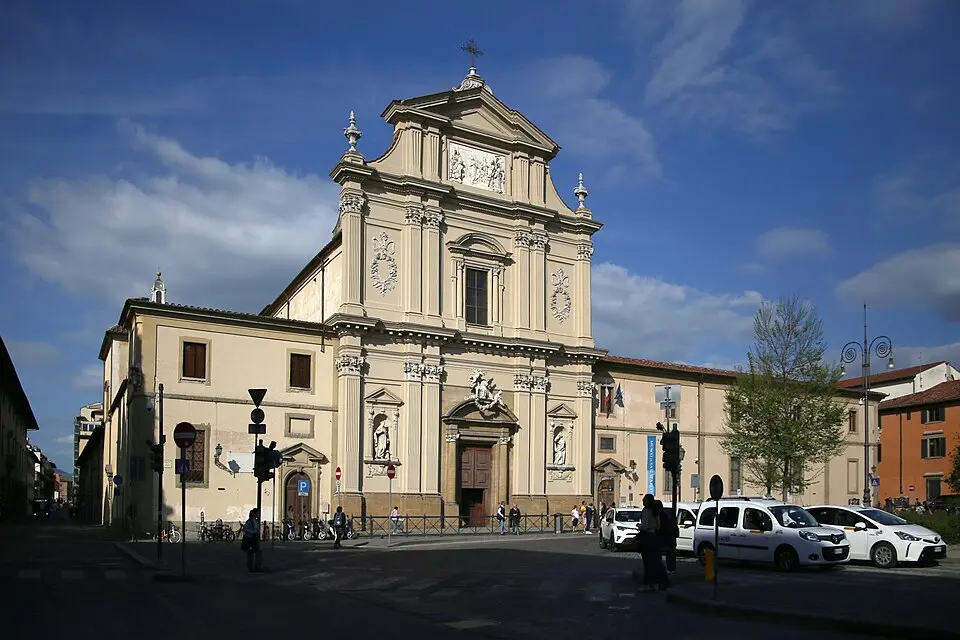
About San Marco Museum
The Museo Nazionale di San Marco sits in the north of Florence's historic center on Piazza San Marco and occupies the remains of a former Dominican monastery. The complex, built mostly in the 1440s, is known internationally above all for the frescoes and panel paintings of the painter Fra Angelico. The site originally held an oratory, which a Benedictine reform order took over in 1299. After that order left in 1418, the Dominicans took over the grounds in 1435. The extensive rebuilding was initiated and funded by Cosimo de' Medici, who in doing so carried out a penance imposed by the pope for his financial dealings. Together with his brother, he invested substantial sums in the construction work, which took place between 1437 and 1452. The consecration followed in 1443 in the presence of high-ranking church dignitaries.
In the museum, you'll experience above all the art-historical significance of the interiors. The corridors, cells, and cloisters were decorated with frescoes by Fra Angelico and his workshop, with the young Benozzo Gozzoli also contributing. In the eastern Cloister of Saint Antoninus, alongside Angelico's early works, you'll find later additions depicting scenes from the saint's life as well as portraits of popes and cardinals. The first floor holds the monks' small, enclosed cells, including Cosimo de' Medici's own cell, which has its own anteroom. One architectural highlight is the library on the first floor. This long room, divided into three aisles with slender sandstone columns, served humanists such as Angelo Poliziano as a place of study and is considered a model for later library buildings in Italy.
The complex was also the center of activity for the penitential preacher Girolamo Savonarola, who was prior in the late 15th century and made the convent his headquarters. Paintings and objects associated with Savonarola are now displayed in the prior's former cell. Works by Fra Bartolomeo can also be seen in a room of their own. The monastery church itself remained in Dominican hands, while most of the complex was reopened as a national museum after the Italian state confiscated it in 1869. Today the museum falls under the directorate of the regional museums of Tuscany.
Besides the national museum, the complex has housed the Museo di Firenze antica since 1906. It is located in the former guesthouse and displays sculptural architectural elements and fresco fragments recovered during the city's urban renewal work in the late 19th century. The combination of the monastery's spiritual atmosphere, Renaissance masterpieces, and historical exhibits makes this place a central draw for art lovers and history buffs in Florence.
At a glance
- Category
- Museum › Art museums
- Rating
- no reviews yet · write a review
- Address
- Piazza di San Marco, 3
50121 Florence, Italy - District
- Quartiere 1
- Phone
- +3908748638196
- Website
- museitoscana.cultura.gov.it
- augustinamaroon@puabook.com
- Coordinates
- 43.77815° N · 11.25897° E
- Data quality
- confidence 0.90
- Identifier
- ID f88131b4-f97…
Location & surroundings
Toggle layersRatings & comments
none yetNear San Marco Museum
closest 5 per category · 2 kmSights
Restaurants
Museums
Hotels
More:Art museums in Florence (56)Museums in Quartiere 1 (138)All museums in Florence (164)
300 places within 2 km loaded.
You need a free account to leave reviews and photos – that keeps comments genuine and lets you edit them later.
Houses frescoes by Fra Angelico and his workshop. Fra Angelico painted a series of frescoes for the cells in which the Dominican monks lived.
Source: Wikivoyage, „Florence“ · authors per page history · CC BY-SA 4.0