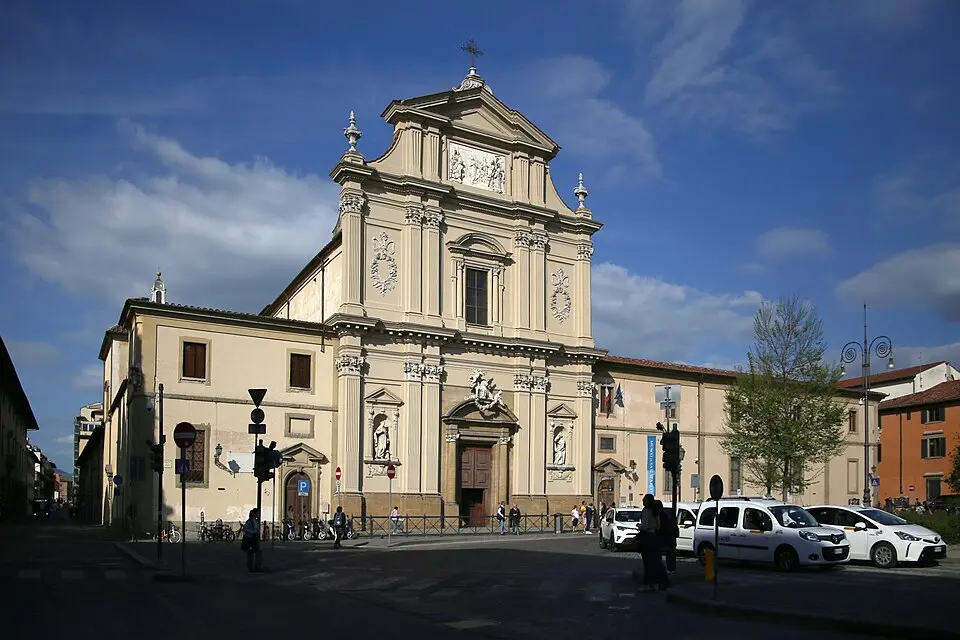
About Museo di San Marco
The Museo di San Marco sits in the northern part of Florence's old town on Piazza San Marco and occupies the remains of a former Dominican monastery. The complex, built mostly in the 1440s, is known around the world above all for the frescoes and panel paintings of the painter Fra Angelico. The era of the fiery preacher Girolamo Savonarola, who headed the convent in the late 15th century, also left a lasting mark on the place. Today the complex houses the state-run Museo Nazionale di San Marco as well as the Museo di Firenze Antica, which give visitors a deep insight into the art and history of the site.
The monastery's history goes back to 1299, when the Sylvestrines, a Benedictine reform order, acquired the property. After they left in 1418, the Dominican Observants took over the complex in 1435. The extensive rebuilding was initiated and financed by Cosimo de' Medici, who regarded the project as penance for his banking dealings. Between 1437 and 1452, the Medici invested considerable sums in the construction work. The monastery includes two cloisters, a chapter house, refectories, and a pilgrims' hospice. Especially noteworthy is the library, built on the first upper floor between 1441 and 1444. This spacious room with Ionic columns and barrel vaults served as a place of study for humanists such as Angelo Poliziano and is considered a model for later library buildings in Italy.
In the museum itself, you can visit the monks' cells in the dormitory, including Cosimo de' Medici's own cell, which has a separate anteroom. The cloisters are richly decorated with frescoes. The Cloister of St. Antoninus shows works by Fra Angelico as well as later scenes from the saint's life and portraits of popes and cardinals. In the former priory, objects and paintings related to Girolamo Savonarola are on display; he made the convent his headquarters before he ended up at the stake in 1498. Other highlights include the works of Fra Bartolomeo in the hall named after him, as well as numerous panel paintings in the former hospice hall.
Besides the national museum, the complex has housed the Museo di Firenze Antica in the former guesthouse since 1906. Here you can see sculpted architectural elements and fresco fragments salvaged during the city's demolition work in the late 19th century. The church itself, reconsecrated in 1442, contains among other things remnants of Fra Angelico's famous San Marco Altarpiece. Although parts of the altarpiece can be found in other museums such as the Uffizi or in Munich, the site remains a central place in the art history of the Renaissance. The combination of architectural elegance, spiritual tradition, and outstanding painting makes San Marco an essential stop for visitors to Florence.
At a glance
- Category
- Museum › Art museums
- Rating
- no reviews yet · write a review
- Address
- Piazza San Marco, 3
50121 Florence, Italy - District
- Quartiere 1
- Phone
- +390550882000
- Website
- museitoscana.cultura.gov.it
- drm-tos.mussanmarco-fi@cultura.gov.it
- Coordinates
- 43.77842° N · 11.25929° E
- Data quality
- confidence 0.98
- Identifier
- ID 60b865ff-949…
Location & surroundings
Toggle layersRatings & comments
none yetNear Museo di San Marco
closest 5 per category · 2 kmSights
Restaurants
Museums
Hotels
More:Art museums in Florence (56)Museums in Quartiere 1 (138)All museums in Florence (164)
300 places within 2 km loaded.
You need a free account to leave reviews and photos – that keeps comments genuine and lets you edit them later.
Houses frescoes by Fra Angelico and his workshop. Fra Angelico painted a series of frescoes for the cells in which the Dominican monks lived.
Source: Wikivoyage, „Florence“ · authors per page history · CC BY-SA 4.0