About Bayerisches Nationalmuseum
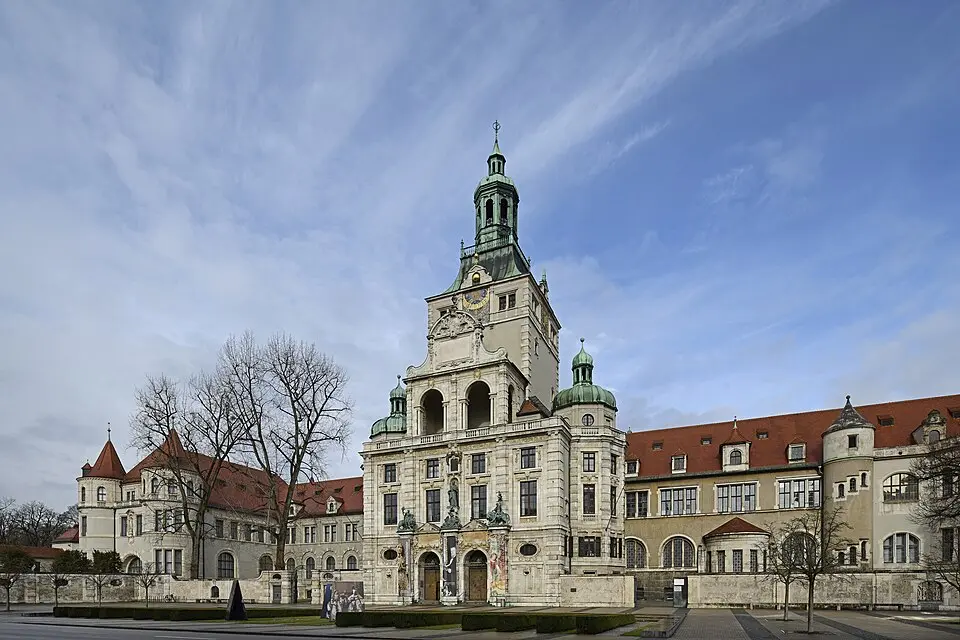
The Bavarian National Museum in Munich is one of the most important institutions for art and cultural history in Germany. Founded in 1855 on the initiative of King Maximilian II, who was inspired by his trip to the Great Exhibition in London, the museum today houses an immense variety of exhibits across roughly 13,000 square meters (about 140,000 square feet) of exhibition space. The monarch chose the name himself to underline the close connection to Bavarian history and the House of Wittelsbach. Originally conceived as a dynastic museum, it quickly developed into an educational institution that served not only research but was also meant to inspire the general public and craftsmen in their own work.
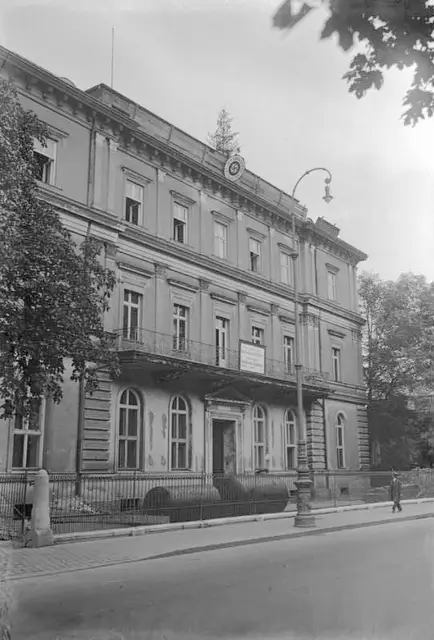
The museum building on Prinzregentenstrasse, which opened in 1900, is an architectural masterpiece of historicism. Designed by Gabriel von Seidl, the building combines the Bavarian regional style with elements of German Renaissance, Neo-Baroque, and Rococo. Seidl deliberately avoided excessive monumentality and sacred references in order to emphasize the civic and national character of the museum. The facade is divided into different stylistic periods that correspond to the works on display. This architectural variety is also reflected inside, where the rooms differ in size, shape, and decoration. Changing dimensions and passageway axes create a lively tour in which the exhibits harmonize with the rooms that house them.
The historical tour on the main floor and the east upper floor takes you from the early Middle Ages to the beginning of the 20th century. The core of the collection comes from the Wittelsbach family's art holdings, which gives the museum significance far beyond the region. The ground floor is dominated by precious paintings, wood sculptures, bronzes, and medieval ivories. Particularly noteworthy are the masterpieces of southern German sculptors such as Hans Multscher, Tilman Riemenschneider, and Hans Leinberger. The Riemenschneider Room, for example, displays the world's most important collection of this artist's sculptures, including unpainted figures from the Münnerstadt Magdalene Altarpiece that demonstrate his technical virtuosity.
The painting collection is also of great importance, especially for early Bavarian painting, which can be studied here in unique abundance. Highlights include works from the 14th and 15th centuries, such as the large panel showing the Crucifixion and the Raising of Drusiana, or the lower register of the tabula magna from Tegernsee Abbey. In the Church Hall you can see large parts of the altarpieces by the Munich painter Jan Polack. The collection also includes historic room ensembles, Gothic cabinets, and outstanding examples of ivory art ranging from late antiquity to modern times.
The weapons collection, which goes back to the Wittelsbachs' armory, deserves special attention. The large Arms Hall displays armor from the 16th and early 17th centuries, polearms, and edged weapons, including unique late Gothic swords. The collection was expanded by significant acquisitions from Hohenaschau Castle, Ambras Castle, and the Munich Residenz. Alongside the weapons you will also find goldsmith work, musical instruments, and clocks that reflect the courtly lifestyle of the time.
In the Baroque and Rococo section, the museum presents ornate furniture, Florentine bronzes of the Medici, and masterpieces of Bavarian Rococo sculpture. Artists such as Ignaz Günther and Johann Baptist Straub are represented with works that are in part polychrome. The Reuschel Collection complements this area with more than 60 late Baroque oil sketches that document the development of southern German and Austrian painting in the 18th century. These preliminary sketches for church decorations come from artists such as Martin Knoller and Franz Anton Maulbertsch and were given to the museum on permanent loan.
The east upper floor continues the tour with styles from Neoclassicism to Art Nouveau. Sculptures, furniture, porcelain, and glassware illustrate changing tastes. One highlight is the model of the capital and residence city of Munich, made by Johann Baptist and Franz von Seitz, which presents a topographically accurate picture of the city in the mid-19th century. The dynastic ties between France and the Bavarian royal house are illustrated by gifts from Napoleon to King Max Joseph I and Crown Prince Ludwig, including an ornate table with a Sèvres top.
The Art Nouveau department, established through purchases from the Siegfried Wichmann Collection, offers examples of almost all categories of decorative arts from the most important centers of the era. Works by Emile Gallé, René Lalique, and Louis Comfort Tiffany are represented, as is Munich Art Nouveau through Richard Riemerschmid and August Endell. The focus is particularly on the experimental use of glass, but jewelry, ceramics, and furniture are also on display. This collection complements the holdings of other Munich museums and offers a comprehensive look at the aesthetics of the early 20th century.
On the lower level, folk art and folklore collections round out the cultural-history tour. Here you can see typically furnished Bavarian farmhouse parlors with furniture from the last four centuries. A special highlight is the world-famous nativity scene collection, considered the most artistically valuable and extensive of its kind. It shows the development of the nativity scene in the Alpine region and in Italy from the 18th to the 20th century. Wooden figures in regional costume, Neapolitan nativity scenes with porcelain heads, and expressive scenes from Sicily illustrate the diversity of this tradition.
The Bollert Collection, shown in a renovated wing of the building since 2005, documents the collecting culture of the early 20th century. As the last major German private collection of medieval sculpture, it includes works from southern Germany, the Alpine region, Austria, and central and western Germany. The pieces on display include reliefs by Tilman Riemenschneider and portrait medallions by Andre Hanntlas. This collection offers a unique glimpse into medieval art and historical collecting practices.
The Bavarian National Museum also operates several branch museums throughout Bavaria that focus on regional themes and preserve historic buildings through museum use. These institutions, such as the Franconian Gallery in Kronach or the Cabinet of Art and Curiosities in Landshut, broaden the profile of the main museum and bring Bavaria's art and cultural history to life in the regions. With its comprehensive collection and the architectural splendor of the Seidl building, the Bavarian National Museum remains a central attraction for visitors from around the world who are interested in the history, art, and culture of Bavaria and Europe.
At a glance
- Category
- Museum › Art museums
- Rating
- no reviews yet · write a review
- Address
- Prinzregentenstraße 3
80538 Munich, Germany - District
- Altstadt-Lehel
- Phone
- +49892112401
- Website
- www.bayerisches-nationalmuseum.de
- kontakt@bayerisches-nationalmuseum.de
- Coordinates
- 48.14301° N · 11.59093° E
- Data quality
- confidence 1.00
- Identifier
- ID 9de05c05-3a6…
Location & surroundings
Toggle layersRatings & comments
none yetNear Bayerisches Nationalmuseum
closest 5 per category · 2 kmSights
Museums
Hotels
More:Art museums in Munich (21)Museums in Altstadt-Lehel (34)All museums in Munich (164)
300 places within 2 km loaded.
You need a free account to leave reviews and photos – that keeps comments genuine and lets you edit them later.
Huge and fascinating museum of European history from the Middle Ages until early 20th century. There's armour, pottery, furniture, fashions, porcelain, beer mugs, the lot; plus Oct-April a display of nativity scenes. The Bollert medieval art collection is only open Th F 10:00-17:00.
Source: Wikivoyage, „Munich/Altstadt“ · authors per page history · CC BY-SA 4.0 · as of 10/19/2022