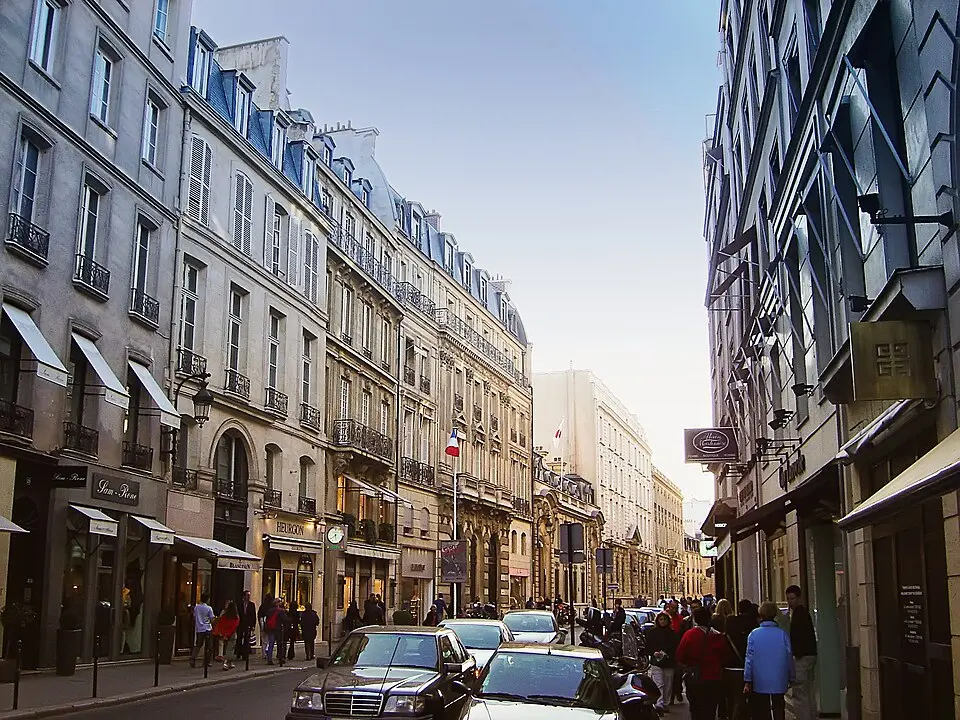
About Rue du Faubourg Saint-Honoré
The Rue du Faubourg Saint-Honoré is one of the main east-west arteries running through Paris's 8th arrondissement. Just under two kilometers (about 1.2 miles) long, it connects the Rue Royale in the east with the Place des Ternes in the west, not far from the Place Charles-de-Gaulle. As the western continuation of the equally exclusive Rue Saint-Honoré, it is considered one of the world's most important shopping streets for high-end luxury goods today. The name comes from Saint Honoratus of Amiens, while the word faubourg historically refers to the former suburb beyond the city wall. The first documentary mentions of it as a road date from 1222, making it one of the oldest streets in the capital. Although it was once part of the suburb, it was incorporated into the actual city limits of Paris in 1860, and it received its present name in 1847.
The history of the street is closely tied to the Parisian upper middle class and the nobility. Families such as the Rothschilds once lived here; in 1856 they acquired No. 33, the former Russian embassy. Coco Chanel also moved into an apartment at No. 29 in 1923. Today, a dense concentration of international fashion houses shapes the street's character. Here you'll find flagships for haute couture and accessories, including Gucci, Prada, Chanel, Hermès, Cartier, and Valentino. In addition to regular walk-in business, many of these shops also offer private appointments, which underscores their exclusivity. Alongside the fashion houses, renowned galleries such as Galerie Bernheim-Jeune and Opera Gallery enrich the street's cultural offerings.
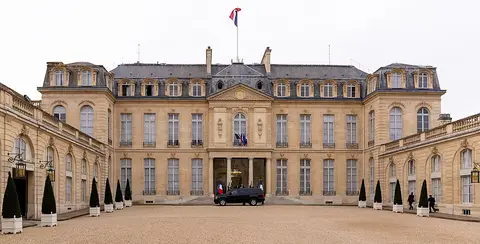
A particular focus lies on the political center of France. At No. 55 stands the Élysée Palace, the official residence of the French president. The building, originally constructed in 1718 as a private mansion, served various purposes over the centuries before becoming the presidential residence in 1873. Soldiers of the Republican Guard stand watch in front of the palace, and the address is as well known internationally as Britain's Downing Street. The French Ministry of the Interior is also located nearby. The street also houses numerous diplomatic missions and ambassadors' residences, including those of the United States, Canada, Japan, and the United Kingdom. The Hôtel de Charost, the seat of the British ambassador since 1814, is a historic testament to this diplomatic significance.
For visitors, the street offers a varied experience that goes beyond shopping. The luxury hotel Le Bristol, opened in 1925 in the Art Deco style, is a well-known meeting place. The architecture changes from one section to the next: while the higher street numbers are lined with galleries, antiquarian shops, and restaurants, the street becomes cobblestoned beginning at the intersection with the Rue La Boétie. The church of Saint-Philippe du Roule, built in 1772, also stands here. At the end of the street, at the Place des Ternes, you'll find the famous concert hall Salle Pleyel. The street is heavily trafficked by pedestrians and vehicles alike, and temporary closures may occur near the presidential palace due to security measures.
The Rue du Faubourg Saint-Honoré is thus more than just a shopping street; it is a historic and political heart of Paris. It combines the tradition of haute couture with modern diplomacy and French state history. From the ateliers of famous fashion designers such as Paul Poiret and Charles Frederick Worth to the residences of international state guests, the street reflects the city's eventful history. Whether you admire the splendor of the luxury boutiques, marvel at the historic architecture of the embassies, or take advantage of the cultural offerings of the galleries and concert halls, the street provides an impressive glimpse into upscale Parisian life. The concentration of these elite institutions makes it an essential destination for travelers who want to experience the culture and history of the French capital at the highest level.
At a glance
- Category
- Sight › Historic sites
- Rating
- no reviews yet · write a review
- Address
75008 Paris, France- District
- Quartier de la Madeleine
- Phone
- —
- Website
- services.chanel.com
- —
- Coordinates
- 48.87035° N · 2.31765° E
- Data quality
- confidence 0.89
- Identifier
- ID 20acc772-7ca…
Location & surroundings
Toggle layersFAQ about Rue du Faubourg Saint-Honoré
quick answersWhat is the Rue du Faubourg Saint-Honoré in Paris?
The Rue du Faubourg Saint-Honoré is a historic street just under two kilometers long in Paris's 8th arrondissement and is considered one of the world's most important shopping streets for luxury goods. It runs east to west from the Rue Royale to the Place des Ternes, not far from the Place Charles-de-Gaulle. It is the western extension of the Rue Saint-Honoré and lies in the Quartier de la Madeleine.
How old is the Rue du Faubourg Saint-Honoré and where does its name come from?
The Rue du Faubourg Saint-Honoré in Paris was first documented as a path as early as 1222, making it one of the oldest streets in the city. Its name goes back to Saint Honoratus of Amiens, while the word "Faubourg" refers to the former suburb beyond the city wall. It received its current name in 1847 and was incorporated into the Paris city limits in 1860. Famous residents included the Rothschilds, who acquired No. 33 in 1856, and Coco Chanel, who moved into No. 29 in 1923.
What shops and galleries are there on the Rue du Faubourg Saint-Honoré?
On the Rue du Faubourg Saint-Honoré in Paris, you'll find flagship stores of international fashion houses such as Gucci, Prada, Chanel, Hermès, Cartier, and Valentino. Many of these shops offer private appointments in addition to regular sales. Culturally, renowned galleries such as the Galerie Bernheim-Jeune and the Opera Gallery round out the offerings, and the higher street numbers also have antiquarian bookshops and restaurants.
Is the Élysée Palace on the Rue du Faubourg Saint-Honoré?
Yes, the Élysée Palace, the official residence of the French president, is located at No. 55 on the Rue du Faubourg Saint-Honoré in Paris. The building was constructed in 1718 as a private hôtel and has been the presidential residence since 1873; guards of the Garde républicaine stand in front of it. The street is also home to the Ministry of the Interior nearby, as well as ambassadorial residences, such as those of the United States, Canada, Japan, and the United Kingdom. The Hôtel de Charost has been the residence of the British ambassador since 1814.
What can you see around the Rue du Faubourg Saint-Honoré?
Around the Rue du Faubourg Saint-Honoré in Paris, in addition to the Élysée Palace, you can visit the museum La Maison Elysée, which travelguide195 lists about 73 meters away. On the street itself stands the church of Saint-Philippe du Roule, built in 1772, in the cobblestone section starting at the Rue La Boétie. A well-known meeting place is the Art Deco luxury hotel Le Bristol, which opened in 1925, and travelguide195 lists around 262 restaurants within 500 meters.
Ratings & comments
none yetNear Rue du Faubourg Saint-Honoré
closest 5 per category · 2 kmSights
Restaurants
Museums
Hotels
More:Historic sites in Paris (1,524)Sights in Quartier de la Madeleine (34)All sights in Paris (1,859)
300 places within 2 km loaded.
You need a free account to leave reviews and photos – that keeps comments genuine and lets you edit them later.