About Death of Diana
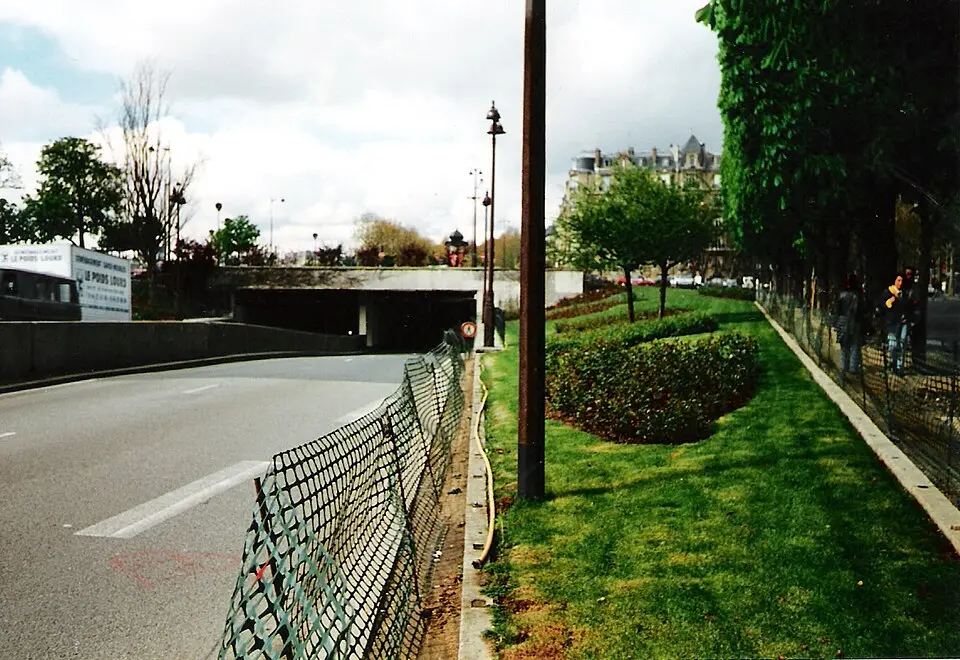
The tunnel beneath the Pont de l'Alma in Paris is known today above all as the site of a tragic historical event. In the early hours of August 31, 1997, Diana, Princess of Wales, lost her life here. The accident occurred in the short underpass that runs beneath the Seine's riverside road and connects the two banks of the city. For many visitors to the French capital, this spot is a quiet memorial where people remember the end of the life of the internationally known figure. The scene itself is shaped by typical Parisian architecture, yet the tunnel and its immediate surroundings carry a heavy historical weight that has left a lasting mark on the character of the place.
The circumstances of the accident were complex and remained the subject of heated debate for years. Diana was traveling with her then partner Dodi Fayed and the chauffeur Henri Paul in an armored Mercedes-Benz. The car had set off from the Hôtel Ritz Paris in order to escape a large group of waiting photographers. The route led along the Cours la Reine and the Cours Albert 1er directly into the tunnel. Eyewitnesses reported that the Mercedes was traveling at around 105 kilometers per hour (about 65 mph), twice the posted speed limit of 50 kilometers per hour (about 31 mph). The driver lost control of the vehicle and crashed into one of the support pillars that hold up the tunnel's vault.
Official investigations found that Henri Paul, the deputy head of security at the Ritz, was heavily intoxicated at the time of the accident and under the influence of medication. In 1999, the French judiciary concluded that he alone bore responsibility for the crash. Later British investigations, known as Operation Paget, reached a verdict of "unlawful killing" in 2008, meaning killing through gross negligence. Both the chauffeur's driving and the behavior of the pursuing paparazzi were named as contributing causes. It also emerged that none of the occupants of the car was wearing a seat belt, which considerably worsened their injuries.
Diana suffered severe injuries to her chest and head. Despite immediate rescue efforts and her transfer to the Pitié-Salpêtrière hospital, she died in the early morning. Dodi Fayed and the driver Henri Paul were pronounced dead at the scene. The only survivor was the bodyguard Trevor Rees-Jones, who suffered severe facial injuries but remained conscious. Images of the wrecked vehicle and the reactions of those present went around the world and set off a wave of shock.
The international public's reaction to the princess's death was unprecedented. Millions of people around the world expressed their sympathy, and her funeral at Westminster Abbey was watched on television by an estimated one billion viewers. In Paris itself, thousands of people gathered at the site of the accident and outside the hospital to leave flowers, candles, and messages of grief. The spot at the Pont de l'Alma became a spontaneous memorial where people showed their sympathy. Mourners also visited the nearby Hôtel Ritz, where the car had started its journey.
In the years after the accident, various memorials were created in Diana's honor. In London, the Diana, Princess of Wales Memorial Fountain opened in Hyde Park in 2004, and a statue was unveiled at Kensington Palace in 2021. In Paris itself, the tunnel area remains a place of quiet remembrance. Although the original messages and flowers have been removed, visitors still come to pause and reflect on the event. The Flamme de la Liberté, a monument near the tunnel, was for a time used by the public as a memorial to Diana, underscoring people's emotional attachment to this particular place.
The investigation of the accident was of great political and social significance. The British inquest lasted several months and heard hundreds of witnesses. The cost of the investigations was enormous and was criticized in media coverage. Despite the official verdicts, conspiracy theories remained a presence in public discussion. Dodi Fayed's father, Mohamed Al-Fayed, claimed for years that it had been a murder ordered by the royal family or the secret service. These claims, however, were rejected by the investigating authorities and the courts. The debate over the role of the media and the paparazzi in the accident led to an intense public discussion about the limits of press freedom and the protection of privacy.
The accident and Diana's death also had far-reaching social and psychological effects. Studies showed that the national mourning led to a rise in suicides and self-harm in Britain, particularly among women aged 25 to 44. People's identification with Diana, who was seen as someone who had struggled with mental health, played a major role. At the same time, the event led to an increase in demand for counseling services. Society reflected on how public figures are treated and on how the death of a prominent person can set off collective emotions.
Today the Pont de l'Alma tunnel is part of the normal flow of traffic in Paris, yet its significance as a historical site remains unchanged. Visitors exploring the city often learn of the tragedy that took place here. The site serves as a reminder of the dangers of reckless driving and of the power of the media. The tunnel's architecture, with its massive stone pillars, recalls the structure that became the scene of the accident in 1997. It is a place where past and present meet and where people linger in thoughts of Diana and the events of that night.
The memory of Diana lives on in the memorials and in people's collective memory. The site in Paris is a silent witness to one of the best-known tragedies of modern history. It invites you to pause and reflect on the circumstances of the accident and the deep emotional resonance it had around the world. For travelers, it is a place of reflection that shows the human side behind the public figure and illustrates the lasting impact of a single event on the global community.
At a glance
- Category
- Sight › Historic sites
- Rating
- no reviews yet · write a review
- Address
Paris, France- District
- 8th Arrondissement of Paris
- Phone
- —
- Website
- —
- —
- Coordinates
- 48.86495° N · 2.30191° E
- Data quality
- confidence 0.44
- Identifier
- ID 9daa3208-271…
Location & surroundings
Toggle layersRatings & comments
none yetNear Death of Diana
closest 5 per category · 2 kmSights
Restaurants
Museums
Hotels
More:Historic sites in Paris (1,524)Sights in 8th Arrondissement of Paris (87)All sights in Paris (1,859)
300 places within 2 km loaded.
You need a free account to leave reviews and photos – that keeps comments genuine and lets you edit them later.