About Château de Bagatelle
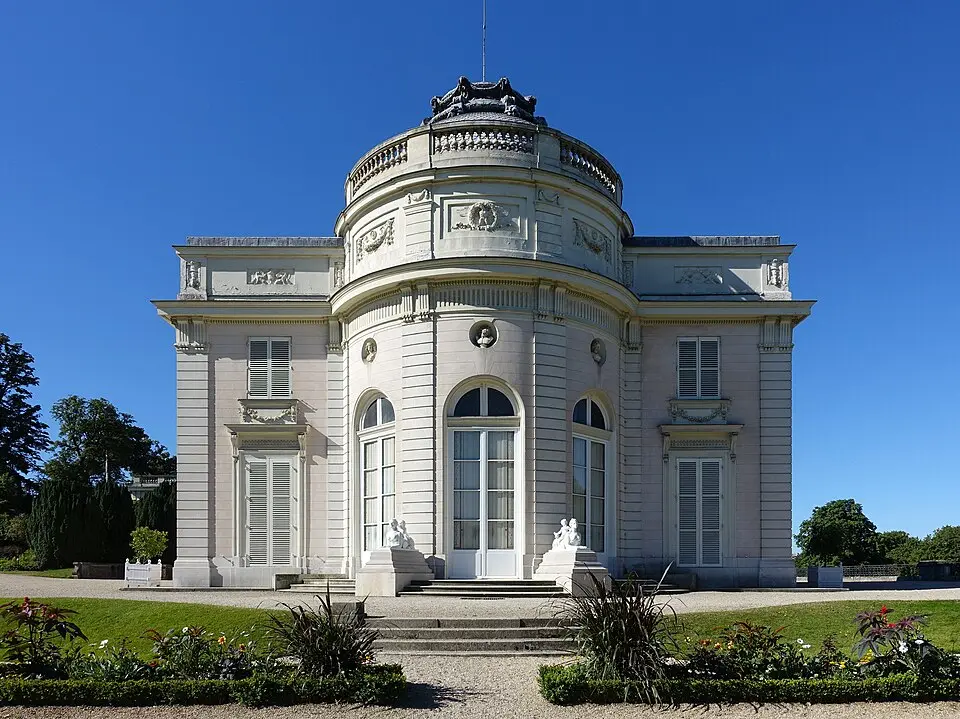
The Château de Bagatelle is a neoclassical château in the 16th arrondissement of Paris, set within the Bois de Boulogne. Originally built in 1720 as a small hunting lodge for the Maréchal d'Estrées, the estate was acquired in 1775 by the Comte d'Artois, the brother of Louis XVI. The count had the existing building torn down and commissioned the architect François-Joseph Bélanger to build a new one. In a famous wager with Marie Antoinette, who claimed the project could not be completed in three months, the count finished the château in just 63 days. The building served as a pleasure retreat for short stays and hunting excursions. The façade bears the Latin inscription "Parva sed Apta," which roughly means "Small, but suitable."
Today, you can tour the elegant interiors, which were originally furnished with pieces from renowned Parisian dealers and decorative details by artists such as Hubert Robert. The central vaulted space once housed a music room, while the bedroom was designed in the style of a military tent. The château is surrounded by extensive gardens that feature both formal French elements and a landscaped park in the English style. The park, designed in part by the Scottish garden architect Thomas Blaikie, is known for its rose beds, an orangery, and historic garden features such as obelisks, pagodas, and grottoes. The rose garden is especially famous for the annual international competition for new roses, which has been held since 1907 and is considered the oldest of its kind.
The history of the site is also shaped by cultural and sporting events. The grounds hosted early rugby championships and polo matches during the 1924 Olympic Games. In addition, the aviation pioneer Alberto Santos-Dumont used the meadows next to the château for his first flight attempts with the 14-bis aircraft. After a series of changes in ownership, including the Hertford family, whose art collection later formed the basis of the Wallace Collection in London, the City of Paris purchased the estate in 1905. Today, the Château de Bagatelle is a popular destination for visitors who want to relax in the peaceful atmosphere of the park and enjoy the historic architecture and the blooming gardens.
At a glance
- Category
- Sight › Historic sites
- Rating
- no reviews yet · write a review
- Address
- route de Sèvres-à-Neuilly
75016 Paris, France - District
- Quartier de la Muette
- Phone
- +33140679700
- Website
- jardinshakespeare.fr
- —
- Coordinates
- 48.87167° N · 2.24722° E
- Data quality
- confidence 0.70
- Identifier
- ID ee071875-e5c…
Location & surroundings
Toggle layersFAQ about Château de Bagatelle
quick answersWhat is the Château de Bagatelle in Paris?
The Château de Bagatelle is a neoclassical château in the 16th arrondissement of Paris, located in the Bois de Boulogne on the route de Sèvres-à-Neuilly. It was built in 1775 as a pleasure retreat for the Comte d’Artois, the brother of Louis XVI, for short stays and hunting trips. The Latin inscription "Parva sed Apta" on the façade means roughly "Small, but suitable." The estate has belonged to the City of Paris since 1905.
How was the Château de Bagatelle built in just 63 days?
The Château de Bagatelle in Paris came about through a bet between the Comte d’Artois and Marie-Antoinette, who doubted that the building could be completed in three months. The count had the original 1720 hunting lodge of the Maréchal d’Estrées torn down and commissioned the architect François-Joseph Bélanger to build a new one, which was finished after just 63 days. Inside, you can tour elegant rooms that were once furnished with pieces from renowned Parisian dealers and decorated by artists such as Hubert Robert, including a music room beneath the central dome and a bedroom styled like a military tent.
What is there to see in the gardens of the Château de Bagatelle?
The gardens of the Château de Bagatelle in Paris's Bois de Boulogne combine formal French elements with an English-style landscape park. The park was designed in part by the Scottish landscape gardener Thomas Blaikie and features rose beds, an orangery, and historic follies such as obelisks, pagodas, and grottoes. The rose garden is especially well known for the international competition for new roses, held every year since 1907 and considered the oldest of its kind.
What historical events are associated with the Château de Bagatelle?
The grounds of the Château de Bagatelle in Paris were the setting for important moments in sports and technology history. Early rugby championships were held here, as were the polo competitions of the 1924 Olympic Games, and the aviation pioneer Alberto Santos-Dumont made his first flight attempts with his 14-bis aircraft on the meadows next to the château. Former owners included the Hertford family, whose art collection later formed the basis of the Wallace Collection in London.
What can you visit around the Château de Bagatelle?
Several historic sites lie within walking distance of the Château de Bagatelle in Paris. Within 1 km, travelguide195 lists the Orangerie du Parc de Bagatelle (about 190 m), the Roseraie Classique (about 540 m), the Château de Madrid (about 670 m), and the Hôtel Arturo Lopez (about 990 m), among others. For a break, travelguide195 also lists 2 restaurants within 500 m.
Ratings & comments
none yetNear Château de Bagatelle
closest 5 per category · 2 kmSights
Restaurants
Museums
Hotels
Cocktail bars
More:Historic sites in Paris (1,524)Sights in Quartier de la Muette (42)All sights in Paris (1,859)
177 places within 2 km loaded.
You need a free account to leave reviews and photos – that keeps comments genuine and lets you edit them later.