About Charlie Hebdo
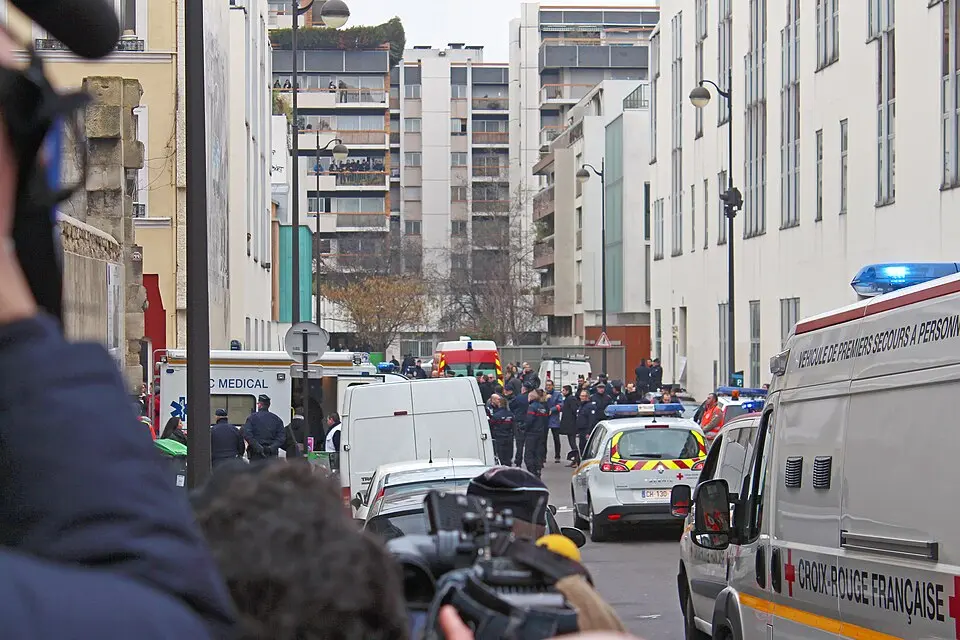
The site that once housed the editorial offices of the French satirical magazine Charlie Hebdo has become etched in the world's collective memory above all because of the tragic terrorist attack of January 7, 2015. The office building on Rue Nicolas-Appert in Paris's 11th arrondissement was the scene of an Islamist-motivated assault that claimed eleven lives. Alongside Le Canard enchaîné, the magazine itself is considered France's most important satirical publication and is known for its sharp, often provocative criticism of politics, society, and religion. For visitors today, the site is a place of remembrance and of reflection on the limits of free speech in a pluralistic society.
The magazine's history is closely tied to its controversies over depictions of the Prophet Muhammad. As early as 2006, Charlie Hebdo reprinted the controversial cartoons from the Danish newspaper Jyllands-Posten, which led to international protests. In November 2011, the magazine published a special issue titled Charia Hebdo, whose cover caricatured Muhammad as editor-in-chief. On the same day, unknown assailants firebombed the editorial offices. These incidents led to the magazine's then editor-in-chief, Stéphane Charbonnier, being placed under police protection. In March 2013, he was named on a wanted list in the al-Qaeda magazine Inspire, which further heightened the threat to the editorial staff.
On the day of the attack, the editorial team met for its weekly meeting, as it did every Wednesday. At 11:30 a.m., the brothers Saïd and Chérif Kouachi, masked and heavily armed, forced their way into the building. They first went to the wrong building before entering the editorial offices and opening fire. In the entrance area, the attackers shot a maintenance worker and forced a cartoonist to enter the access code for the editorial offices on the second floor. Inside, they killed ten more people, including several well-known cartoonists and journalists. During the attack, the perpetrators shouted slogans such as "Allahu Akbar" and "We have avenged the Prophet." The assault lasted only about five minutes, during which 31 shell casings were later found in the building.
After the attack, the assailants fled in a stolen car. During their escape, further shootouts occurred, in which police officer Ahmed Merabet was killed. The manhunt for the Kouachi brothers led security forces northeast of Paris. On January 9, the attackers barricaded themselves in a printing works in Dammartin-en-Goële. After an exchange of fire with the GIGN special forces, both were killed. Assault rifles, a rocket launcher, and explosives were found on them. The brothers later claimed allegiance to al-Qaeda in Yemen, which described the attack as revenge for the honor of the Prophet.
At the same time as the events at Charlie Hebdo, the heavily armed Amedy Coulibaly carried out further attacks. On January 8, he shot a policewoman in Montrouge and wounded a street sweeper. On January 9, he stormed a kosher supermarket in eastern Paris and took several people hostage. He killed four French Jews and demanded safe passage for the Kouachi brothers. Coulibaly pledged allegiance to the Islamic State by phone. When police stormed the supermarket, he was killed. Several hostages had earlier hidden in the store's cold room, where a Muslim employee protected them from the attacker.
The reactions to the attacks were felt worldwide. In France, the government raised the security level to its highest and declared a national day of mourning. President François Hollande called the murdered journalists heroes. Solidarity rallies took place in numerous European cities, where people demonstrated with candles and signs reading "Je suis Charlie." The central Republican March in Paris on January 11, 2015, drew around 1.5 million people, including numerous heads of state and government from around the world. The message of the demonstrations was unmistakable: freedom of the press and of speech must not be broken by violence.
Charlie Hebdo showed great resilience after the attack. The surviving editors published a special edition titled "Le Journal des Survivants." The cover showed a caricature of a weeping Muhammad holding a sign reading "Je suis Charlie." The print run was increased from 60,000 to several million copies, as demand around the world was enormous. The issue also included contributions from the murdered colleagues. The editorial team stressed that the pen is mightier than barbarism. Some time later, publication of the magazine was suspended for a few weeks due to the exhaustion of its staff, before regular operations resumed.
The legal reckoning for the crimes took a long time. In December 2020, a Paris court sentenced several accomplices of the attackers to lengthy prison terms. The main defendant, Ali Riza Polat, received 30 years in prison for providing decisive help to Coulibaly. Coulibaly's partner was also sentenced in absentia to life imprisonment. The trial made clear the extent of the support the attackers found within society. The convictions were an important step toward holding those responsible for aiding the crimes to account.
Today, the site of the attack is a symbol of the defense of free speech. It commemorates the victims, who lost their lives for their convictions and their work. At the spot where the former editorial building stood, visitors can pause and reflect on the magnitude of the event. The events of 2015 permanently changed security awareness in France and fueled the debate about the limits of satire in a multicultural society.
The significance of Charlie Hebdo goes beyond mere reporting. The magazine stands for a courageous commitment to freedom of speech, even when that comes with risks. The attack showed how dangerous the attempt to curtail this freedom through violence can be. The expressions of solidarity from around the world underscored that the values of democracy and freedom of the press are universal.
For travelers in Paris, a visit to this site offers the chance to engage with the current challenges of modern society. It is a place that prompts reflection and highlights the importance of tolerance and dialogue in a globalized world. The memory of the victims and the resilience of the editorial team remain an important part of the history of France and Europe.
At a glance
- Category
- Sight › Historic sites
- Rating
- no reviews yet · write a review
- Address
- 10 Rue Nicolas Appert
75011 Paris, France - District
- Quartier Saint-Ambroise
- Phone
- +33176215300
- Website
- www.charliehebdo.fr
- —
- Coordinates
- 48.85910° N · 2.37014° E
- Data quality
- confidence 0.96
- Identifier
- ID eb840b2c-a5e…
Part of the tour
Paris and Its History: From the Sun King to the Present →Location & surroundings
Toggle layersRatings & comments
none yetNear Charlie Hebdo
closest 5 per category · 2 kmSights
Museums
Hotels
More:Historic sites in Paris (1,524)All sights in Paris (1,859)
300 places within 2 km loaded.
You need a free account to leave reviews and photos – that keeps comments genuine and lets you edit them later.