About Thermes de Cluny
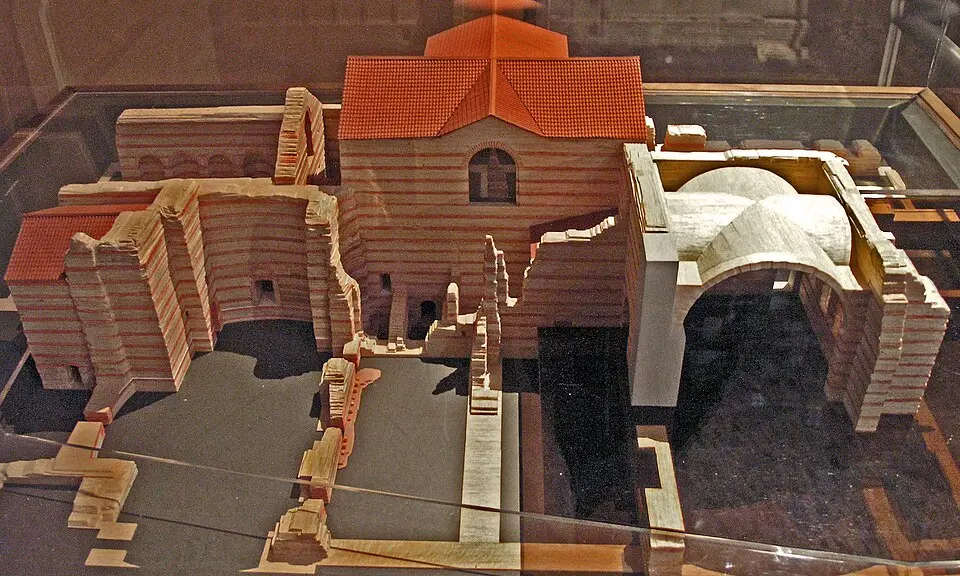
The Thermes de Cluny are the ruins of a Gallo-Roman bath complex in the heart of Paris's fifth arrondissement, built around the turn of the third century. Probably funded originally by the boatmen's guild, the bath was open to the public and also served to integrate the local Celtic population culturally. Today about a third of the complex survives, and its impressive frigidarium, with its intact vaulting and remnants of mosaics, is fully integrated into the Musée National du Moyen Âge. The room also houses the historic Pillar of the Boatmen. Other areas, such as the gymnasium, have been repurposed as museum space, while you can see the ruins of the caldarium and tepidarium on the museum grounds.
At a glance
- Category
- Museum › Museums (general)
- Rating
- no reviews yet · write a review
- Address
- 28 Rue du Sommerard
75005 Paris, France - District
- Quartier de la Sorbonne
- Phone
- +33153737800
- Website
- www.musee-moyenage.fr
- —
- Coordinates
- 48.85085° N · 2.34345° E
- Data quality
- confidence 0.82
- Identifier
- ID d7c9dba6-257…
Location & surroundings
Toggle layersRatings & comments
none yetNear Thermes de Cluny
closest 5 per category · 2 kmSights
Restaurants
Museums
Hotels
More:All museums in Paris (525)
300 places within 2 km loaded.



You need a free account to leave reviews and photos – that keeps comments genuine and lets you edit them later.
The remains of the bathing complex of ancient Lutetia Parisiorum , now partly an archeological site, and partly incorporated into the adjacent Musée National du Moyen Age. Site of the coronation of emperor Julian "the Apostate" in February 360. Lutetia, renamed Parisius in the 5th century AD, was mainly built on the Seine's southern margin; the Roman cardo maximus (main axis) is still observed on the Left Bank (Rue St-Jacques) and on the Right Bank (Rue St-Martin). Some 800 m away, stand the , a preserved 1st century amphitheater. There's also the Early Christian archeological crypt under the Notre Dame cathedral's forecourt. For more Roman antiquities in Paris, the Louvre is the obvious place to go.
Source: Wikivoyage, „Roman Empire“ · authors per page history · CC BY-SA 4.0 · as of 9/3/2015