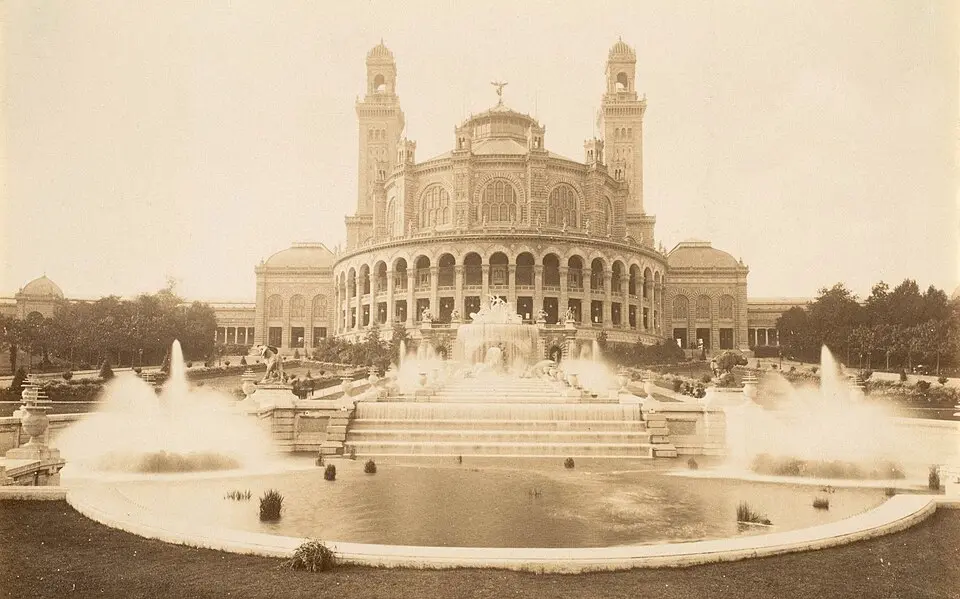
About Musée d'Ethnographie du Trocadéro
The Musée d'Ethnographie du Trocadéro was the first anthropological museum in Paris, founded in 1878 as part of the World's Fair. It was housed in the Trocadéro Palace, a building by the architect Gabriel Davioud that arranged two wings around a central concert hall. The initiative came from the Ministry of Public Education, with the aim of opening the numerous collections of French explorers, particularly from South America, to the public. Ernest Hamy, an anthropologist at the Natural History Museum, was appointed the first director and drove the museum's institutional establishment. Originally conceived as a purely scientific institution, the museum was meant to illustrate the progress of humankind through the methodical classification and analysis of objects in their cultural context. Despite initial restrictions that kept it from competing with other institutions such as the Louvre or the National Library, the collection grew considerably under Hamy's leadership and soon comprised tens of thousands of exhibits.
In practice, however, the museum often fell short of its idealistic goals. The rooms in the Trocadéro Palace suffered from inadequate heating, poor lighting, and a lack of laboratories. Visitors and critics complained about the insufficient display cases and the general neglect of the exhibits, while lifelike dioramas, such as one of a Breton interior, drew most of the public's interest. The artist Pablo Picasso recalled the unpleasant smell of dampness and decay that deeply affected him on his first visit in 1907. Despite these adverse conditions, the place became an important meeting point for modern artists. Fauvists and Cubists discovered so-called primitive art here, particularly African masks, which influenced Picasso as he worked on his groundbreaking painting Les Demoiselles d'Avignon. Later, ethnologists such as Paul Rivet and Georges Rivière worked with Surrealist artists to view objects not only aesthetically but in their social and human context.
In 1935, the Trocadéro building was demolished to make way for the Palais de Chaillot, which was built for the 1937 World's Fair. The museum closed its doors, and its successor institution, the Musée de l'Homme, opened in the new palace. The French collections went to the newly founded Musée National des Arts et Traditions Populaires. This ended the story of the Trocadéro Museum, which, despite its material limitations and financial difficulties, made a significant contribution to ethnographic research and to the development of modern art.
At a glance
- Category
- Museum › Museums (general)
- Rating
- no reviews yet · write a review
- Address
- —
Paris, France - District
- 16th Arrondissement
- Phone
- +33144053700
- Website
- cs.wikipedia.org
- —
- Coordinates
- 48.86278° N · 2.28861° E
- Data quality
- confidence 0.81
- Identifier
- ID 5d17ab5d-835…
Location & surroundings
Toggle layersRatings & comments
none yetNear Musée d'Ethnographie du Trocadéro
closest 5 per category · 2 kmSights
Museums
Hotels
More:Museums in 16th Arrondissement (35)All museums in Paris (525)
300 places within 2 km loaded.
You need a free account to leave reviews and photos – that keeps comments genuine and lets you edit them later.