Museum · Museums (general)
Musee de Notre-Dame de Paris
6B Rue du Cloître Notre-Dame, 75004 Paris
About Musee de Notre-Dame de Paris
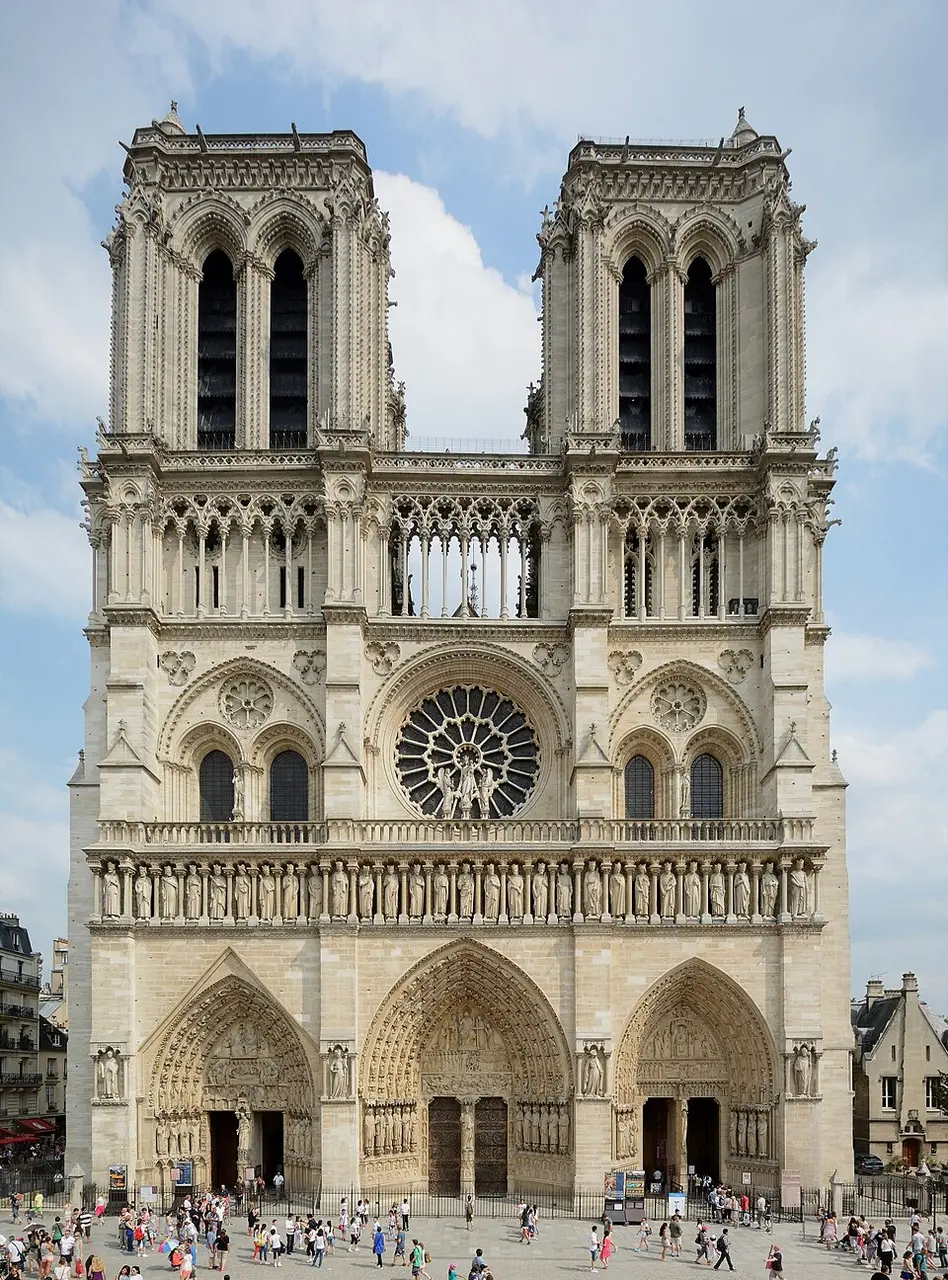
Notre-Dame de Paris is the Roman Catholic cathedral of the Archdiocese of Paris and one of the earliest Gothic churches in France. It stands on the Île de la Cité in the historic heart of the city, and its distinctive silhouette defines the Paris skyline. Construction began in 1163 and stretched across nearly two centuries, until 1345. As one of the country's most important historic monuments, the church has repeatedly been the setting for pivotal moments in history, from the French Revolution to Napoleon's imperial coronation to the devastating fire of 2019.
The building's architecture is the product of several construction phases that reflect a stylistic shift from Romanesque to Gothic. The choir was first built in the Romanesque style and consecrated in 1182, while the later sections increasingly feature Gothic elements such as flying buttresses and large windows. The west façade, completed around 1250, is notable for its balanced interplay of vertical and horizontal elements. It follows the principle of the golden ratio and is flanked by two symmetrical towers, each 69 meters (226 feet) tall. Above the crossing rises a slender wooden spire, rebuilt after the 2019 fire, which reaches a height of 93 meters (305 feet).
The elaborately carved portals of the west façade deserve special attention. The north portal, dedicated to the Virgin Mary, shows the Coronation of the Virgin in its tympanum. The central portal depicts the Last Judgment, with Christ as judge of the world. The south portal, dedicated to St. Anne, incorporates older elements from the 12th century. Above the portals runs the so-called Gallery of Kings, with 28 larger-than-life statues that originally represented the kings of Judah but were often interpreted by the public as French rulers. Because the originals were destroyed during the Revolution, the figures you see today are replacements from the 19th-century restoration, although several heads from the original statues are kept at the Musée national du Moyen Âge.
The cathedral's interior has five aisles and measures just under 130 meters (about 425 feet) in length. The nave reaches a height of 32.5 meters (107 feet) and can hold around 9,000 to 10,000 people. The arcades are supported by round columns with Corinthian capitals, a feature typical of early French Gothic. Over the centuries, the structure of the walls was altered several times to let more light into the space. The original four-story elevation was reworked into a three-story one with large tracery windows. The vaults and the buttress system, considered one of the key innovations of Gothic architecture, contribute to the stability and the light, open atmosphere of the interior.
On the exterior walls and along the rainwater spouts you'll find the famous grotesques, known as the Gallery of Chimeras. These figures originally served an apotropaic purpose, meant to ward off evil spirits. The figures visible today, however, are mostly copies or new creations from the 19th century, strongly influenced by Victor Hugo's novel "The Hunchback of Notre-Dame." The novel stirred broad public interest in the cathedral in the 19th century and led to the extensive restoration under Eugène Viollet-le-Duc, which gave the building its present appearance.
The cathedral's history is closely intertwined with the political history of France. During the French Revolution, the church was desecrated and for a time rededicated as a Temple of Reason, which led to the destruction of many furnishings and sculptures. After it was returned to the Catholic Church, Napoleon I held his grand imperial coronation here in 1804. In the 20th century, the 1905 law on the separation of church and state made the building state property, though it remains available for the church's liturgical use. As part of the Banks of the Seine in Paris, the cathedral has been a UNESCO World Heritage Site since 1991.
The devastating fire on April 15, 2019, caused severe damage to the roof structure and the crossing. The oak roof frame burned almost entirely, and the spire collapsed. Despite this destruction, many art treasures, bells, and relics were saved. The reconstruction followed a restorative approach that aimed for the most faithful reproduction of the original possible. After five years of intensive restoration work, the nave reopened in December 2024, and in September 2025 the towers and roof also opened to the public as viewing platforms.
Today, visitors can once again explore the majestic interior, shaped by a striking play of light through the large windows. The cathedral's organs, including the great organ with 115 stops, are an important part of its cultural heritage. The history of organ music here reaches back to the 12th century, and the cathedral gave its name to the famous Notre-Dame school of music. The bells, especially the great bell "Emmanuel" in the south tower, are also an acoustic landmark that carries across the city.
Among the furnishings are significant works of art, including the choir screen with 14th-century sculptures depicting scenes from the life of Jesus. The treasury, displayed in an annex, includes historic chalices, vestments, and reliquaries, among them the containers for the Crown of Thorns and a nail from the Cross. These treasures testify to the long tradition and religious significance of the site. The crypt beneath the cathedral, which displays archaeological finds from earlier building phases, is also open to visitors and offers a glimpse into the building's prehistory.
Notre-Dame de Paris is not only a place of worship but also a symbol of France's cultural and historical identity. It has witnessed countless historic events, from the coronations and weddings of prominent figures to political assemblies. Its reopening after the fire marks an important moment of reconciliation and renewal. With its unique architecture, rich history, and cultural significance, the cathedral remains an essential destination for pilgrims, tourists, and art lovers from around the world.
A visit to the cathedral lets you experience the development of Gothic architecture in all its splendor. From the early Romanesque elements in the choir to the High Gothic windows of the transept, the building showcases the technical and artistic mastery of the medieval master builders. The combination of religious stillness, historical depth, and architectural beauty makes Notre-Dame a place that invites reflection and wonder. The towers also offer a breathtaking view over the Paris cityscape that underscores the cathedral's central location on the Île de la Cité.
At a glance
- Category
- Museum › Museums (general)
- Rating
- no reviews yet · write a review
- Address
- 6B Rue du Cloître Notre-Dame
75004 Paris, France - District
- Quartier Les Îles
- Phone
- +33143254292
- Website
- www.notredamedeparis.fr
- —
- Coordinates
- 48.85332° N · 2.35028° E
- Data quality
- confidence 0.94
- Identifier
- ID 6f7142da-0f9…
Part of the tour
Paris in One Day: From Notre-Dame to the Eiffel Tower →Location & surroundings
Toggle layersRatings & comments
none yetNear Musee de Notre-Dame de Paris
closest 5 per category · 2 kmSights
Restaurants
Museums
Hotels
More:All museums in Paris (525)
300 places within 2 km loaded.
You need a free account to leave reviews and photos – that keeps comments genuine and lets you edit them later.
The early Gothic Cathédrale de Notre Dame has a 12th-century design but wasn't completed until the 14th. Still it is a good example of the development of the style, though the west or main portal is a bit unusual in its rigidity. Remember that this is an active church, there may even be a mass going on. Meanwhile anybody who's interested in history should check out the crypt. You enter at the opposite end of the square, where you can observe the foundation stones for buildings on the island going back to Roman times.
Source: Wikivoyage, „Axe historique“ · authors per page history · CC BY-SA 4.0