About Le Toit De L'arc De Triomphe
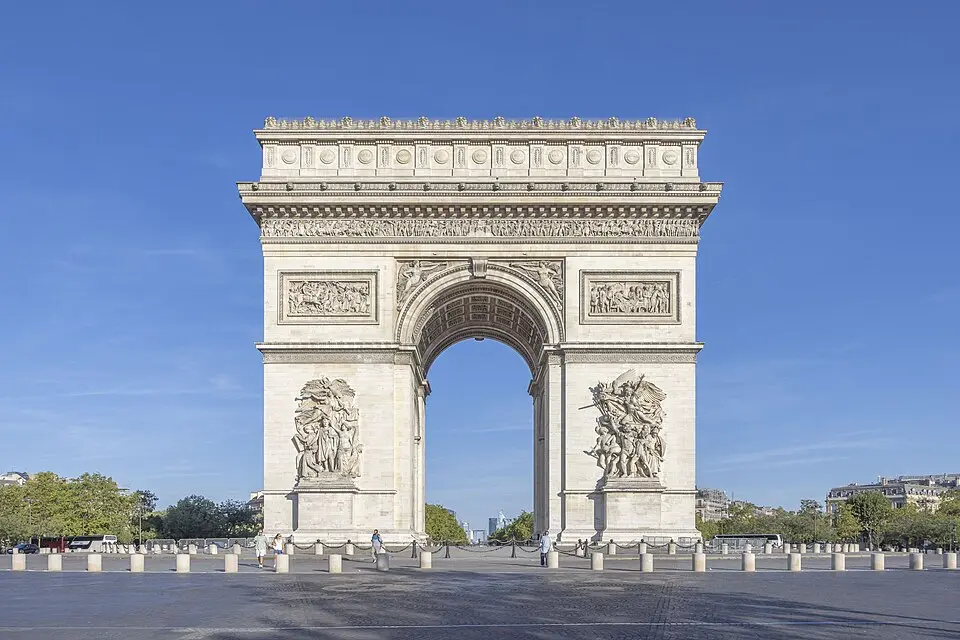
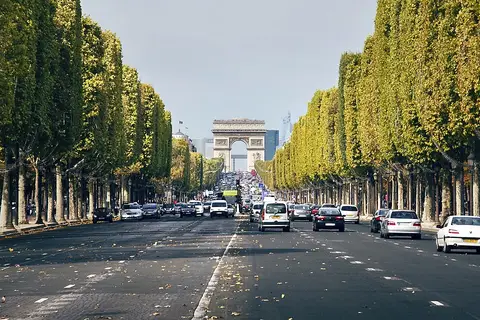
The Arc de Triomphe de l’Étoile is one of the best-known landmarks in Paris, standing at the center of the Place Charles de Gaulle, the western end of the famous Avenue des Champs-Élysées. The monumental structure, designed in the style of ancient Roman architecture, was built between 1806 and 1836. Originally commissioned by Emperor Napoleon I, it was meant to glorify the imperial armies and their victories. Today the monument is managed by the Centre des monuments nationaux and is a focal point for state ceremonies, with parades often starting or ending here. Twelve avenues radiate out from the square like the points of a star, underscoring the site's historical importance as a hub of the Paris cityscape.
Visitors can reach the top of the arch by a staircase leading to an observation deck, which offers sweeping views over the city and the grand boulevards that converge below. The architecture of the arch is rich in sculptural detail that tells the story of France. At its base are four large sculptural groups depicting key moments in history. The most famous is probably La Marseillaise by François Rude on the east façade, which shows the departure of the volunteers in 1792. This work is considered a milestone in the transition from Neoclassicism to Romanticism in sculpture. Other reliefs by artists such as Jean-Pierre Cortot and Antoine Étex celebrate the Triumph of 1810, the Resistance of 1814, and the Peace of 1815. The outer sides of the arch also bear bas-reliefs depicting famous battles of the Napoleonic era.
Beneath the great vault of the arch lies the Tomb of the Unknown Soldier from World War I. The Eternal Flame, the flame of remembrance, burns here; it is tended daily in honor of the fallen soldiers who were never identified. The site is the setting for numerous wreath-laying ceremonies and tributes, culminating in the large military parade on November 11, the anniversary of the 1918 armistice. The inner walls of the arch house a small museum and bear the names of 660 military officers as well as 158 victorious battles, recalling the country's military history.
The Arc de Triomphe has also made headlines in modern times. In 2020, as part of the art project L’Arc de Triomphe, Wrapped, the structure was covered in fabric for a few days, a project originally planned by Christo and Jeanne-Claude and carried out posthumously. The arch has also served as a canvas for political messages, such as the projection of the words Paris est Charlie in 2015 as a sign of solidarity with the victims of an attack. Despite such contemporary events, the Arc de Triomphe remains a deeply symbolic site that shapes France's national identity and fascinates visitors with its imposing presence and rich history.
At a glance
- Category
- Museum › Museums (general)
- Rating
- no reviews yet · write a review
- Address
- —
Paris, France - District
- 8th Arrondissement of Paris
- Phone
- +33143803131
- Website
- —
- —
- Coordinates
- 48.87377° N · 2.29546° E
- Data quality
- confidence 0.80
- Identifier
- ID f8fa8762-e10…
Location & surroundings
Toggle layersRatings & comments
none yetNear Le Toit De L'arc De Triomphe
closest 5 per category · 2 kmSights
Restaurants
Museums
Hotels
More:Museums in 8th Arrondissement of Paris (35)All museums in Paris (525)
300 places within 2 km loaded.
You need a free account to leave reviews and photos – that keeps comments genuine and lets you edit them later.
This iconic triumphal arch forms the focus of the main east-west road axis of Paris, running between the Louvre and the Grande Arche de la Défense in the west. The monument was commissioned by Napoleon in 1806 as a tribute to his victories as Emperor of France - it was finally completed in 1836, long after his death. 50 m (150 ft) high and 45 m wide, the Arc de Triomphe is decorated with battle scenes and martial sculptures that includes La Marseillaise by Rude. The Tomb of the Unknown Soldier was placed beneath the arch in 1920, where an eternal flame burns in tribute to the French dead of both World Wars. The arch is surrounded by a large roundabout, aptly known as l'Etoile - 'the star' - with 12 thoroughfares leading off from it. Visitors can purchase a ticket to climb to the top of the arch, from where magnificent views spread out over western Paris. Admission to a small museum devoted to the history and meaning of the monument is included. The central island and the arch are accessed by an underground passage. Do not attempt to negotiate by foot the busy multi-lane road that rings the Arc de Triomphe, which many Parisian drivers seem to consider their own personal speedway.
Source: Wikivoyage, „Axe historique“ · authors per page history · CC BY-SA 4.0