About Jeu de Paume
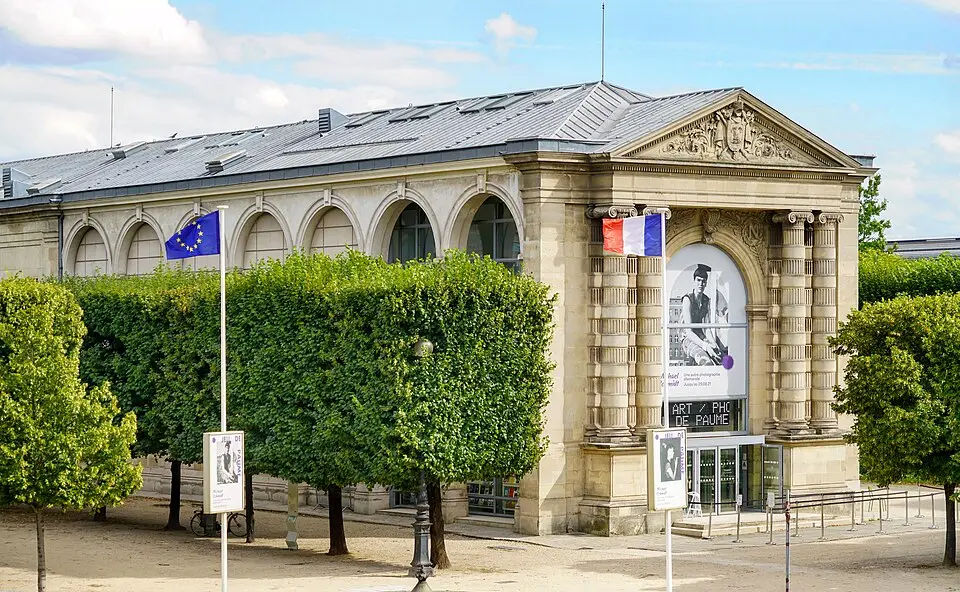
The Galerie nationale du Jeu de Paume is a museum of contemporary art located in the northwest corner of the Tuileries Garden in Paris, on the Place de la Concorde. The building was constructed in 1861 under Napoléon III and originally served as an indoor court for the ball game jeu de paume, a forerunner of tennis. Since 1909, its rooms have been devoted to art. The history of the site also includes dark chapters: during World War II, the German occupiers used the building as a depot for looted art, including modern works they branded "degenerate" and objects seized from Jewish owners. The curator Rose Valland documented these crimes, which later helped in uncovering and investigating them. After the war, the museum initially showed Impressionist works before it was renovated and redesigned in the 1990s under the direction of Antoine Stinco. Today the gallery is devoted exclusively to contemporary photography and video art. Across nine halls on three levels, with ceilings about 4.5 meters (roughly 15 feet) high, you can see current exhibitions by international artists.
At a glance
- Category
- Museum › Art museums
- Rating
- no reviews yet · write a review
- Address
- 1 Place de la Concorde
75008 Paris, France - District
- 1st Arrondissement
- Phone
- +33147031236
- Website
- www.jeudepaume.org
- accueil@jeudepaume.org
- Coordinates
- 48.86594° N · 2.32397° E
- Data quality
- confidence 1.00
- Identifier
- ID 6165c039-e9f…
Location & surroundings
Toggle layersRatings & comments
none yetNear Jeu de Paume
closest 5 per category · 2 kmSights
Restaurants
Museums
Hotels
More:Art museums in Paris (119)Museums in 1st Arrondissement (59)All museums in Paris (525)
300 places within 2 km loaded.
You need a free account to leave reviews and photos – that keeps comments genuine and lets you edit them later.
Built during the First Empire, in imitation of the Orangerie , this small building is used by the Galerie Nationale to mount shows dedicated to lesser known, but nonetheless interesting, artists or (sometimes) the lesser known works of the Great Masters. This museum once housed many of the Impressionist painters that are now to be found in the Musée d'Orsay on the other side of the River Seine.
Source: Wikivoyage, „Axe historique“ · authors per page history · CC BY-SA 4.0