
Wallonia: The Ardennes, the Meuse Valley, and Industrial Heritage
Travel guide · editorialSouth of the language border, Belgium turns French-speaking, hilly, and heavily forested: Wallonia covers more than half of the country's land area but only about a third of its population. A vacation in Wallonia takes you to the Ardennes with its castles and kayaking rivers, to cities with mighty citadels on the Meuse, and to an industrial landscape that was once among the richest in Europe. In the east, you'll also find the German-speaking Community around Eupen.
Liège and Namur on the Meuse
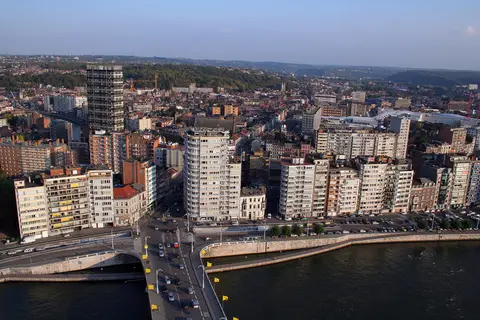
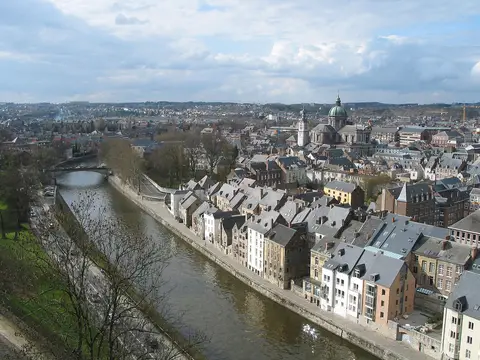
Liège is a lively, slightly rough-edged city with a great history. For centuries it was ruled by prince-bishops, whose palace now houses the law courts. The 374 steps of the Montagne de Bueren staircase lead up to the former citadel, and Santiago Calatrava's Liège-Guillemins station is an architectural event in steel and glass. On Sundays, La Batte, one of Belgium's oldest markets, stretches for miles along the banks of the Meuse. Upstream lies Namur, the capital of Wallonia, at the confluence of the Meuse and the Sambre. The citadel on the rock above the city is one of the largest in Europe; a cable car takes you up. In the old town, cafés on squares such as the Place d'Armes invite you to take a break.
Hainaut: Mons, Tournai, and Charleroi
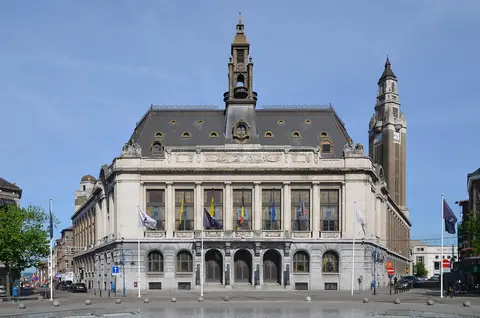
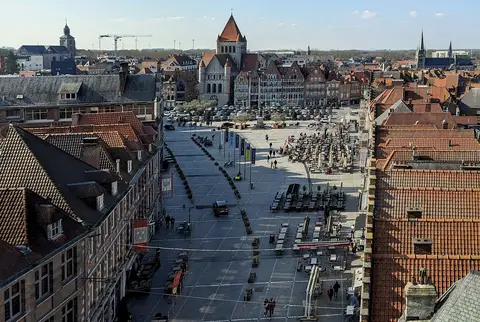
The province of Hainaut lies in the west. Mons was a European Capital of Culture in 2015. Its belfry is a UNESCO World Heritage Site, as are the Doudou festival in early summer, when Saint George battles the dragon, and the Neolithic flint mines of Spiennes. Tournai, one of Belgium's oldest cities, has a cathedral with five towers and the oldest belfry in the country. Charleroi, the largest city in Wallonia, was a center of coal and steel; today, tours show you the "Pays Noir" with its slag heaps and blast furnaces, and the former Bois du Cazier mine commemorates the 1956 mining disaster that killed 262 miners, many of them Italian. Near La Louvière, historic boat lifts on the Canal du Centre raise ships by up to 17 meters.
Sights in Wallonia: The Ardennes
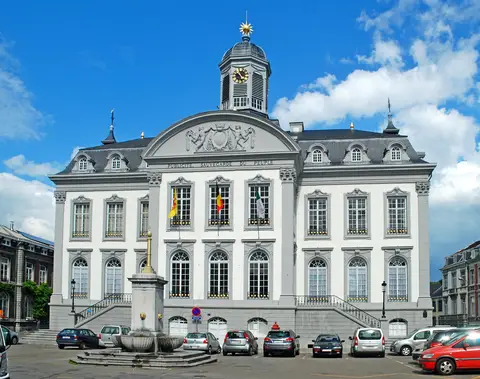
The Ardennes are the green heart of the region and one of the most popular Wallonia destinations. Rivers such as the Ourthe, Lesse, and Semois wind through wooded valleys, lined with castles like Bouillon, the ancestral seat of the crusader Godfrey of Bouillon. Durbuy calls itself the smallest city in the world and, with its stone houses, seems frozen in time. Dinant, with its collegiate church beneath a rock face, is the hometown of saxophone inventor Adolphe Sax, and in Han-sur-Lesse an old tram takes you to a large stalactite cave. To the east lie the High Fens, a raised bog with boardwalks, and the spa town of Spa, which gave its name to the thermal resort. The Grand Prix of Belgium is held at the nearby Spa-Francorchamps racetrack. Verviers, once a center of the wool industry, is the starting point for the Fens. In Eupen and the villages of the East Cantons, people speak German, and many hiking trails cross the border into the Eifel.
Culture, Food, and Drink
The cuisine is French-influenced and hearty. Ardennes ham, game, trout, and boulets à la liégeoise, meatballs in a sweet-and-sour syrup sauce, appear on menus, along with Liège waffles topped with pearl sugar. Wallonia is Trappist country: the abbeys of Chimay, Orval, and Rochefort brew their famous beers here, and numerous small breweries carry on the tradition of saison beers. During the carnival parades in Binche, the Gilles wear wax masks and throw oranges, a UNESCO cultural heritage tradition. In Liège, a boisterous festival is held on August 15 in the Outremeuse district, with puppets, music, and péket, the regional juniper spirit, all part of the fun.
Best Time to Visit and Getting There
The best time for hiking and kayaking in the Ardennes is May through October, and in fall the forests turn especially beautiful colors. In winter, there can be snow in the High Fens. From Germany, Liège is reachable via Aachen in less than an hour, and ICE and Eurostar trains stop at Liège-Guillemins. Budget airlines land at Charleroi (CRL); Liège (LGG) is primarily a cargo airport. A car is handy for the rural areas.