Discovering Liège: Stairs, Sunday Market, and Pékèt
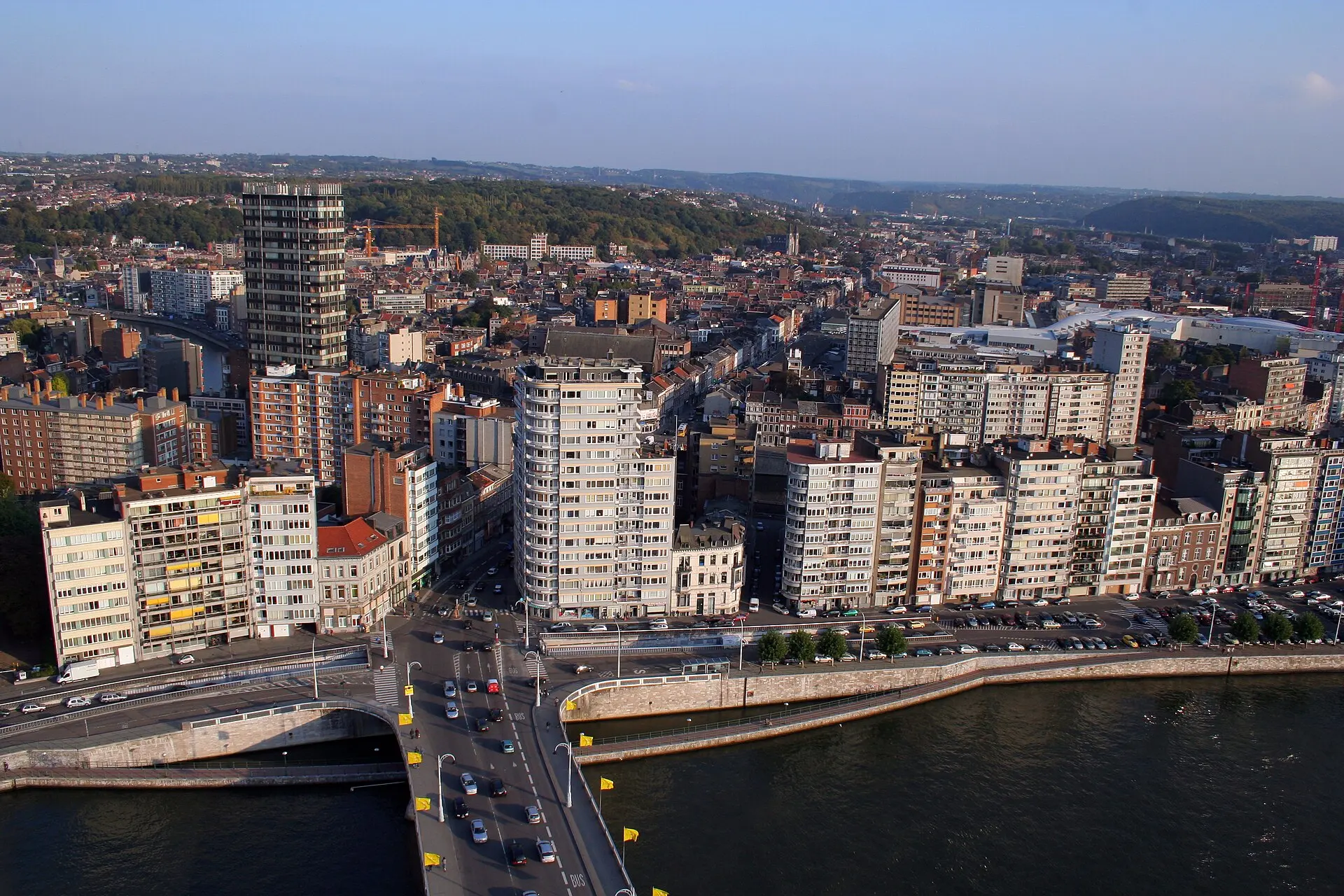
Travel guide · editorialIn Liège, 374 steps run straight up the hillside, and when you reach the top, you look out over a sea of rooftops along the Meuse. A city break in Liège, the largest city in Wallonia, reveals a lively, quirky city with a spectacular train station, one of the biggest weekly markets in Belgium, and a cuisine that wants above all to leave you full and happy.
The City of the Prince-Bishops
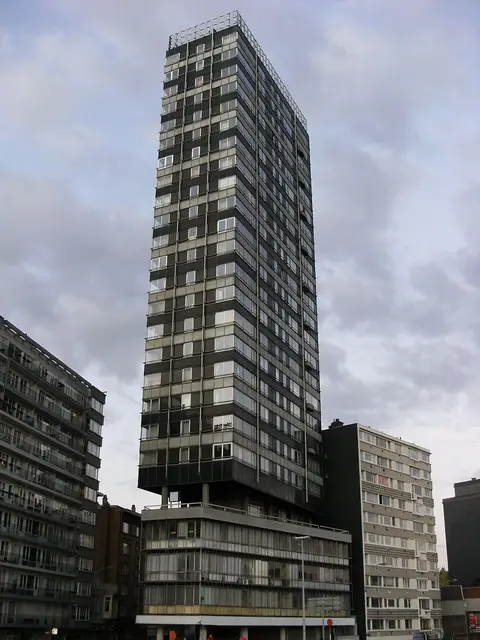
For more than eight hundred years, Liège was the capital of a state of its own, the Prince-Bishopric of Liège, which lasted until 1795. The Palace of the Prince-Bishops on Place Saint-Lambert recalls that era, a massive building with an inner courtyard full of ornate columns. In the 19th century, coal and steel turned the region into one of the first industrial regions on the continent, and the entrepreneur John Cockerill built huge works in the suburb of Seraing. The decline of heavy industry hit the city hard, but Liège has reinvented itself with culture, a university, and new architecture. Georges Simenon, the creator of Inspector Maigret, was born here.
Sights in Liège
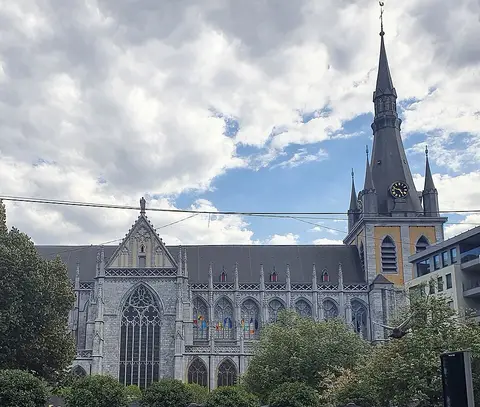
The Montagne de Bueren, a 19th-century staircase with 374 steps, leads up to the Citadel and to the Coteaux, green hillsides with gardens and viewpoints. The Grand Curtius, a museum in a magnificent Renaissance house on the quay, brings together archaeology, weapons, glass, and decorative arts. St. Paul's Cathedral holds a rich church treasury, and the Church of Saint-Barthélemy preserves a Romanesque bronze baptismal font, a 12th-century masterpiece. Liège-Guillemins station by Santiago Calatrava, with its white vault of steel and glass, is a sight in its own right, and across from it, the La Boverie museum in the park by the river shows art from Picasso to Magritte.
La Batte, Le Carré, and Outremeuse
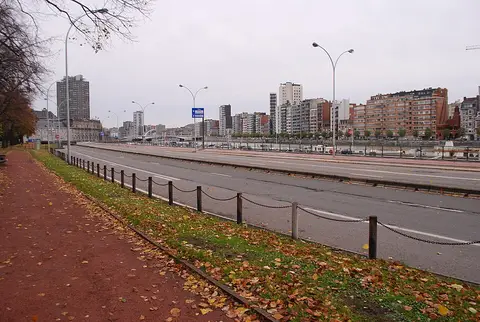
Every Sunday morning, the La Batte market stretches for about two kilometers along the banks of the Meuse, with fruit, cheese, clothing, flowers, and live animals, a tradition dating back to the 16th century. Le Carré in the center is the nightlife district, with bars, pubs, and restaurants that stay packed until late at night. Across the river lies Outremeuse, the working-class neighborhood with the puppet figure Tchantchès; on August 15, the city's biggest festival is celebrated there with a procession, music, and plenty of pékèt. Since 2025, a tram has been running through the city.
Eating in Liège
The Liège waffle is dense, caramelized, and baked with pearl sugar; you eat it warm out of a paper bag. Boulets à la liégeoise are meatballs in a sweet-and-sour sauce made from sirop de Liège, a dark apple and pear syrup, served with fries. The salade liégeoise combines green beans, potatoes, and bacon. To drink, you have pékèt, a juniper spirit served in many flavors, or a beer from one of the region's breweries.
Getting There and Best Time to Visit
High-speed trains connect Liège with Brussels, Cologne, and Aachen; Liège Airport mainly handles cargo traffic. The best time to visit is from May to September, especially on August 15. Day trips take you to the Ardennes, to Spa with its thermal springs and the Spa-Francorchamps racetrack, or to nearby Maastricht.