About Casa Amatller
Casa Amatller is a historic residential and commercial building on Barcelona's famous Passeig de Gràcia, originally built in 1875. The house owes its cultural and historical significance to an elaborate remodel carried out between 1898 and 1900 in the Catalan Modernisme style by the architect Josep Puig i Cadafalch. The building sits right next door to Antoni Gaudí's Casa Batlló and, together with several other neighboring houses, forms the well-known ensemble known as the "Block of Discord." The renovation was commissioned by Antoni Amatller i Costa, a wealthy chocolate manufacturer who bought the plain apartment building and had it transformed into a luxurious residence, expressing the growing self-confidence of Catalonia's middle class at the time.
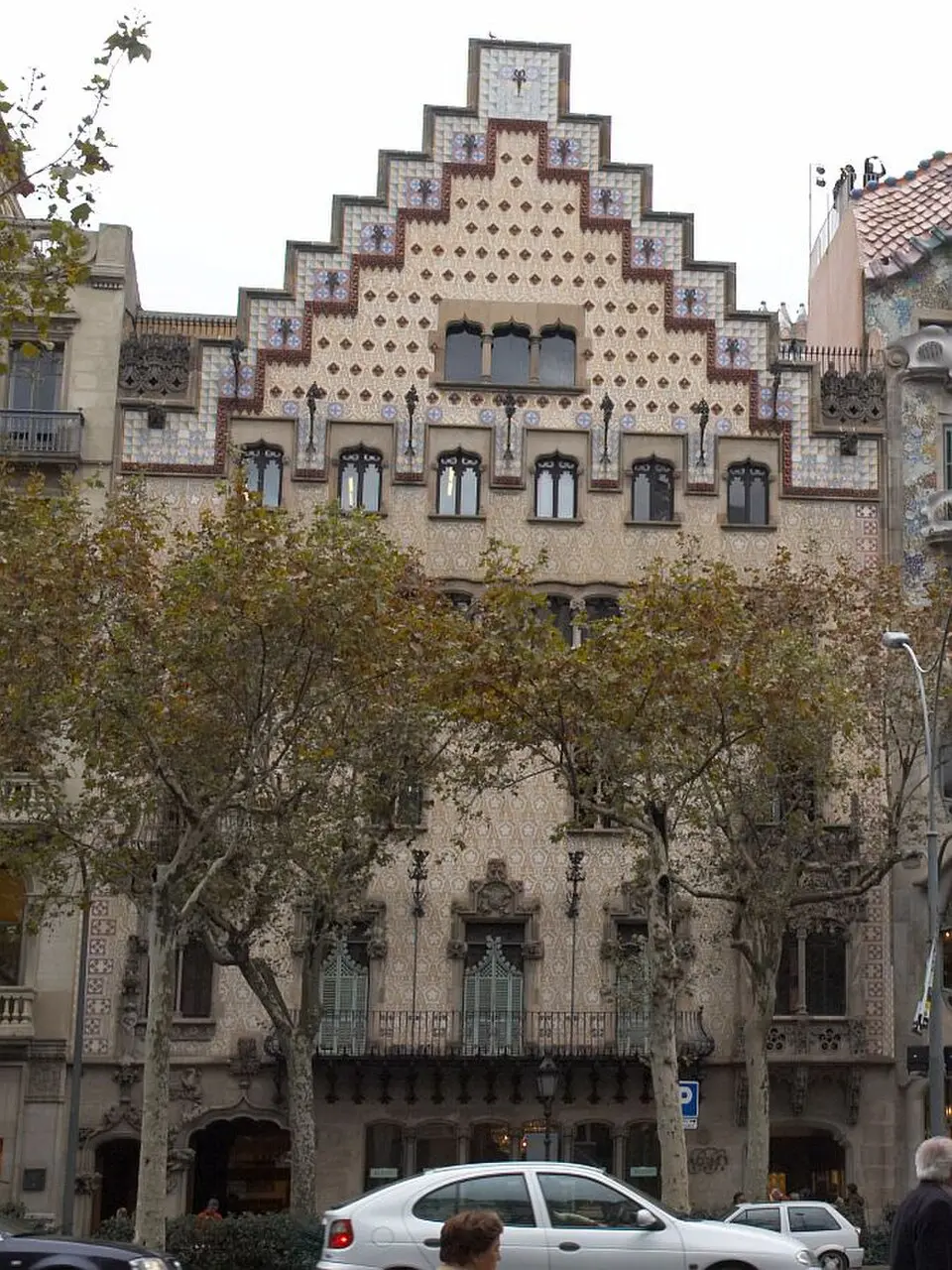
The facade's architecture is marked by a horizontal asymmetry and a three-part structure, with each section rising to a different height. The ground floor is made of austere-looking, undecorated Montjuïc stone, brightened by a sculptural group depicting the dragon slayer Sant Jordi. The residential floors above are framed by a square facade decorated with ocher sgraffito that deliberately recalls a bar of chocolate. This symmetry is broken up by a large neo-Gothic bay window on the piano nobile and by smaller balconies. Animal sculptures at the windows allude to the former owner's hobbies, while the top floor has a Flemish-style gable adorned with tiles that hints at the initial of the family name.
Inside, you'll find an impressive blend of Modernista and Andalusian influences. The spacious ground-floor foyer was originally designed so that the owner could drive his car straight into a private garage equipped with a rotating floor plate. From here, an imposing staircase leads through a light well to the piano nobile. The rooms of this main apartment feature elaborate ceiling decoration, historic chandeliers, wallpaper, and wood wall paneling. The technical fittings of the era are also remarkable: the lamps were connected to both electricity and gas so that they could be switched over instantly during power outages. The original furnishings have been largely preserved, as the owner's daughter made hardly any changes after his death and lived in the house until her own passing.
Today, Casa Amatller is a lively place for culture and discovery. Since 2015, the piano nobile has been open to visitors as a museum apartment restored to its 1900 appearance. Here you can experience the historic atmosphere and admire the carefully restored rooms with their artful details. On the ground floor, a café and museum shop on the left sell the Amatller family's traditional chocolate, while on the right you'll find the flagship store of the venerable jeweler Bagués-Masriera. The upper floors house the foundation dedicated to preserving the building and researching Hispanic art. The building is a protected landmark and is considered an important testament to the era of Catalan Modernisme.
At a glance
- Category
- Sight › Historic sites
- Rating
- no reviews yet · write a review
- Address
- Pg. de Gràcia, 41
08007 Barcelona, Spain - District
- l'Eixample
- Phone
- +34934617460
- Website
- www.amatller.org
- arxiu.mas@amatller.org
- Coordinates
- 41.39160° N · 2.16508° E
- Data quality
- confidence 1.00
- Identifier
- ID 744a0741-3aa…
Part of the tour
Barcelona in a Day: Gaudí, the Gothic Quarter and El Born →Location & surroundings
Toggle layersFAQ about Casa Amatller
quick answersWhat is Casa Amatller in Barcelona?
Casa Amatller is a historic residential and commercial building on Passeig de Gràcia in Barcelona, regarded as a work of Catalan Modernisme. The building was originally constructed in 1875 and remodeled between 1898 and 1900 by the architect Josep Puig i Cadafalch. The commission came from the wealthy chocolate maker Antoni Amatller i Costa, who had the plain apartment building transformed into a luxurious residence.
What can you see inside Casa Amatller?
Since 2015, you can tour the piano nobile of Casa Amatller in Barcelona as a museum apartment that has been restored to its 1900 condition. The rooms feature elaborate ceiling decoration, historic chandeliers, wallpaper, and wood wall paneling, and much of the original furniture has been preserved. Look for the lamps with both electric and gas connections, which allowed an instant switch during power outages. The ground floor also houses a café and a museum shop.
What makes the facade of Casa Amatller special?
The facade of Casa Amatller in Barcelona is asymmetrical and divided into three sections of differing heights. The residential floors are decorated with ocher sgraffito that deliberately recalls a piece of chocolate, and a large neo-Gothic oriel window breaks the symmetry. The ground floor, made of Montjuïc stone, features a sculpture group of the dragon slayer Saint George (Sant Jordi), and the building is crowned by a Flemish-style gable decorated with tiles.
What can you see around Casa Amatller?
Casa Amatller is part of the Illa de la Discòrdia, the "Block of Discord," in Barcelona's Eixample district. Right next door is Antoni Gaudí's Casa Batlló, about 31 meters away, and nearby travelguide195 also lists Casa Bonet, Casa Mulleras, and Casa Lleó Morera (about 60 meters). If you like museums, you'll find the Museu del Perfum about 23 meters away and the Museu Tàpies about 107 meters away.
Where is Casa Amatller, and are there restaurants nearby?
Casa Amatller is located at Pg. de Gràcia, 41 in the Eixample district of Barcelona. travelguide195 lists around 382 restaurants within 500 meters. Casa Amatller is also part of the tour "Barcelona Compact: Gaudí, Gothic, and Born in One Day."
Ratings & comments
none yetNear Casa Amatller
closest 5 per category · 2 kmMuseums
Hotels
More:Historic sites in Barcelona (577)Sights in l'Eixample (165)All sights in Barcelona (680)
300 places within 2 km loaded.
Don't miss in Barcelona
All sights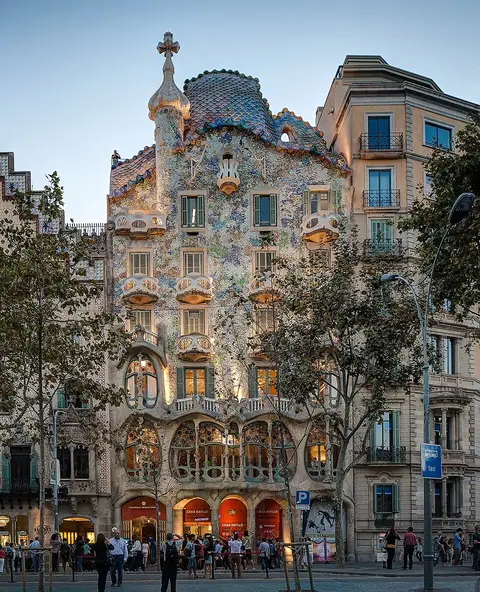 Historic sites01
Casa Batlló
Pg. de Gràcia, 43 · Barcelona● Website● Phone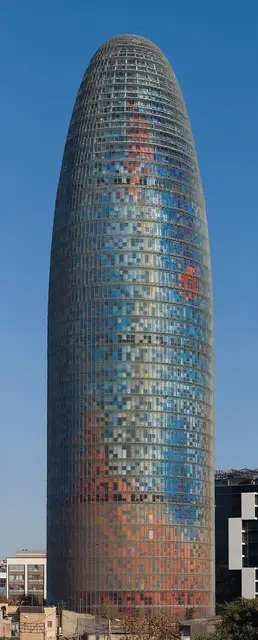 Historic sites02
Torre Glòries
Av. Diagonal, 211 · Barcelona● Website● Phone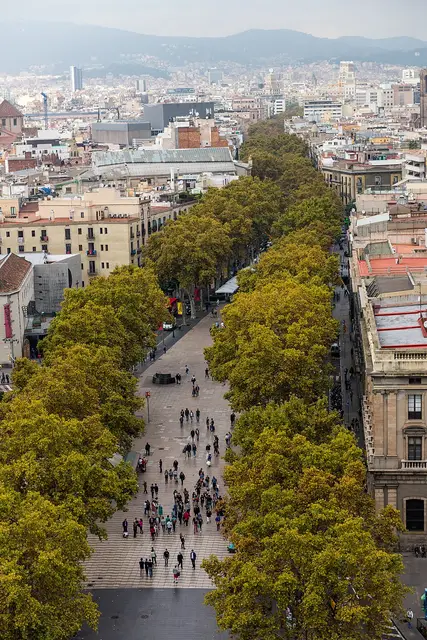 Historic sites03
Las ramblas
Barcelona (Sants · Barcelona● Website○ Phone Historic sites04
You need a free account to leave reviews and photos – that keeps comments genuine and lets you edit them later.
Designed by Puig i Cadafalch, the building is a fine work of Modernism. Check the detailed photos and explanation of facade sculptures. It also has a shop that sells fine chocolate (the Amatller family made its money out of cocoa).
Source: Wikivoyage, „Barcelona/Eixample“ · authors per page history · CC BY-SA 4.0 · as of 3/19/2024