About Serbias nasjonalmuseum
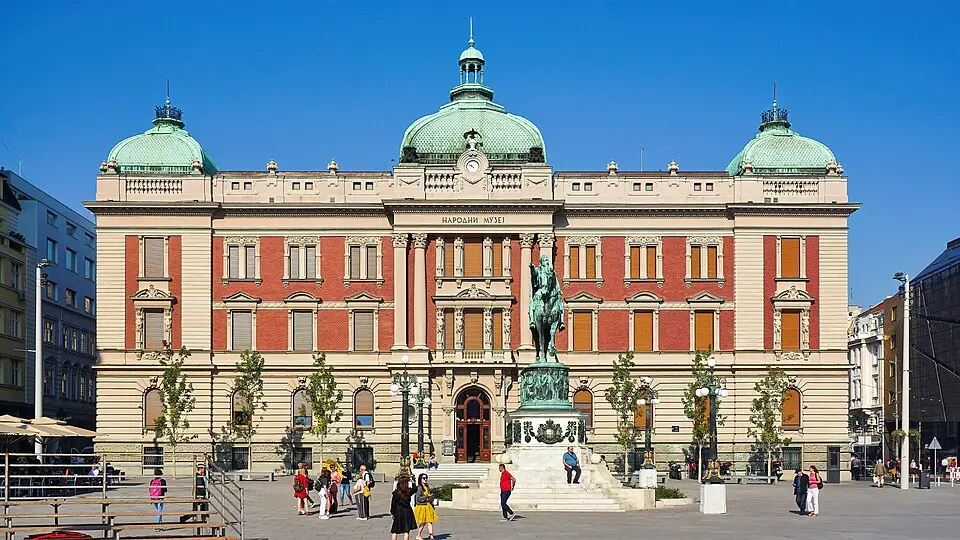
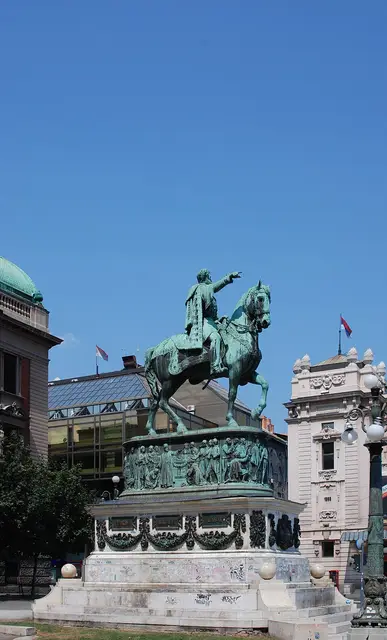
The National Museum of Serbia in Belgrade is the most important cultural institution in both the city and the country. It houses an extensive collection of more than 400,000 archaeological and art-historical objects, including numerous outstanding masterpieces. The museum was founded in 1844 and changed locations several times over its history before finding its permanent home on Trg republike (Republic Square). The site is historically significant, as the Stambol Gate (Stambol kapija) once stood here. After being closed for fifteen years and undergoing a thorough renovation, the museum reopened on June 28, 2018. Since then, it has presented itself as a central place for preserving and sharing Serbia's cultural heritage.
The present-day museum building has a turbulent past. It was originally built between 1902 and 1903 as the headquarters of the Mortgage Bank. The architects Andra Stevanović and Nikola Nestorović designed the two-story building in the Neo-Renaissance style with Neo-Baroque elements. Particularly striking are the domes above the central and side projections as well as the monumental staircase. During World War II, the building was bombed and the central section with the dome was destroyed. After the war it served various purposes until the National Museum moved in in 1948. In the 1960s, the building underwent extensive restoration and was adapted to the needs of a museum. The original architectural features were preserved, while new exhibition rooms were created inside. Today the building is protected as a cultural monument of great importance to the Republic of Serbia.
In the collections, you can gain a deep insight into the history of the region. The archaeological department displays significant finds from the prehistoric Starčevo, Vinča, and Lepenski Vir cultures, with the sculptures from Lepenski Vir attracting particular attention. You can also see the mummy of an Egyptian priest from the Ptolemaic era, as well as Celtic weapons and metalwork. The Greek collection includes ceramics and gold masks, among other items, while the Roman department mainly presents finds from ancient cities such as Sirmium and Singidunum. Of particular value are late antique artifacts, including the famous Belgrade Cameo and a bronze head of Constantine the Great. The interior of the stately building, decorated by well-known artists of the period, underscores the solemn character of the place.
At a glance
- Category
- Museum › Art museums
- Rating
- no reviews yet · write a review
- Address
- —
Belgrade, Serbia - Phone
- —
- Website
- www.istoria-transilvaniei.ro
- —
- Coordinates
- 44.81670° N · 20.45940° E
- Data quality
- confidence 0.79
- Identifier
- ID a338551d-670…
Location & surroundings
Toggle layersRatings & comments
none yetNear Serbias nasjonalmuseum
closest 5 per category · 2 kmSights
Restaurants
Museums
Hotels
More:All museums in Belgrade (87)
277 places within 2 km loaded.
You need a free account to leave reviews and photos – that keeps comments genuine and lets you edit them later.