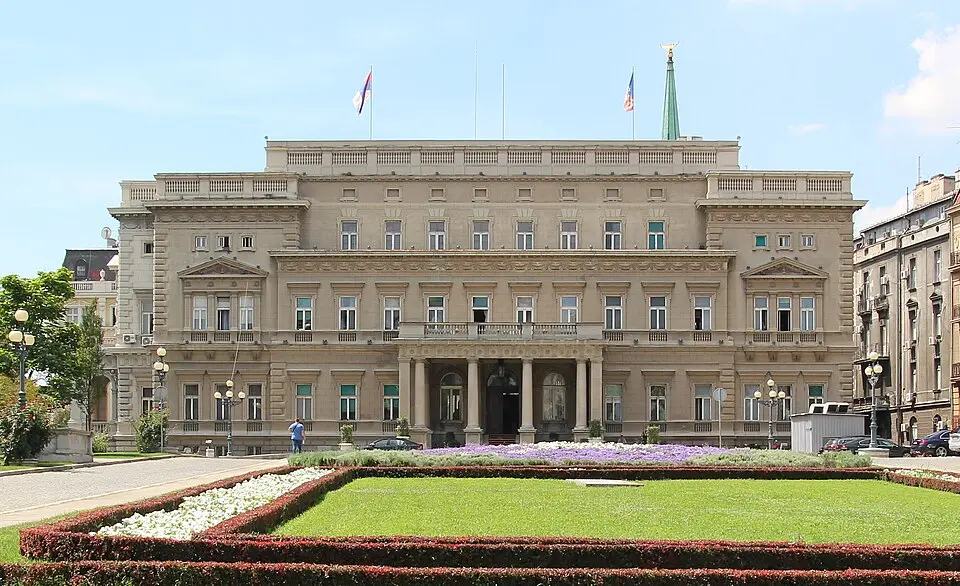
About Stari dvor
The Old Palace, known in Serbian as Stari dvor, is a historic building in Belgrade on Dragoslava Jovanovića Street, across from the New Palace. Originally conceived as the stately residence of the Yugoslav kings, it has housed the Belgrade City Assembly since 1961. The history of the site goes back to the 1840s, when the influential politician Stojan Simić acquired the land, drained the marshes, and had a house built that was later converted into the residence of Prince Aleksandar Karađorđević. The present-day Old Palace itself was built between 1881 and 1884 to plans by the architect Aleksandar Bugarski. It was built on the orders of King Milan Obrenović on the site of an earlier small palace and initially served as a guest residence and for diplomatic receptions, before becoming the official residence of the Karađorđević dynasty after the change of dynasty in 1903.
Architecturally, the building embodies the academic style concepts of the late 19th century, with a harmonious blend of classical, Baroque, and Renaissance elements. The symmetrical facades are richly decorated with Ionic and Corinthian columns, caryatids, and decorative sculpture. Especially striking are the corner design, which recalls a tower topped with a dome and a double-headed eagle, and the coat of arms of the Kingdom of Serbia in the pediment, which is considered one of the oldest on a public building. Inside, the palace impresses with its sumptuous furnishings, which originally came from Viennese art workshops. The centerpiece is a central winter garden with a glass roof and gilded decorations, from which the various salons, such as the ballroom, the library, and the palace chapel, can be reached.
The building has lived through a turbulent history that has left deep marks. After damage from bombardment in World War I, it was restored in the early 1920s and furnished with new furniture from Lyon and Vienna. The palace suffered more severe destruction during the bombing of Belgrade in April 1941. In the postwar period it was extensively remodeled, with the original royal symbols, such as the small domes with crowns, removed and replaced by new state emblems. Today the Old Palace is a protected cultural monument and, together with the New Palace, an important testament to the palatial architecture of Serbia under the Obrenović and Karađorđević dynasties. Visitors can experience the imposing exterior and the historical significance of the building as the seat of the city administration.
At a glance
- Category
- Sight › Historic sites
- Rating
- no reviews yet · write a review
- Address
- Ulica Kralja Milana
11000 Belgrade, Serbia - Phone
- —
- Website
- tr.wikipedia.org
- —
- Coordinates
- 44.81074° N · 20.46253° E
- Data quality
- confidence 0.84
- Identifier
- ID 5757779b-000…
Part of the tour
Getting to Know Belgrade: Old Town, Fortress and Tesla →Location & surroundings
Toggle layersFAQ about Stari dvor
quick answersWhat is Stari dvor in Belgrade?
Stari dvor, or the Old Palace in English, is a historic building in Belgrade that was originally designed as a stately residence for the Yugoslav kings. Since 1961 it has been the seat of the Belgrade City Assembly. The Old Palace stands across from the New Palace and is now a protected cultural monument that, together with its neighbor, bears witness to the palatial architecture of Serbia under the Obrenović and Karađorđević dynasties.
When and by whom was the Old Palace (Stari dvor) in Belgrade built?
The present-day Old Palace in Belgrade was built between 1881 and 1884 to designs by the architect Aleksandar Bugarski. It was commissioned by King Milan Obrenović and constructed on the site of an earlier small palace. Stari dvor initially served as a guest residence and for diplomatic receptions; after the change of dynasty in 1903, it became the official residence of the Karađorđević dynasty. The history of the site goes back to the 1840s, when the politician Stojan Simić acquired the land and had the marshes drained.
What is special about the architecture of Stari dvor?
Stari dvor in Belgrade combines classical, Baroque, and Renaissance elements in the academic style of the late 19th century. The symmetrical facades feature Ionic and Corinthian columns, caryatids, and decorative sculpture, and the tower-like corner with its dome and double-headed eagle is especially striking. The coat of arms of the Kingdom of Serbia sits in the pediment and is considered one of the oldest on a public building. Inside, the centerpiece is a conservatory with a glass roof and gilded decorations, from which you can reach salons such as the ballroom, the library, and the palace chapel.
What damage did the Old Palace in Belgrade suffer in the World Wars?
The Old Palace in Belgrade was damaged by bombing in both World War I and World War II. After World War I, it was restored in the early 1920s and furnished with new furniture from Lyon and Vienna. More severe destruction followed during the bombing of Belgrade in April 1941. In the postwar period, Stari dvor was extensively remodeled, and royal symbols such as the small domes with crowns were removed and replaced with state emblems.
What can you see around Stari dvor in Belgrade?
Several sights are within walking distance of Stari dvor in Belgrade. travelguide195 lists, among others, the Vuk Foundation (about 48 m), the monument to Tsar Nicholas II (about 76 m), the Krsmanović House on Terazije (about 142 m), the Ivo Andrić Museum (about 170 m), the fountain on Nikola Pašić Square (about 189 m), and the Historical Museum of Serbia (about 214 m). Within a 500 m radius, travelguide195 lists around 105 restaurants, and Stari dvor is part of the tour "Getting to Know Belgrade: Old Town, Fortress, and Tesla."
Ratings & comments
none yetNear Stari dvor
closest 5 per category · 2 kmSights
Museums
Hotels
More:Historic sites in Belgrade (368)All sights in Belgrade (414)
278 places within 2 km loaded.
Don't miss in Belgrade
All sights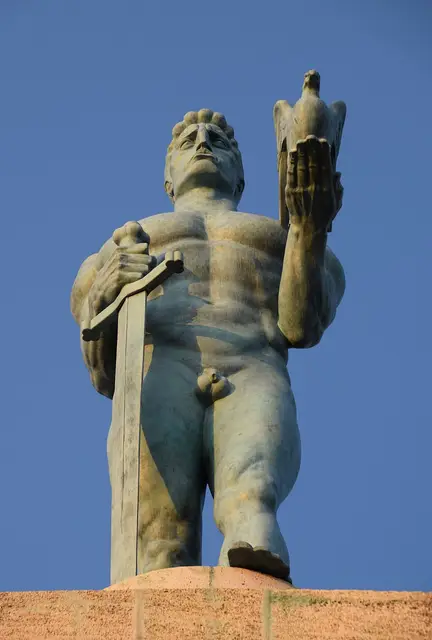 Monuments01
Pobednik
Kalemegdan bb · Belgrade● Website○ Phone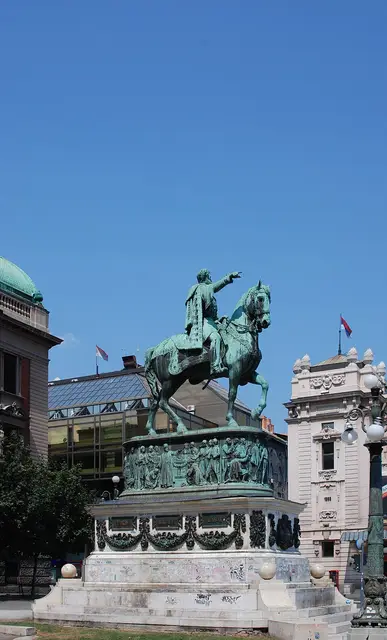 Monuments02
Prince Mihailo Monument
Trg republike · Belgrade● Website○ Phone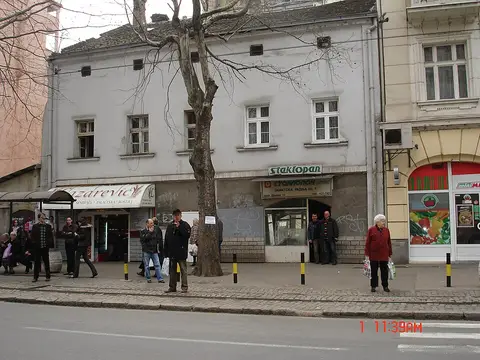 Historic sites03
House at 10 Cara Dušana Street
Cara Dušana 10 · Belgrade○ Website● Phone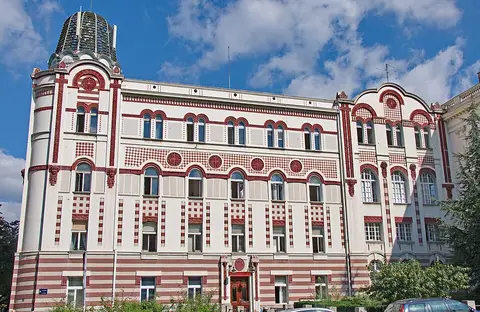 Monuments04
You need a free account to leave reviews and photos – that keeps comments genuine and lets you edit them later.
Built in 1884, the "Old palace" was used as the official residence of the Kings of Serbia (and later Yugoslavia). Rebuilt after World War II, it now houses the offices of the Mayor of Belgrade.
Source: Wikivoyage, „Monarchies“ · authors per page history · CC BY-SA 4.0