About Cytadela
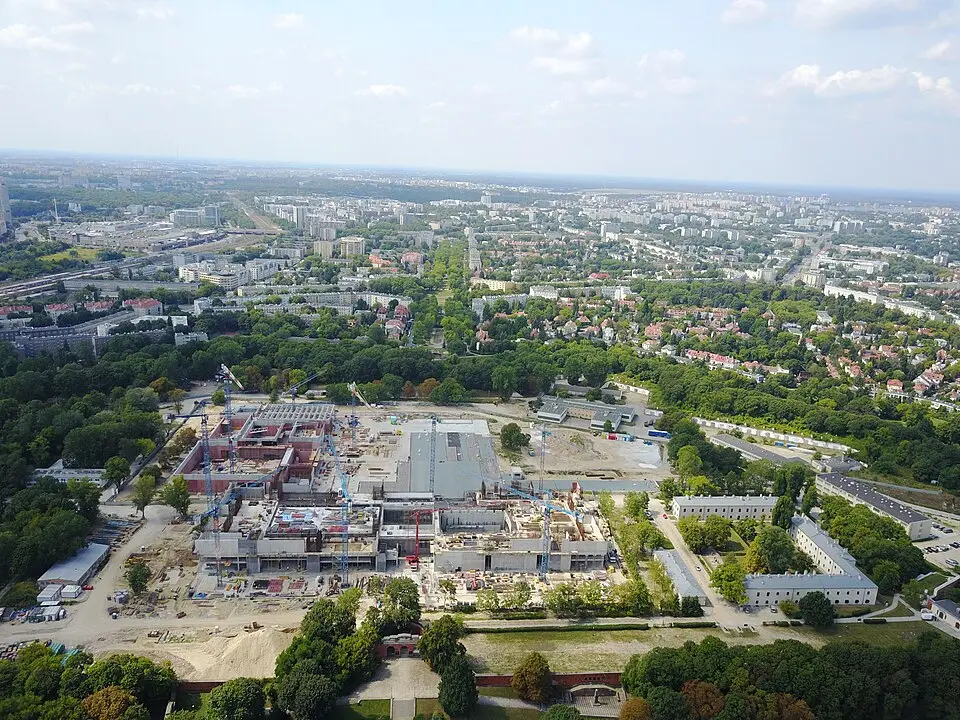
The Warsaw Citadel is an imposing 19th-century fortress perched on the elevated embankment on the west bank of the Vistula. It was built on the orders of Russian Tsar Nicholas I after the suppression of the November Uprising of 1830/31, both to crush the Polish independence movement and to serve as a bulwark for the occupying power. Designed by military engineer Ivan Dehn, the fortress is based on the plans for the Citadel of Antwerp and takes the form of a brick pentagon. Covering 36 hectares (about 89 acres) and with a direct line of fire onto Warsaw's Old Town and New Town, the Citadel was not only a defense against Western powers but, above all, a symbol of intimidation. Over the course of its history, it housed Russian troops, served as a prison for political detainees, and was used as an execution site, which gives it a somber historical character.
Today you can explore the fortress's well-preserved architecture, which ranks among the best-preserved structures of its kind in Europe. The complex includes three bastions on the western flank, half-bastions to the north and south, several caponiers, and a dry moat with a scarp wall, all of which survive in good condition. A central highlight is Pavilion X, now a museum that tells the story of the political prisoners. The so-called Execution Gate, originally an entrance to an artillery firing position, is also an important memorial site. The fortress was once armed with hundreds of cannons capable of bombarding the entire city, underscoring the Citadel's military importance.
Today the Citadel is a place of remembrance and learning. Alongside historic buildings such as Pavilion X and the Execution Gate, new museum facilities are being built. The Polish Army Museum in Warsaw is planning a modern new building here that will present thousands of exhibits using multimedia displays, and the Museum of the History of Poland is also constructing an exhibition building on the site. These projects are meant to make the rich and painful history of the place, shaped by Russian occupation, World War II, and liberation in 1945, accessible to a broad audience. The Citadel remains a key site for understanding the struggles for Polish sovereignty in the 19th and 20th centuries.
At a glance
- Category
- Sight › Historic sites
- Rating
- no reviews yet · write a review
- Address
- Dymińska 13
01-783 Warsaw, Poland - Phone
- —
- Website
- muzeum-niepodleglosci.pl
- —
- Coordinates
- 52.26440° N · 20.99982° E
- Data quality
- confidence 0.77
- Identifier
- ID 30c1ff6a-c1f…
Location & surroundings
Toggle layersRatings & comments
none yetNear Cytadela
closest 5 per category · 2 kmSights
Restaurants
Museums
Hotels
More:Historic sites in Warsaw (704)All sights in Warsaw (792)
215 places within 2 km loaded.
You need a free account to leave reviews and photos – that keeps comments genuine and lets you edit them later.