About Krypty Wawelskie
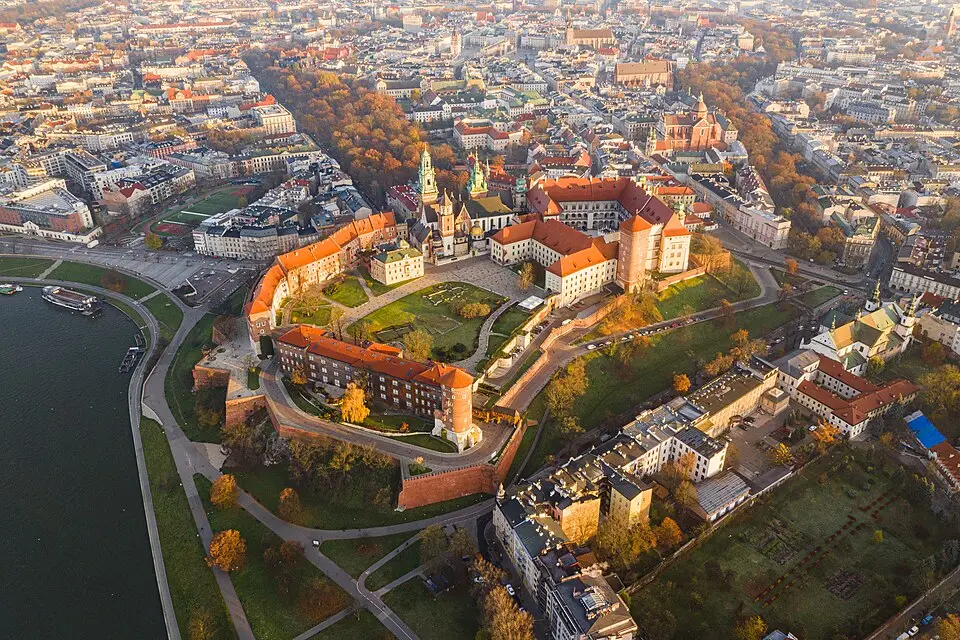
Wawel Hill in Kraków is far more than just a historic site; it is the symbolic heart of Polish history. This 228-meter-high limestone rock rises in the center of the city on the left bank of the Vistula and forms the southernmost spur of the Kraków-Częstochowa Upland. The landscape is heavily karstified and riddled with a network of caves, which gives the hill a special geological and atmospheric character. On this strategically important plateau stand the former royal castle and the cathedral, which, together with Kraków's Old Town, have been a UNESCO World Heritage Site since 1978. The buildings date back to the early Middle Ages and reflect more than a thousand years of construction history, in which architectural styles alternated from Romanesque through Gothic and Renaissance to Baroque and Neoclassicism.
The history of the site begins in prehistoric and early historic times, when people lived in the hill's caves. In the 6th century, Wawel served as the power center of the West Slavic Vistulan tribe. A deeply rooted legend tells of a dragon that lived in the so-called Dragon's Den until the knight Krak defeated it by cunning and then founded the city of Kraków. This legend is closely tied to the topography, since a karst cave does in fact lead from the castle walls at the top of the hill to its foot. Archaeological finds, such as a wooden church from the 9th century, attest to early Christian influences, while the takeover by the Polans in the 10th century marked the beginning of Poland's state organization.
The oldest stone buildings on Wawel date from the 10th century, including the pre-Romanesque Rotunda of the Virgin Mary. When Kraków became a bishop's seat, construction began on a large cathedral, which was destroyed and rebuilt several times over the centuries. Around 1040, the castle complex was elevated to a royal residence, which ushered in the Romanesque period in Poland. Relics from this era include the Silver Bells Tower and the eight-pillared Crypt of St. Leonard. This crypt houses the oldest surviving tomb in the cathedral, that of Bishop Maurus from 1118, and since the 20th century has served as the final resting place of important figures in Polish history, including Marshal Józef Piłsudski and the national poets Adam Mickiewicz and Juliusz Słowacki.
With the transition to the Gothic style in the 13th century, the appearance of the hill changed fundamentally. Brick replaced limestone as the main building material, which led to the characteristic red façades. After a devastating fire in 1305, the old cathedral was demolished and replaced by a new Gothic building, consecrated in 1364. This third Wawel Cathedral has survived largely unchanged to this day. Inside you will find magnificent tombs, including the High Gothic sarcophagi of kings such as Władysław I the Elbow-high and Casimir III the Great. Particularly noteworthy are the Late Gothic tomb monuments by Veit Stoss and Jörg Huber, which rank among the finest tombs of their kind in the world.
Wawel's Golden Age began with the rule of the Jagiellonians in the Renaissance. From 1504, the royal castle was gradually rebuilt into a closed four-wing complex modeled on Italian examples. Architects such as Franciscus Italus and later Bartolomeo Berrecci shaped the castle's new look. A highlight of this era is the Sigismund Chapel in the cathedral, considered one of the most beautiful Renaissance chapels outside Italy. At that time, the castle was one of the most splendid complexes in Europe, adorned with gilded roof tiles, colorful frescoes, and a collection of more than 300 Arras tapestries that is unique in the world. The columned loggias in front of the wings allowed for elegant communication between the royal apartments and the courtyard.
After the great fire of 1595, which ended the Renaissance heyday, King Sigismund Vasa moved his residence to Warsaw. The castle was remodeled in the early Baroque style by Giovanni Battista Trevano, adding sweeping senators' staircases and a marble fireplace in the Hall Under the Birds. Despite the relocation of the residence, Wawel remained an important site, but in the 18th century it was occupied by Prussian troops, who plundered the crown treasure. Many valuable items, including a large part of the tapestries and the library, fell to Russian troops and ended up at the tsar's court, from which only a fraction returned. The cathedral continued to develop in the Baroque period, with the construction of the Vasa Chapel and the erection of the main altar and the silver mausoleum of St. Stanislaus.
In the 19th century, Wawel went through a phase of desecration and destruction. After the Third Partition of Poland, the Austrians set up a barracks and tore down many historic buildings to make room for a parade ground. The arcades were walled up, and the interiors served as barracks buildings. Only in the late 19th century did people begin to open and reorganize the royal tombs, and the underground crypts were connected to one another. This period also saw the burial of further national heroes in the cathedral crypt, making the site a central place of Polish national identity.
In the 20th century, Wawel was finally recognized as a national monument. Emperor Franz Joseph I declared Kraków an official royal residence, which protected the complex from further damage. After the Austrian soldiers withdrew in 1905, extensive restoration work began under the direction of architects such as Zygmunt Hendel. The walled-up courtyard arcades were uncovered and reconstructed, and the interiors were redesigned for their new use as a museum. During World War II, the castle served as the seat of the German occupying power, which led to further alterations that were partly reversed or adapted after the war.
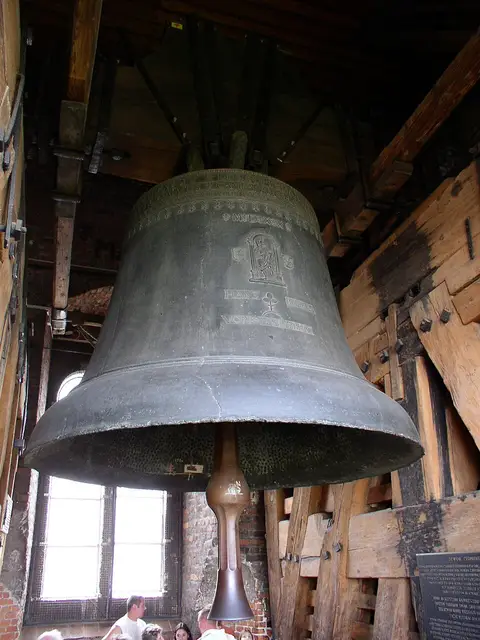
Today, the 71 halls of Wawel Castle house important state art collections. You can visit the state rooms, the private royal chambers, the treasury, and the armory. The collection of Flemish tapestries and the exhibition of Oriental art are especially worth seeing. In Wawel Cathedral, the royal tombs and the famous Sigismund Bell draw attention; it is rung by rope, and the office of bell ringer is hereditary in some Kraków families. The Cathedral Museum and the exhibition on the Lost Wawel in the Rotunda of the Virgin Mary offer further insights into the complex history of the site.
The Dragon's Den, a natural cave passage, is a popular destination for visitors who want to experience the legend of the dragon. In addition, parts of the former royal gardens have been reconstructed and can be visited today. Wawel is thus not just a museum but a living place where history, myth, and art come together. The combination of majestic architecture, valuable collections, and deep historical significance makes Wawel Hill an essential destination for every visitor to Kraków.
At a glance
- Category
- Sight › Historic sites
- Rating
- no reviews yet · write a review
- Address
31-001 Krakow, Poland- Phone
- —
- Website
- —
- —
- Coordinates
- 50.05427° N · 19.93493° E
- Data quality
- confidence 0.91
- Identifier
- ID e3015759-ffb…
Part of the tour
Krakow Compact: The Classics in One Day →Location & surroundings
Toggle layersRatings & comments
none yetNear Krypty Wawelskie
closest 5 per category · 2 kmSights
Restaurants
Museums
Hotels
More:Historic sites in Krakow (343)All sights in Krakow (386)
289 places within 2 km loaded.
You need a free account to leave reviews and photos – that keeps comments genuine and lets you edit them later.