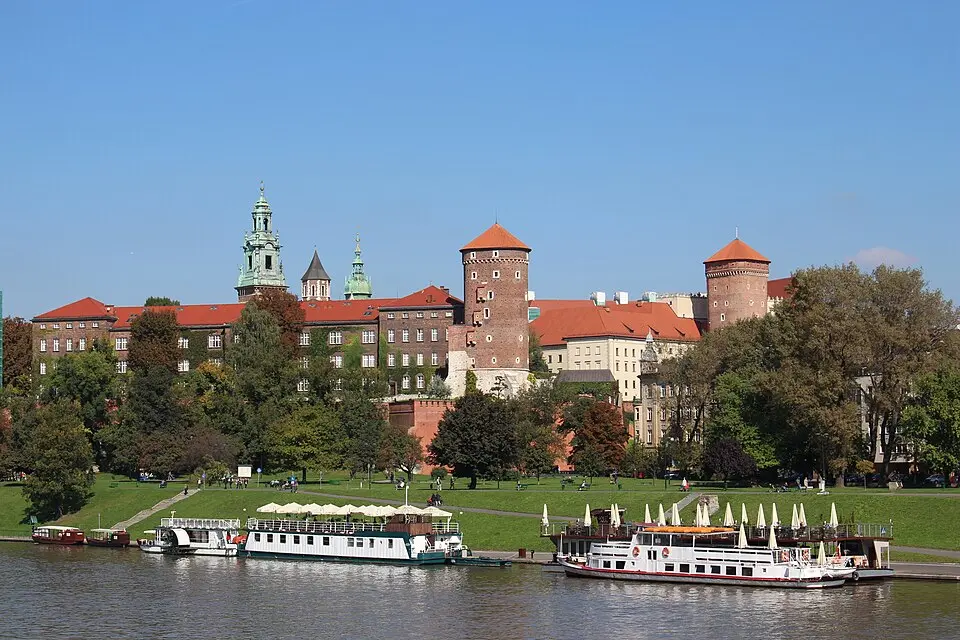
About Kraków Zamek Wawel
Wawel Hill in Krakow is far more than just a historic site; it is the spiritual and political heart of Poland. Atop a 228-meter limestone outcrop that rises majestically above the Vistula River stands the former Royal Castle, the one-time residence and seat of government of Poland's rulers. Since 1978, this unique architectural ensemble has been a UNESCO World Heritage Site, together with Krakow's Old Town. The history of this place goes back to around the year 1000, when King Bolesław I had the first stone structures built. Over the centuries, various architectural styles shaped its appearance, so that today Romanesque, Gothic, Renaissance, and Baroque elements blend harmoniously.
The geological foundation of the hill is a limestone formation 161 to 155 million years old, part of the Krakow-Częstochowa Upland. The terrain is heavily karstified and riddled with a network of underground caves. One of the best known is the Dragon's Den, which runs from the castle walls to the foot of the hill. Its name comes from an old legend that says a dragon once lived here until the knight Krak defeated it by cunning. After this deed, the city of Krakow is said to have been founded on this spot and named after the hero. This mythical connection to nature gives the place a special atmosphere that still fascinates visitors today.
The settlement history of Wawel is as old as human presence in this region. As early as the Paleolithic, people used the caves as shelter, and in the 6th century the hill served as the power center of the West Slavic Vistulan tribe. With the takeover by the Polans in the 10th century and the Christianization of the country, its actual development into a royal residence began. In 1040, Wawel was officially elevated to royal residence, marking the beginning of the Romanesque era in Poland. The early stone buildings, including a rotunda dedicated to the Virgin Mary and a cathedral, laid the foundation for the ensemble's later splendor.
The Gothic era brought a significant change in building materials and architecture. From the 13th century, red brick replaced white limestone, while sandstone and marble were used for fine sculptural work. The third Wawel Cathedral, consecrated in 1364, is a masterpiece of Gothic architecture and today houses the royal tombs. Particularly noteworthy are the elaborate sarcophagi of kings such as Casimir the Great and Władysław Jagiełło. The tombs of the late Gothic period, including the monument to Casimir IV created by Veit Stoss, are considered among the finest of their kind in the world. The cathedral served not only as a coronation church but also as the final resting place of many important figures in Polish history.
Wawel's Golden Age began with the Renaissance under the Jagiellonian dynasty. From 1504, the castle was gradually rebuilt into an enclosed four-wing complex modeled closely on Italian examples. Architects such as Franciscus Italus and Bartolomeo Berrecci brought the High Renaissance style to Krakow. The Sigismund Chapel, built between 1517 and 1533, is considered one of the most beautiful Renaissance chapels outside Italy. In this period, Wawel was one of the most magnificent residences in Europe, equipped with gilded roof tiles, colorful frescoes, and a collection of more than 300 Arras tapestries that is unique in the world. The columned loggias and the ceremonial halls reflect the wealth and cultural openness of the royal court of the time.
After the great fire of 1595, which ended the Renaissance flowering, King Sigismund Vasa moved his residence to Warsaw. Nevertheless, Wawel remained an important site and was further developed in the Baroque period. The Italian architect Giovanni Battista Trevano remodeled the castle in the early Baroque style, with the sweeping Senators' Staircase and the marble fireplace in the Hall Under the Birds among the most important innovations. The cathedral received new chapels and tombs during this time, including the silver mausoleum of Saint Stanislaus. Despite political upheavals and occupations by Swedish and Prussian troops, who plundered the crown treasury and valuable collections, the site retained its historical significance.
In the 19th century, Wawel went through a period of neglect and repurposing. After the Third Partition of Poland in 1795, Krakow came under Austrian rule, and the Austrians set up barracks on the hill. Many historic buildings between the castle and the western walls were demolished to make room for a parade ground, and the arcades were walled in. This era left deep scars, as many original furnishings were lost. Only in the late 19th century did people begin to organize the royal tombs and connect the crypts, paving the way for later use as a museum.
The rescue and restoration of Wawel in the 20th century was a national cause. Emperor Franz Joseph I recognized the historic importance of the site and ordered the Austrian soldiers to withdraw in 1905. This made extensive restoration work possible under the direction of architects such as Zygmunt Hendel. The walled-in arcades were uncovered and reconstructed, and the interiors were redesigned for their new use as a museum. Poles from all the territories under various powers donated to this effort, making Wawel a symbol of national unity. Unfortunately, many details from this period are poorly documented, which today makes it difficult to tell originals from copies.
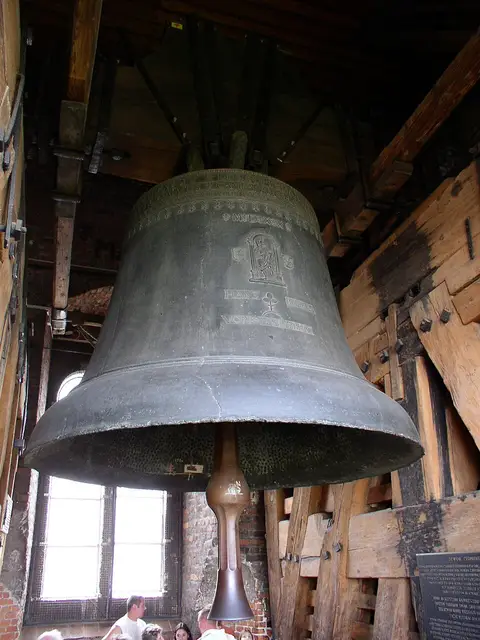
Today, Wawel Castle is a living museum with 71 halls housing the state art collections. You can tour the kings' state apartments, the private living quarters, the treasury, and the armory. A particular highlight is the collection of Flemish tapestries as well as the exhibition of Oriental art. Wawel Cathedral offers insight into Poland's religious history with its royal tombs, the Cathedral Museum, and the famous Sigismund Bell, which is still rung by rope to this day. The Dragon's Den invites you to explore the fascinating underground world.
The former royal gardens, of which 300 square meters have been reconstructed, round out the experience and offer a quiet retreat amid the historic splendor. Wawel is not only a place of history but a place where the past stays alive. The combination of impressive architecture, rich collections, and the picturesque setting above the Vistula makes it an essential destination for every visitor to Krakow. The journey through the centuries, from the early Slavic settlements to the modern museum presentation, shows the profound significance of this place for Polish identity and culture.
At a glance
- Category
- Museum › History museums
- Rating
- no reviews yet · write a review
- Address
- Wawel 1
31-001 Krakow, Poland - Phone
- —
- Website
- www.wawel.krakow.pl
- —
- Coordinates
- 50.05404° N · 19.93472° E
- Data quality
- confidence 0.86
- Identifier
- ID a79f3e5a-c4f…
Location & surroundings
Toggle layersRatings & comments
none yetNear Kraków Zamek Wawel
closest 5 per category · 2 kmSights
Restaurants
Museums
Hotels
More:History museums in Krakow (39)All museums in Krakow (161)
289 places within 2 km loaded.
You need a free account to leave reviews and photos – that keeps comments genuine and lets you edit them later.