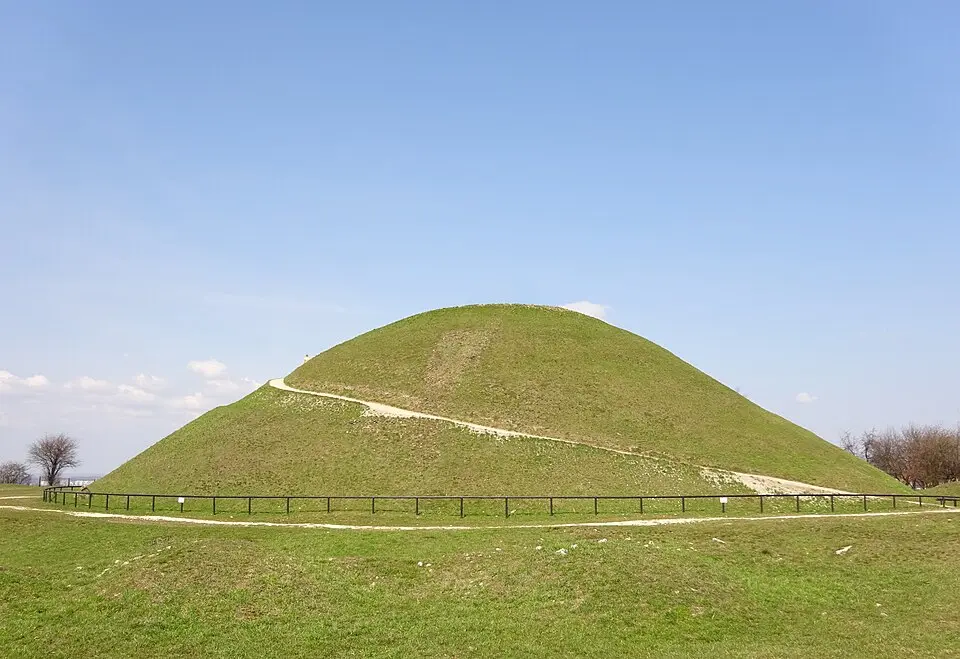
About Krakus Mound
Krak Mound in Kraków is a historic burial mound that was probably raised in the sixth century by the Vistulans in honor of the legendary ruler Krak. Standing about 16 meters (52 feet) high and 75 meters (246 feet) across, it dominates the surrounding landscape. Archaeological finds such as human remains and ritual objects point to a long history of settlement, though the mound's exact origins are still debated today. During the Habsburg era, Fort 33 Krakus was built here. Visitors experience the site not only as an archaeological landmark but also as the setting of Rękawka, a traditional Easter festival. The mound also offers special astronomical views: on certain days, the sun rises and sets exactly over the neighboring Wanda Mound.
At a glance
- Category
- Sight › Monuments
- Rating
- no reviews yet · write a review
- Address
30-543 Krakow, Poland- District
- Podgórze
- Phone
- —
- Website
- —
- —
- Coordinates
- 50.03808° N · 19.95843° E
- Data quality
- confidence 0.34
- Identifier
- ID f1826fa7-09e…
Location & surroundings
Toggle layersRatings & comments
none yetNear Krakus Mound
closest 5 per category · 2 kmSights
Museums
Hotels
More:Monuments in Krakow (35)Sights in Podgórze (52)All sights in Krakow (386)
225 places within 2 km loaded.
You need a free account to leave reviews and photos – that keeps comments genuine and lets you edit them later.
An artificial mound of great age, but just how old and its original purpose are unknown. It was supposedly built in honour of King Krakus, a mythical figure, but it contains no human remains and its earliest artefacts are 8th century. Four smaller mounds ringed it but were raided for building material in the Middle Ages. There is a curious astronomical alignment: if you stand atop it on Beltane (1 May), the sun rises over the equally unexplained Wanda Mound north of the river. But Beltane is a Celtic rite: this region hasn't been Celtic since the La Tène Iron Age culture of 2000 years ago. A mystery.
Source: Wikivoyage, „Kraków/South“ · authors per page history · CC BY-SA 4.0 · as of 12/16/2019