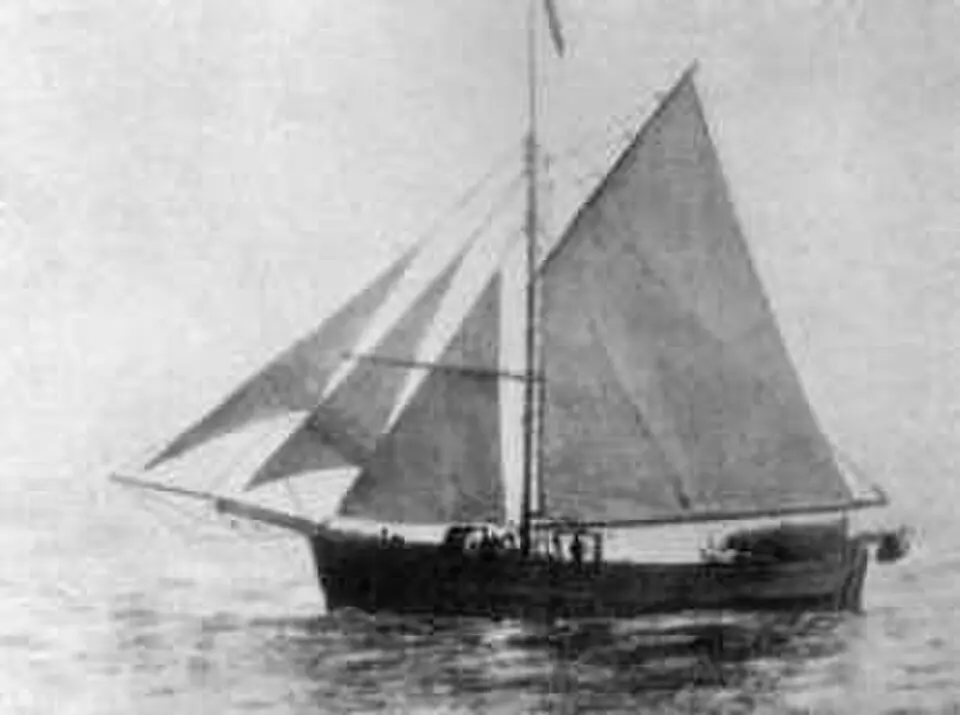
About Gjøa
The Gjøa is a historic expedition yacht and the first ship to sail the entire Northwest Passage. Under the command of Roald Amundsen, the vessel completed this historic transit in 1906 after a journey of more than three years with a small crew. The ship is a so-called Hardangerjakt, a traditional Norwegian class of cargo sailing vessel that was used along the Norwegian coast in the 19th century to transport salted herring and grain. The Gjøa was originally built in 1873 at the shipyard in Rosendal on the Hardangerfjord and put into service as a cargo ship by its first owner. Later, it served for many years as a seal-hunting vessel in the Arctic Ocean before Amundsen bought it and converted it for his polar expedition.
Today the Gjøa is a prominent museum ship that you can visit on the Bygdøy museum peninsula in Oslo. After it returned from San Francisco, where it had been on display in Golden Gate Park for many years, Norway bought it back in 1972 and brought it to Oslo. It was first placed in front of the Norwegian Maritime Museum before moving to the neighboring Fram Museum in 2009. There the ship stands in a purpose-built hall that protects it from the elements and offers visitors a sheltered look at the history of polar exploration. The Gjøa is regarded as a national maritime monument of great historical importance.
You can experience the ship in a condition that, thanks to a comprehensive restoration in 2017, comes as close as possible to its original state during the Northwest Passage expedition. Inside, a companionway leads from the galley down into the hold, where original frames from 1873 are visible through Plexiglas windows in the floor. The historic 13-horsepower DAN hot-bulb engine, installed in 1902, is back in its original spot and can be seen behind a partition alongside tools and equipment. The crew bunks in the forecastle and the original anchor windlass are also part of the exhibit.
The exterior of the ship was reinforced with additional layers of planking to recreate the historic "ice skin" and given its characteristic green paint. The deck shows the typical fittings of a sailing ship of this era, including the head and the rigging. Although a few mast sections are missing due to the structural limitations of the museum building, the sails and blocks on display give the impression that the Gjøa could be launched again at any moment. The exhibition at the Fram Museum complements the ship with further artifacts such as North Pole maps and stuffed polar bears, vividly illustrating the context of the Arctic expeditions.
At a glance
- Category
- Sight › Historic sites
- Rating
- no reviews yet · write a review
- Address
- —
Oslo, Norway - District
- Frogner
- Phone
- —
- Website
- de.wikipedia.org
- —
- Coordinates
- 59.90361° N · 10.70056° E
- Data quality
- confidence 0.80
- Identifier
- ID 209e8bdb-c23…
Location & surroundings
Toggle layersFAQ about Gjøa
quick answersWhat is the Gjøa in Oslo?
The Gjøa is a historic expedition yacht and the first ship to navigate the entire Northwest Passage. Under the leadership of Roald Amundsen, the crossing was completed in 1906 after a journey of more than three years with a small crew. Today the Gjøa is considered a national maritime monument of Norway and can be visited as a museum ship in Oslo.
Where is the Gjøa in Oslo?
The Gjøa stands on the museum peninsula of Bygdøy in Oslo, which travelguide195 assigns to the Frogner district, and has been part of the Fram Museum since 2009. It is housed there in a purpose-built building that protects it from the weather. The ship was long displayed in Golden Gate Park in San Francisco before Norway bought it back in 1972, after which it first stood in front of the Norwegian Maritime Museum.
What can you see on board the Gjøa?
On board the Gjøa in Oslo, you see the ship in a condition that a comprehensive restoration in 2017 brought as close as possible to the era of the Northwest Passage expedition. A companionway leads from the galley down into the cargo hold, where you can make out original frames from 1873 through Plexiglas windows in the floor. You can also see the 13-horsepower DAN hot-bulb engine installed in 1902, the crew bunks in the forecastle, the original anchor windlass, and on deck the outhouse and the rigging. The exhibition in the Fram Museum complements the ship with North Pole maps and stuffed polar bears.
How old is the Gjøa and what was it originally used for?
The Gjøa was built in 1873 at the shipyard in Rosendal on the Hardangerfjord and was initially used as a cargo ship. It is a Hardangerjakt, a traditional Norwegian class of sailing cargo vessel that was used in the 19th century to transport salted herring and grain along the Norwegian coast. Later it served for many years as a seal hunter in the Arctic Ocean, before Roald Amundsen bought it and converted it for his polar expedition.
What can you see around the Gjøa in Oslo?
Around the Gjøa on Bygdøy in Oslo, several museums are within walking distance. travelguide195 lists the Fram Museum at about 63 meters, the Norwegian Maritime Museum (Norsk Maritimt Museum) at about 140 meters, the Kon-Tiki Museum at about 141 meters, and the S/S Svanen at about 163 meters. Slightly farther away are Oscarshall Palace at about 876 meters and the Norwegian Museum of Cultural History at about 892 meters.
Ratings & comments
none yetNear Gjøa
closest 5 per category · 2 kmSights
Restaurants
Museums
Hotels
Cocktail bars
More:Historic sites in Oslo (377)Sights in Frogner (45)All sights in Oslo (394)
156 places within 2 km loaded.




You need a free account to leave reviews and photos – that keeps comments genuine and lets you edit them later.