Quintana Roo: Caribbean Coast, Cenotes, and Maya Ruins
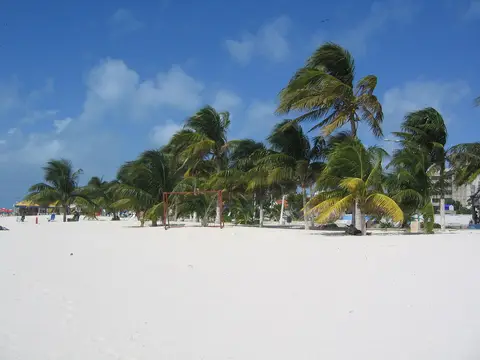
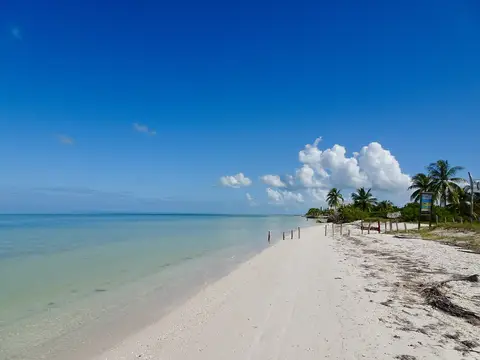
Travel guide · editorialWhite limestone sand, turquoise water, and a coral reef just offshore have made Quintana Roo Mexico's most visited vacation state. But a trip to Quintana Roo offers more than hotel beaches: Maya cities in the jungle, freshwater caves full of stalactites, and the quiet lagoon of Bacalar.
A Young State on the Caribbean
Quintana Roo occupies the eastern part of the Yucatán Peninsula and borders Belize to the south. The landscape is flat, covered in low dry forest, and has no surface rivers: rainwater seeps into the porous limestone and collects in underground river systems that surface as cenotes where the ground has collapsed. Offshore runs the Mesoamerican Reef, the second-largest barrier reef in the world. The former territory was not made a state until 1974, in the same decade that the planned city of Cancún was built on an almost uninhabited sandbar.
Cancún, Playa del Carmen, and Tulum
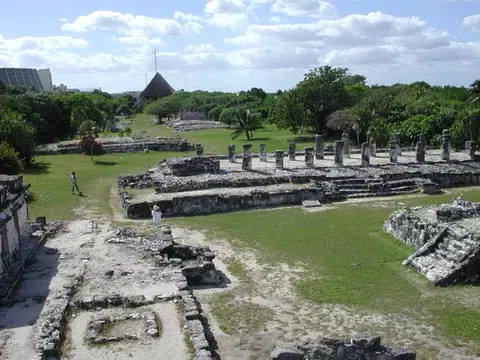
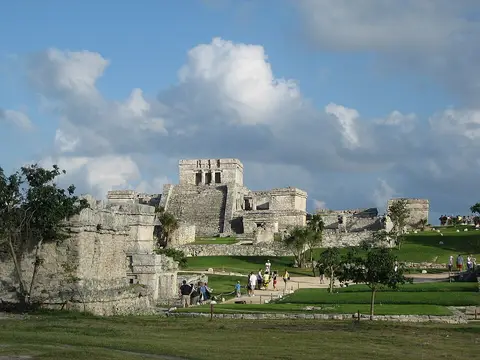
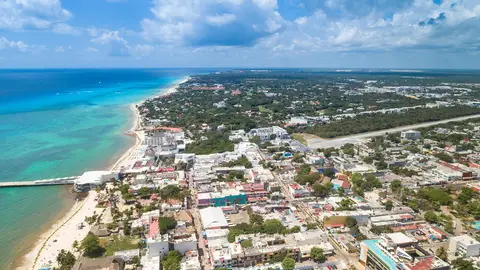
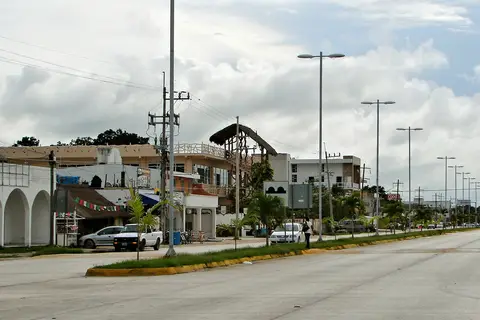
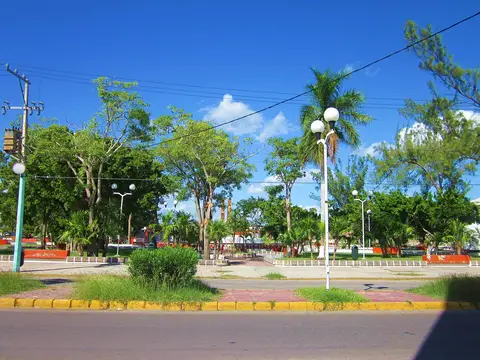
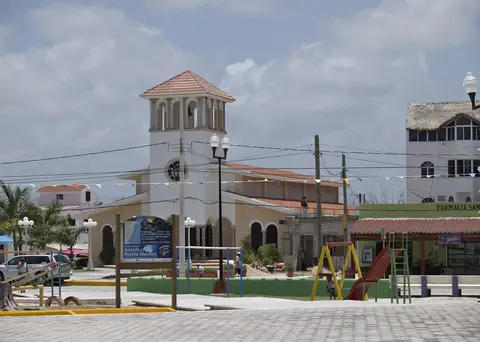
Cancún consists of two worlds: the Hotel Zone on a long barrier strip between the Caribbean and the Nichupté Lagoon, and the city on the mainland, where most locals live and where you can eat more cheaply at markets such as Mercado 28. Puerto Morelos to the south is a quieter fishing village with a protected reef. Playa del Carmen has grown from a ferry port into a small city with a pedestrian promenade, Quinta Avenida. Tulum, in turn, combines Maya ruins on a clifftop above the sea with a beach strip of boutique hotels. The capital, Chetumal, in the south on the border with Belize, is quiet, sees few tourists, and has a good museum of Maya culture.
Sights in Quintana Roo
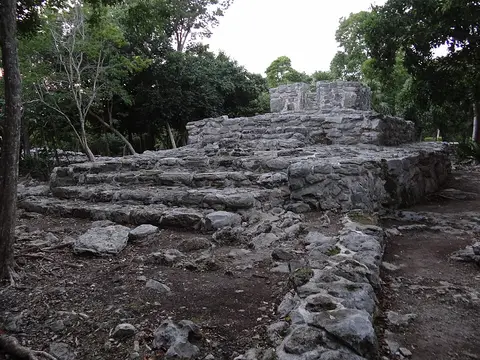
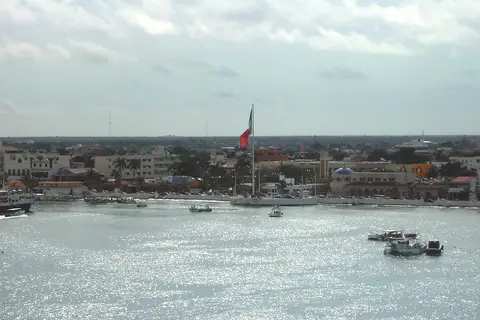
The island of Cozumel, with its main town of San Miguel de Cozumel, is considered one of the best dive spots in the Caribbean, with sheer walls and strong currents. Isla Mujeres off Cancún is smaller and more relaxed; in summer you can snorkel with whale sharks from here. The ruins of Cobá, inland, lie in the middle of the forest and are linked by sacbé causeways. In the Sian Ka'an Biosphere Reserve, a World Heritage site, boats glide through lagoons and mangrove channels, and manatees and crocodiles live here. Cenotes such as Dos Ojos and Gran Cenote invite you to swim and cave dive. In the south lies the Bacalar Lagoon, known as the "Lagoon of Seven Colors" for its shades of blue, with stromatolites along the shore and a Spanish fortress. Farther inland, the little-visited ruins of Kohunlich and Dzibanché beckon.
Culture and History
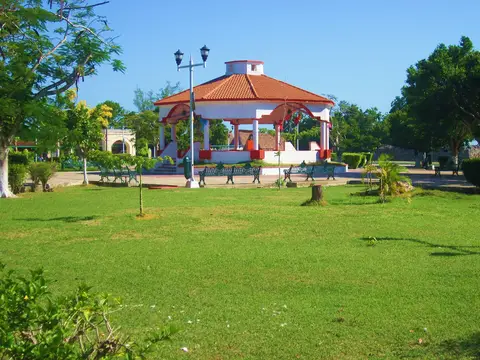
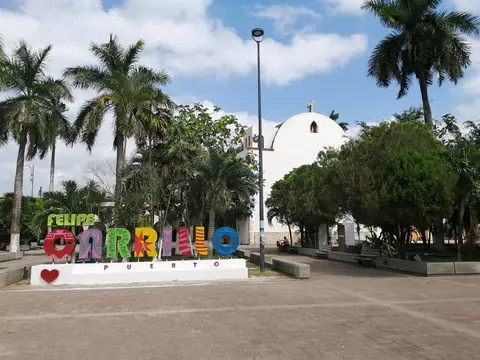
Long before the Spanish arrived, the Maya traded along the coast here; Tulum was an important port. In the 19th century, the area became a refuge for the rebel Maya during the Caste War, and Felipe Carrillo Puerto was their religious center. In villages inland, Yucatec Maya is still spoken today, and the cult of the Talking Cross has left its mark. The coast, by contrast, is a place of immigration: workers from all over Mexico and many foreigners live here.
Food and Drink
The cuisine draws on Yucatán's heritage: cochinita pibil, pork marinated in achiote, panuchos and salbutes, and sopa de lima. By the sea, ceviche, tikin xic (fish grilled in achiote), and lobster join the menu. Markets sell fresh juices made from chaya, a spinach-like leafy green, as well as horchata. Xtabentún, an anise liqueur with honey, is traditionally served after a meal.
Getting There and Best Time to Visit
Cancún Airport (CUN) has direct flights from Europe; since late 2023 there has also been Tulum Airport (TQO), along with Cozumel (CZM) and Chetumal (CTM). The Tren Maya connects Cancún with Playa del Carmen, Tulum, Bacalar, and Chetumal, and continues on to Yucatán and Campeche. Ferries run to Cozumel and Isla Mujeres, and ADO buses travel along the coast. The best time to visit is between December and April. From June to November is hurricane season, and in summer, washed-up sargassum seaweed can affect some beaches. A word on safety: the major tourist towns are lively, but you should still stay alert at night in nightlife districts.