Discover Cancún: Caribbean Beaches and Maya Heritage
Travel guide · editorialJust over fifty years ago, only a handful of fishermen and coconut farmers lived on the narrow sandbar off the coast of Yucatán. Today Cancún is Mexico's most important vacation destination: a trip to Cancún means turquoise water, powder-white sand, and an ideal base for excursions to Maya sites, cenotes, and islands in the Caribbean.
A City Drawn on the Drawing Board
Cancún is a product of planning. In the late 1960s, Mexico's central bank used computer analysis to search for the best location for a new tourist center and settled on the island shaped like a seven, stretching between the Caribbean and the Nichupté Lagoon. Construction began in 1970, and the first hotels opened in 1974. At the same time, the actual city for employees and newcomers took shape on the mainland, laid out in numbered Supermanzanas. In just a few decades, a village became a major city.
Zona Hotelera and Downtown
The Zona Hotelera stretches for about 22 kilometers (14 miles) along the sandbar, lined with high-rise hotels, shopping centers, and clubs. At Punta Cancún, the bend in the seven, you'll find the party district with its big nightclubs, a magnet for American spring breakers in the spring. Farther south it gets quieter; Playa Delfines is one of the few public beaches with no hotel in front of it, and the colorful Cancún sign makes a popular photo spot. Downtown, the Centro on the mainland, feels completely different: around the Parque de las Palapas in Supermanzana 22, families gather in the evening for marquesitas and street music, and Avenida Tulum is where you'll find everyday shops and banks.
Sights in Cancún
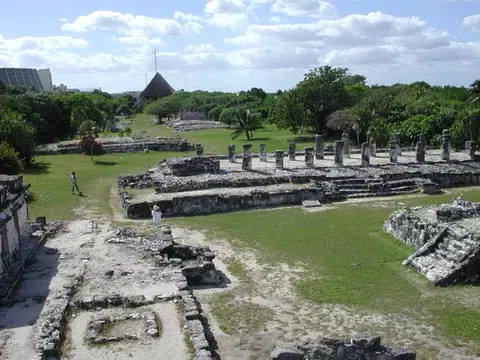
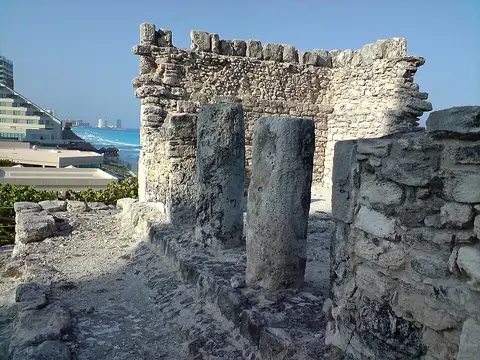
Right in the middle of the hotel zone lies the small Maya site of El Rey, with its platforms and iguanas; next door, the Museo Maya de Cancún displays finds from all over Quintana Roo, and the San Miguelito excavation site is part of the museum. Underwater off Isla Mujeres and Punta Nizuc is MUSA, an underwater museum with hundreds of sculptures that you can visit by snorkeling or diving and that also serve as an artificial reef. You can explore the mangrove belt of the Nichupté Lagoon by kayak or boat.
Eating in Cancún
Restaurants in the hotel zone tend to cater to international tastes; for more authentic and cheaper food, head to Downtown. There you'll find cochinita pibil, panuchos, and sopa de lima from Yucatecan cuisine, as well as ceviche, aguachile, and fish prepared tikin xic style, marinated in achiote and grilled in a banana leaf. Mercado 28 is a classic for handicrafts and simple eateries, while locals do their shopping at Mercado 23. For those who like to go out, Cancún is one of the liveliest cities in the country: the big clubs at Punta Cancún put on shows with acrobats, while in the bars of Downtown around the Parque de las Palapas, you'll mostly find locals over beer and live music.
Excursions in the Area
Ferries run from Puerto Juárez to Isla Mujeres in about 20 minutes, where you can circle the island by golf cart. Holbox, with its whale sharks in summer, the ruins of Chichén Itzá and Ek Balam, the cenotes around Valladolid, and Playa del Carmen and Tulum on the Riviera Maya are all popular day trips. Since late 2023, the Tren Maya has connected Cancún with Mérida and other towns on the peninsula.
Getting Around, Safety, and Best Time to Visit
Cancún Airport (CUN) is the second-largest in Mexico and has many direct connections to Europe, including Frankfurt. A new Tren Maya station is located near the airport. Buses on lines R1 and R2 run around the clock between Downtown and the hotel zone, and ADO buses and colectivos go to Playa del Carmen. The tourist areas are heavily guarded and considered safe with normal precautions; violent crime between gangs does occur in outlying neighborhoods. The best time to visit is from December to April, when there is little rain. June through November is hurricane season, and in summer large amounts of sargassum seaweed sometimes wash up on the beaches, though the beaches facing north toward the Isla Mujeres bay are usually less affected.