
Puebla: Talavera, Mole, and Volcano Views
Travel guide · editorialPuebla lies in the shadow of Popocatépetl, whose plume of smoke hangs over the city on clear days. A vacation in Puebla combines one of Mexico's most beautiful colonial cities with the largest pyramid in the world by volume, mountain villages in the Sierra Norte, and a cuisine regarded as the birthplace of mole.
Landscape Between the Volcanoes
The state stretches from the high valley around the capital, Puebla, to tropical valleys in the north and dry cactus landscapes in the south. In the west, the volcanoes Popocatépetl and Iztaccíhuatl form the border with the states of Mexico and Morelos, while in the east Pico de Orizaba rises on the border with Veracruz. In the northeast, the Sierra Norte drops steeply to the Gulf Coast; it is humid, misty, and green there. The southeast around Tehuacán is part of the Tehuacán-Cuicatlán Biosphere Reserve, a semi-desert of columnar cacti that is a World Heritage site.
Puebla and Cholula
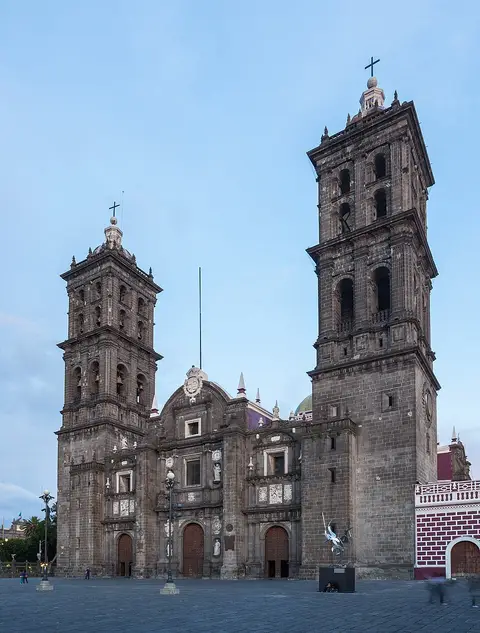
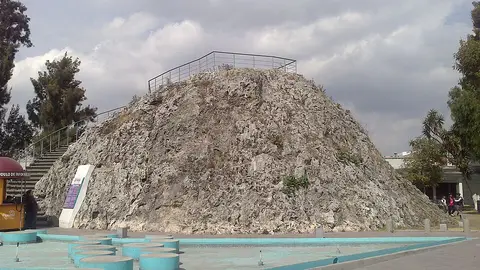
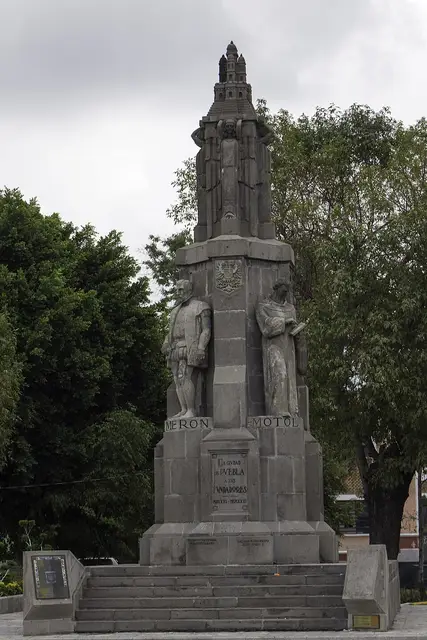
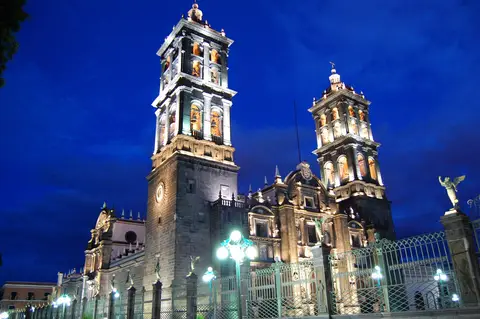
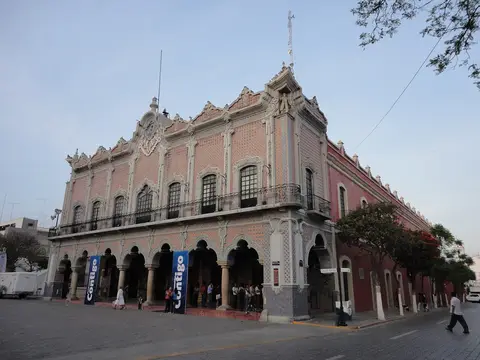
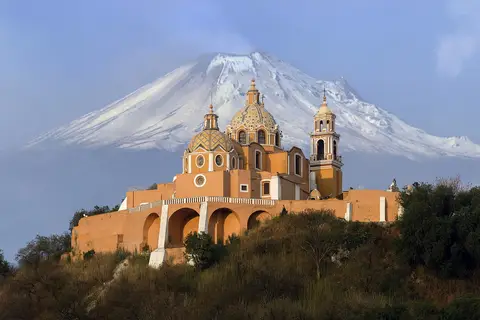
The city of Puebla was founded by the Spanish in 1531 according to a deliberate plan, and its checkerboard-patterned center is a UNESCO World Heritage site. Facades covered in glazed tiles, the cathedral with its tall towers, and the Capilla del Rosario in the Church of Santo Domingo, whose interior is almost entirely covered in gilded stucco, are among the highlights. The Biblioteca Palafoxiana is considered the oldest public library in the Americas. On May 5, 1862, Mexican troops defeated a French army here, an event commemorated by the Cinco de Mayo holiday. Just a few miles to the west lie San Pedro Cholula and San Andrés Cholula. Beneath the Church of Nuestra Señora de los Remedios lies the Tlachihualtepetl, a huge pyramid that today looks like an overgrown hill. Tunnels let you explore part of its interior. In good weather, the view from the church at the top stretches across the plain to the snow-capped volcanoes.
Sights in Puebla
Atlixco, at the foot of Popocatépetl, is known for its flower growing and the Huey Atlixcáyotl festival in September. In the Sierra Norte, Pueblos Mágicos such as Cuetzalan, Zacatlán, and Chignahuapan have kept their own character: Cuetzalan with its Sunday market of the Nahua and Totonac peoples and the caves in the surrounding area, Zacatlán with apple orchards and a factory that makes large clocks, and Chignahuapan with its production of Christmas ornaments. Teziutlán, on the border with Veracruz, is a bustling trading center in the mountains. Near Tehuacán, known for its mineral water, and in nearby Zapotitlán Salinas, trails lead through forests of columnar cacti. The ruins of Cantona in the east are among the largest urban settlements in Mesoamerica.
Talavera and Crafts
Blue-and-white Talavera pottery came to Puebla with Spanish craftsmen in the 16th century and is still shaped and painted by hand in long-established workshops today; the craft is part of UNESCO's intangible cultural heritage. In the Barrio del Artista, painters work outdoors, and the area around the Callejón de los Sapos is full of antiques. In Amozoc, spurs and metalwork for charros are made, and in Izúcar de Matamoros, colorful clay trees of life.
Food and Drink
Mole poblano, a dark sauce made from several kinds of chile, spices, nuts, and chocolate, is said to have originated in a convent in Puebla. Equally famous are chiles en nogada, peppers stuffed with meat and fruit under a white walnut sauce, sprinkled with pomegranate seeds, and available only in August and September. On the street, you can eat chalupas; cemitas, large sesame rolls with meat and papalo herb; and tacos árabes, a legacy of Lebanese immigrants. The Calle de los Dulces offers camotes, sweet sweet-potato sticks, and tortitas de Santa Clara.
Getting There and Best Time to Visit
Puebla is about two hours from Mexico City by bus; Hermanos Serdán Airport (PBC) serves a few domestic routes. City buses and taxis run between Puebla and Cholula. The best time to visit is during the dry season from October to May, when views of the volcanoes are clearest. In summer, the rainy season brings green landscapes but afternoon showers. Popocatépetl is an active volcano; the summit is closed, and during periods of heightened activity, ash can disrupt air traffic.