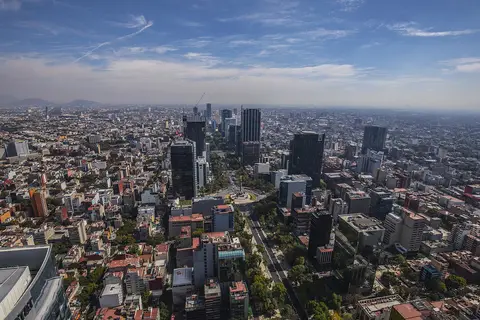
Mexico City: A Metropolis on the Aztec Lake Bed
Travel guide · editorialWhere subways now run and high-rises rise, Tenochtitlan, the island capital of the Aztecs, once stood. A vacation in Mexico City is a journey through five centuries of history, past world-class museums, market halls full of chiles, and neighborhoods where every street corner smells of tortillas. The capital, officially Ciudad de México, is also the best starting point for exploring the central highlands.
A City in a High Valley
Mexico City sits at roughly 7,350 feet (2,240 meters) in a basin ringed by volcanoes. On clear days, the peaks of Popocatépetl and Iztaccíhuatl stand out to the southeast. The valley was once largely covered by Lake Texcoco; after the conquest in 1521, the Spanish gradually drained it. You can still feel the consequences today: the soft lake bed gives way, and some colonial churches in the center visibly lean. Add to that the risk of earthquakes, as major quakes in 1985 and 2017 remind us. Since 2016, the capital is no longer a federal district but a separate entity similar to a state, with 16 boroughs known as alcaldías.
Neighborhoods with Their Own Character
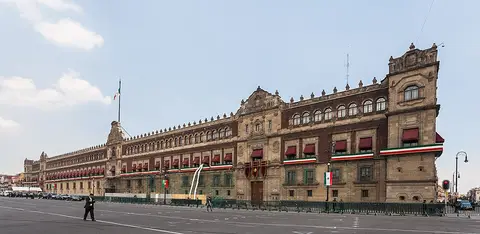
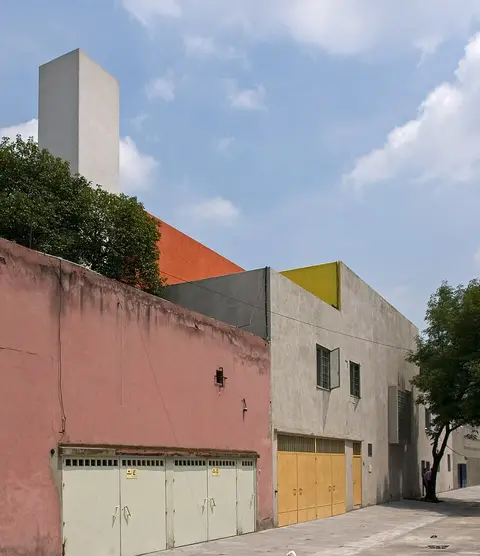
The historic center around the Zócalo is a UNESCO World Heritage Site. Here you'll find the cathedral, the National Palace with its murals by Diego Rivera, and right next door the excavations of the Templo Mayor, the main Aztec temple. To the west, the Alameda and the Palacio de Bellas Artes with its Art Nouveau dome come next. Roma and Condesa feel completely different: plane trees, Art Deco facades, cafés, and small galleries define these two popular residential neighborhoods. To the south, Coyoacán preserves the atmosphere of a village of its own, with cobblestone streets, Frida Kahlo's Blue House, and a lively market. Farther south lies San Ángel with its Saturday bazaar, and nearby the districts of Tizapan and Tetelpan, quiet residential areas on the edge of the Pedregal lava fields.
Sights in Mexico City
You can easily spend a whole day in Chapultepec Park, the large city park with its castle and the Museo Nacional de Antropología. Its collection, from Olmec colossal heads to the Aztec Sun Stone, is considered one of the most important on the cultures of Mesoamerica. In Xochimilco, brightly painted trajineras glide through the canals, remnants of the old floating gardens where flowers and vegetables still grow today. If you want to see the city from above, head up the Torre Latinoamericana. The Basilica of Guadalupe in the north is the country's most important pilgrimage destination; on December 12, millions of pilgrims arrive. About an hour to the northeast lies Teotihuacán with the Pyramids of the Sun and Moon, technically already in the neighboring State of Mexico, but the classic day trip.
Eating from Street Stalls to Top Restaurants
The capital eats on the street. Tacos al pastor from the vertical spit with pineapple, quesadillas made from blue corn dough, tlacoyos with bean filling, and a torta de tamal for breakfast. At markets like La Merced or the Mercado de San Juan, dried chiles, cactus paddles, and grasshoppers are piled high. At the same time, Mexico City has become a stage for fine dining, where traditional ingredients such as mole, huitlacoche, and heirloom corn are reinterpreted. In the cantinas of the center, small dishes often come free with your beer, and in Garibaldi, mariachis play late into the night. Pulque, the fermented agave drink of the Aztecs, is once again served in a few pulquerías.
Getting Around the City
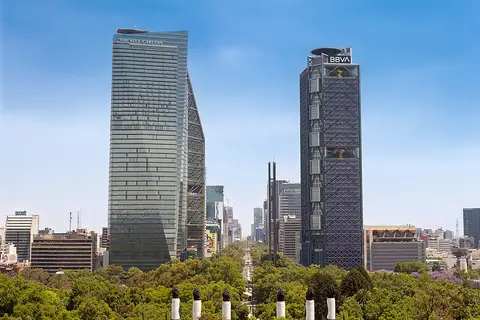
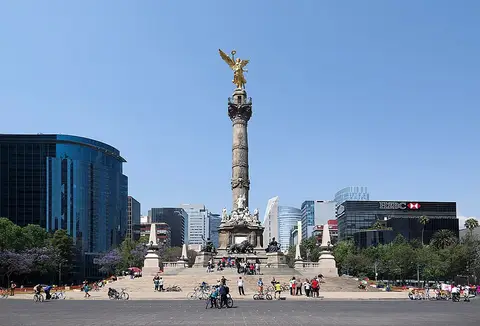
Benito Juárez International Airport (MEX) is close to the center; some domestic flights now use Felipe Ángeles Airport (NLU) north of the city. The Metro is inexpensive and extensive, but very crowded at rush hour. It is supplemented by the Metrobús network, cable cars in the outlying districts, and ride-hailing apps. On Sundays, the Paseo de la Reforma is closed to cars and belongs to cyclists and strollers. As in any big city, keep valuables close to your body and use app-based taxis at night rather than hailing one on the street.
Best Time to Visit
Thanks to the altitude, the climate is mild year-round. The dry months from October to May are considered the best time to visit, though December and January can be quite chilly in the mornings and air quality suffers in April and May. From June to September, it rains hard almost every afternoon, while the mornings are usually sunny. A special experience is the Día de Muertos in early November, when altars, marigolds, and a large parade transform the city.