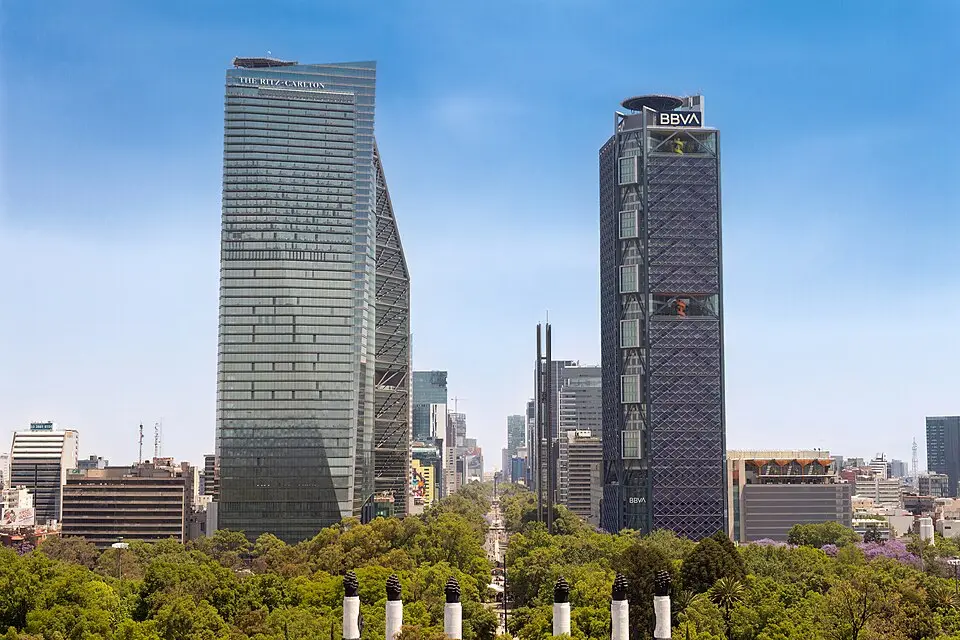
About Av. Paseo de Reforma
The Paseo de la Reforma is Mexico City's most important east-west artery, stretching roughly fifteen kilometers in length and sixty meters in width. This historic avenue was originally laid out on the orders of Emperor Maximilian, who wanted to create a direct link between his residence at Chapultepec Castle and his seat of government at the Zócalo. After he was deposed, it was first known as the Paseo de los Hombres Ilustres before receiving its present name in honor of President Benito Juárez's reform laws. Today, a mix of upscale hotels, restaurants, embassies, and modern office buildings shapes the look of the metropolis. The middle stretch is considered the economic heart of the city, home to the stock exchange as well as some of the country's tallest skyscrapers, including the Torre Mayor.
The avenue begins in the northeast at Tlatelolco and first passes the Plaza de las Tres Culturas. After a short distance, you reach the Glorieta Cuitláhuac, a monument honoring the last Aztec ruler, who died of smallpox. Farther southwest lies Plaza Garibaldi, a well-known center of mariachi music and the terminus of Metro Line 8. At the intersection with Avenida Hidalgo is Plaza Hidalgo, which is defined by the nearby Alameda Central and the Baroque church of San Hipólito. In the cemetery of the neighboring church of San Fernando rest important figures from Mexican history such as Benito Juárez and Vicente Guerrero.
Another major junction forms at the intersection with Avenida Juárez, which leads toward the Zócalo. On the opposite side lies the Plaza de la República with the Monumento a la Revolución, a converted parliament building that commemorates the Mexican Revolution and holds the remains of Francisco Madero and Venustiano Carranza. The next stretch is especially commercial and is home to the Zona Rosa, a district full of boutiques and restaurants. Here you will also find monuments to Christopher Columbus and to Cuauhtémoc, the last Aztec emperor, whose monument took more than nine years to complete.
The avenue's best-known landmark is the Independence Monument, popularly called El Ángel. This 36-meter-high column, designed by Antonio Rivas Mercado, is topped by a gilded bronze figure of an angel. The angel holds a laurel wreath and a broken chain symbolizing liberation from Spanish rule. The monument was inaugurated in 1910 for the centennial of independence. The surrounding plaza is a popular gathering place for celebrations, especially after victories by the national soccer team. Another striking sculpture is La Diana Cazadora, a bronze statue of the Roman goddess of the hunt, created in 1942, whose story ran from initial controversy to its final installation in 1992.
After a right turn in front of the entrance to the Bosque de Chapultepec, the avenue runs straight through the park. This area is home to cultural highlights such as the Museo de Arte Moderno and the Museo Nacional de Antropología, which displays a comprehensive collection of pre-Hispanic culture. The Chapultepec Zoo and the Auditorio Nacional are also close by. The Torre Mayor, the tallest building in Latin America, stands just before this bend and is built to withstand even strong earthquakes. Here the avenue also serves as a feeder to the highway that crosses the park, connecting the historic and cultural centers with the city's other neighborhoods.
At a glance
- Category
- Sight › Historic sites
- Rating
- no reviews yet · write a review
- Address
- Av. P.º de la Reforma 25
06600 Mexico City, Mexico - District
- Tabacalera
- Phone
- +525550091930
- Website
- —
- —
- Coordinates
- 19.43444° N · -99.15194° E
- Data quality
- confidence 0.84
- Identifier
- ID 1fd3d49c-523…
Location & surroundings
Toggle layersFAQ about Av. Paseo de Reforma
quick answersWhat is the Paseo de la Reforma in Mexico City?
The Paseo de la Reforma is Mexico City's most important east-west artery and a historic grand boulevard. It is about 15 kilometers long and 60 meters wide and runs from Tlatelolco in the northeast toward the southwest. Today, upscale hotels, restaurants, embassies, and modern office buildings define its look. The middle section, the economic heart of the avenue, is home to the stock exchange and some of Mexico's tallest skyscrapers, including the Torre Mayor.
How did the Paseo de la Reforma in Mexico City come about, and where does its name come from?
The Paseo de la Reforma was laid out on the orders of Emperor Maximilian to connect his residence, Chapultepec Castle, directly with his seat of government at the Zócalo. After he was deposed, the street was initially called Paseo de los Hombres Ilustres. It received its current name in honor of the Reform Laws of President Benito Juárez.
What is El Ángel on the Paseo de la Reforma?
El Ángel is the popular name for the Independence Monument, the best-known landmark on the Paseo de la Reforma in Mexico City. The 36-meter-tall column was designed by Antonio Rivas Mercado and dedicated in 1910 for the centennial of independence. At its top stands a gilded bronze angel holding a laurel wreath and a broken chain, symbolizing liberation from Spanish rule. The plaza around the monument is a popular gathering spot for celebrations, such as after victories by the national soccer team.
Which sights can you visit along the Paseo de la Reforma in Mexico City?
Along the Paseo de la Reforma you'll find a string of plazas and monuments tied to Mexican history. They include the Plaza de las Tres Culturas, the Glorieta Cuitláhuac, Plaza Garibaldi, famous for its mariachi music, and Plaza Hidalgo, with the nearby Alameda Central and the Baroque church of San Hipólito. Benito Juárez and Vicente Guerrero are buried in the cemetery of the San Fernando church, and at the Plaza de la República the Monumento a la Revolución commemorates the Mexican Revolution. Farther southwest you'll find the monuments to Christopher Columbus and Cuauhtémoc, as well as the bronze statue La Diana Cazadora from 1942.
Are there restaurants near the Paseo de la Reforma in Mexico City?
Yes, there is a wide range of dining options around the Paseo de la Reforma in Mexico City. travelguide195 lists around 231 restaurants within 500 meters of the address Av. P.º de la Reforma 25 in the Tabacalera neighborhood. In addition, the Zona Rosa along the avenue is known as a district with many boutiques and restaurants.
Ratings & comments
none yetNear Av. Paseo de Reforma
closest 5 per category · 2 kmSights
Restaurants
Museums
Hotels
More:Historic sites in Mexico City (2,578)Sights in Tabacalera (19)All sights in Mexico City (2,702)
300 places within 2 km loaded.
Don't miss in Mexico City
All sights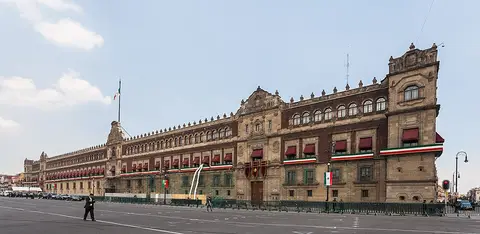 Historic sites01
Palacio Nacional
Avenida Pino Suarez · Mexico City● Website● Phone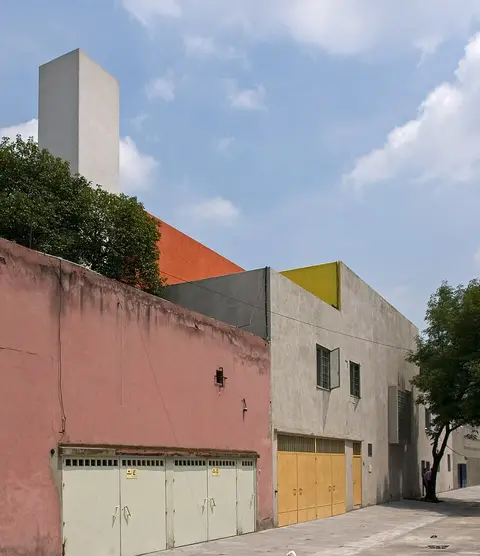 Historic sites02
Casa Estudio Luis Barragán
Gral. Francisco Ramírez 12 · Mexico City● Website● Phone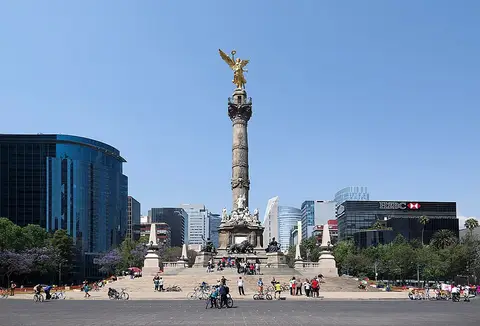 Monuments03
The Angel of Independence
Av. P.º de la Reforma s/n · Mexico City● Website○ Phone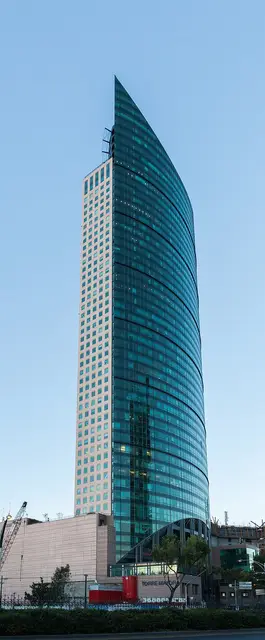 Historic sites04
You need a free account to leave reviews and photos – that keeps comments genuine and lets you edit them later.
A long avenue with fine examples of architecture, numerous banks and offices, and spectacular monuments. Modeled after the great boulevards of Europe, it was to link the National Palace with the imperial residence, Chapultepec Castle. It is now lined with luxury restaurants and hotels, office buildings and public art exhibitions.
Source: Wikivoyage, „Mexico City/Zona Rosa“ · authors per page history · CC BY-SA 4.0 · as of 3/8/2026