Discover Tsu: Temple Town, Tenmusu, and Ise Bay
Travel guide · editorialTsu has the shortest place name in Japan, written with just a single character in Japanese – and is often overlooked precisely because of it. If you stop here on a trip through Mie Prefecture on your way to Ise, you'll find one of the great temples of Pure Land Buddhism, the castle walls of a famous fortress builder, and small rice balls with shrimp tempura that conquered all of Japan from here.
Port Town and Castle
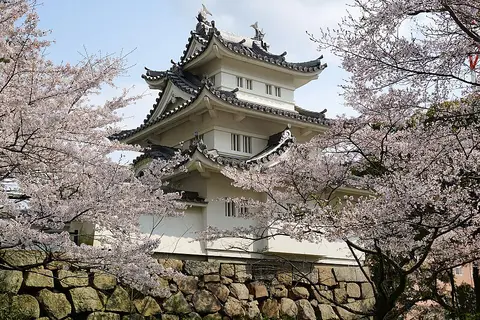
In the Middle Ages, Anotsu, as the town was then called, was one of Japan's three great ports, until an earthquake and tsunami destroyed the harbor in 1498. In the 17th century, Tōdō Takatora, one of the most important castle builders of his day, expanded Tsu Castle and laid out the town. The high stone walls and moat survive in Ochiyama Park, and a reconstructed corner tower and an equestrian statue of Takatora commemorate him. Tsu became a post station on the Ise Kaidō, along which hundreds of thousands of pilgrims traveled each year to the great shrine at Ise, and a saying held that Ise owed its fame to Tsu.
Sights in Tsu
In the Isshinden district stands Senju-ji, the head temple of the Takada school of Jōdo Shinshū Buddhism. The huge wooden Mieidō hall and the Nyoraidō are National Treasures; around the temple, a small temple town with canals, shops, and inns has been preserved. In the center stands Tsu Kannon, one of Japan's three great Kannon temples, with markets in the surrounding lanes. The Mie Prefectural Museum (MieMu) and the Mie Prefectural Art Museum show the history and art of the region. To the west lies Sakakibara Onsen, whose springs Sei Shōnagon praised in her Pillow Book over a thousand years ago.
Eating in Tsu
Tsu is considered the birthplace of tenmusu: small rice balls filled with shrimp tempura and wrapped in nori. Invented in the 1950s at a local restaurant, they later became famous in Nagoya. Another specialty is Tsu gyōza, a giant fried dumpling originally created for school lunches. Tsu is also known for its high eel consumption; many long-established restaurants grill unagi over charcoal and serve it at prices lower than in Tokyo. Oysters, clams, and seaweed come from Ise Bay.
Festivals and Nightlife
In October, the town celebrates the Tsu Festival with the Tōjin Odori, a dance in costumes reminiscent of the Korean delegations of the Edo period, along with parades and lion dances. In the evening, life spreads out across the lanes around Tsu and Tsu-Shinmachi stations and the Ōmon district, with izakaya and small bars that also pour sake from breweries in the prefecture.
Getting There and Best Time to Visit
By Kintetsu train, you can reach Tsu from Nagoya in about 50 minutes, and Ise is just under another hour away. Particularly convenient is the Tsu Airport Line high-speed boat, which crosses the bay to Centrair Airport in about 45 minutes. The best times to visit are spring and fall; in summer, the beaches on Ise Bay invite you to swim.