Mie Prefecture: Ise Shrine, Pearls, and Ninja
Travel guide · editorialA vacation in Mie Prefecture leads you to the holiest site of Shintō: Ise Shrine, dedicated to the sun goddess Amaterasu. Surrounding it are the rugged Shima coastline with its pearl farms and women divers, the ninja town of Iga, and sections of the Kumano Kodō pilgrimage route. The prefecture is easy to reach from Nagoya and Osaka, yet international travelers often overlook it.
Location and Landscape
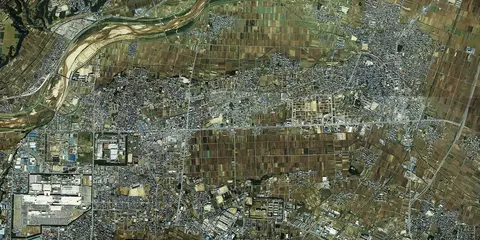
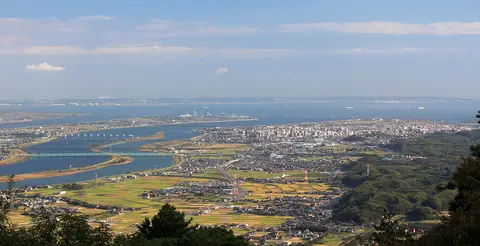
Mie lies on the eastern side of the Kii Peninsula and stretches roughly 170 kilometers from north to south. The north, on Ise Bay, with Kuwana, Yokkaichi, Suzuka, Tsu, and Matsusaka, is flat and shaped by industry. In the west, the Suzuka Mountains separate Mie from Shiga, and the old ninja country lies in the Iga Basin. The south grows increasingly wild: the Shima Peninsula, with its ria coastline and islands, is part of Ise-Shima National Park, and the Kumano coast in the far south is characterized by sheer cliffs and cedar forests.
Sights in Mie Prefecture
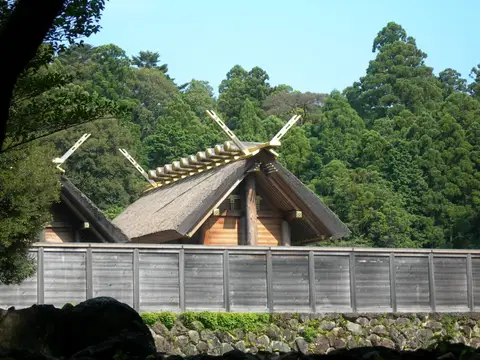
Ise Jingū consists of the Outer Shrine, Gekū, and the Inner Shrine, Naikū, which are surrounded by more than a hundred smaller sanctuaries. The simple wooden buildings have been rebuilt identically every 20 years for almost 1,300 years; the next rebuilding is planned for 2033, and preparations are already under way. In front of Naikū lies Oharai-machi, a lane lined with wooden houses, shops, and food stalls. Near Futami stand the Meoto Iwa, two "wedded rocks" in the sea joined by a straw rope. In Toba, Mikimoto Pearl Island recalls that cultured pearls were first produced here in 1893; women divers in white suits demonstrate their work. The Toba Aquarium is one of the largest in Japan.
Iga, Kumano, and the Hinterland
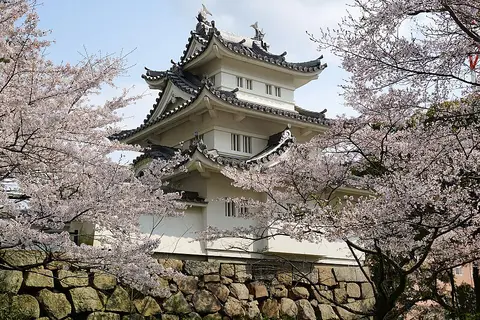
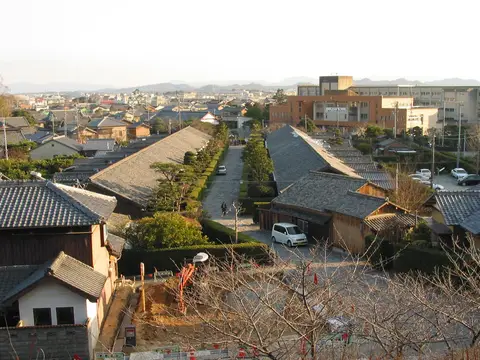
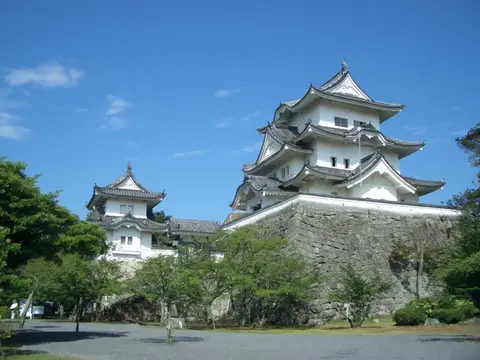
In Iga, home of the ninja school of the same name, a museum displays hidden doors and throwing stars; the haiku poet Bashō was also born here. Iga Ueno Castle has one of the highest stone walls in Japan. Seki-juku on the old Tōkaidō preserves a post town with hundreds of historic houses. In the south, sections of the Kumano Kodō, the Iseji Route, lead over stone paths through cedar forests; the Magose Pass is especially impressive. On the coast near Kumano you will find Shishi-iwa, a rock shaped like a lion, and Shichirimihama Beach. Since 1987, Suzuka has regularly hosted the Formula 1 Japanese Grand Prix. Iga is also home to Iga-yaki, a type of pottery whose heat-resistant clay pots for stews are prized throughout the country.
Food and Drink
Along with Kōbe, Matsusaka beef ranks among the finest varieties of wagyu; the cattle are said to be fed beer and massaged, though legend and reality blur here. Ise-ebi, spiny lobster from Shima Bay, is the region's specialty, as is awabi, abalone, which the ama women divers harvest and grill in beachside huts. Ise udon is served with thick, soft noodles and a dark sauce. Akafuku, rice cakes topped with sweet bean paste, is the classic pilgrim's souvenir from Ise. Yokkaichi has tonteppanyaki, thick pork steaks with garlic sauce, and Kuwana was famous for its clams.
Culture and History
Since the Middle Ages, millions of Japanese have made pilgrimages to Ise; in the Edo period, the "Ise-mairi" became a mass movement for which some entire villages saved up. The ama divers of Toba and Shima have been diving for seafood without breathing equipment for thousands of years; this tradition is under threat today as the number of active women declines. In 2016, Shima hosted the G7 summit. Matsusaka was home to influential merchant families such as the Mitsui, and the house of the scholar Motoori Norinaga has been preserved. Kuwana has the Rokkaen Garden with a villa by the British architect Josiah Conder, and nearby Nagashima is home to one of Japan's largest amusement parks, with roller coasters and a winter light show.
Getting There and Best Time to Visit
You can reach Ise and Toba on the Kintetsu Railway from Nagoya in about 90 minutes, and from Osaka and Kyōto in roughly two hours; the Shimakaze panoramic trains run as far as Kashikojima. JR lines connect Nagoya with Tsu and the south. From Centrair Airport there is also a high-speed ferry to Tsu. Spring and fall are considered the best times to visit. For the Kumano Kodō, October through May is pleasant; in summer the forest paths can get muggy. Around New Year's, Ise Shrine is extremely crowded.