Discover Yokkaichi: Factory Lights, Banko Pottery, Tonteki
Travel guide · editorialAt night, the refineries and chemical plants along the harbor glitter like a science-fiction set, and excursion boats head out specifically to see them. A trip to Yokkaichi reveals an industrial city that is open about its difficult environmental history, along with pottery, hearty food, and easy access to Suzuka and the Ise region.
From Market Day to Industrial City
The name means "fourth-day market": in the Middle Ages, trading took place here on every day of the month with a four in the date. Later, Yokkaichi was a post station on the Tōkaidō road, where travelers turned off toward Ise. After World War II, one of Japan's first large petrochemical complexes was built at the harbor. The boom had a dark side: sulfurous exhaust fumes caused severe asthma in many residents, and Yokkaichi asthma became one of the country's four major pollution-related diseases. The Yokkaichi Pollution and Environment Museum tells this story powerfully and documents how court rulings and strict regulations made the air clean again.
Sights in Yokkaichi
Today the industrial landscape is an attraction in its own right: on evening boat tours or from the observation deck of the Umi Terrace port building, you look out over a sea of lights made up of smokestacks, pipelines, and flares, which draws photographers from all over Japan. It is quieter in the temple and shrine district around Suwa Shrine, whose big festival in August brings the whole city center to life with parades, dragons, and mechanical puppet floats. In the west of the city, tea plantations and the rolling hills at the foot of the Suzuka Mountains invite you to take a stroll; Yokkaichi is one of the most important growing areas for Ise tea.
Banko Pottery
Banko ware has been fired in Yokkaichi since the 18th century. Particularly well known are the heat-resistant donabe, clay pots for stews cooked at the table, a large share of which sold in Japan come from this area, as well as the purple-brown teapots made of unglazed clay. In the north of the city you'll find workshops, shops, and a Banko information center, and in May a large ceramics market draws collectors and bargain hunters.
Eating in Yokkaichi
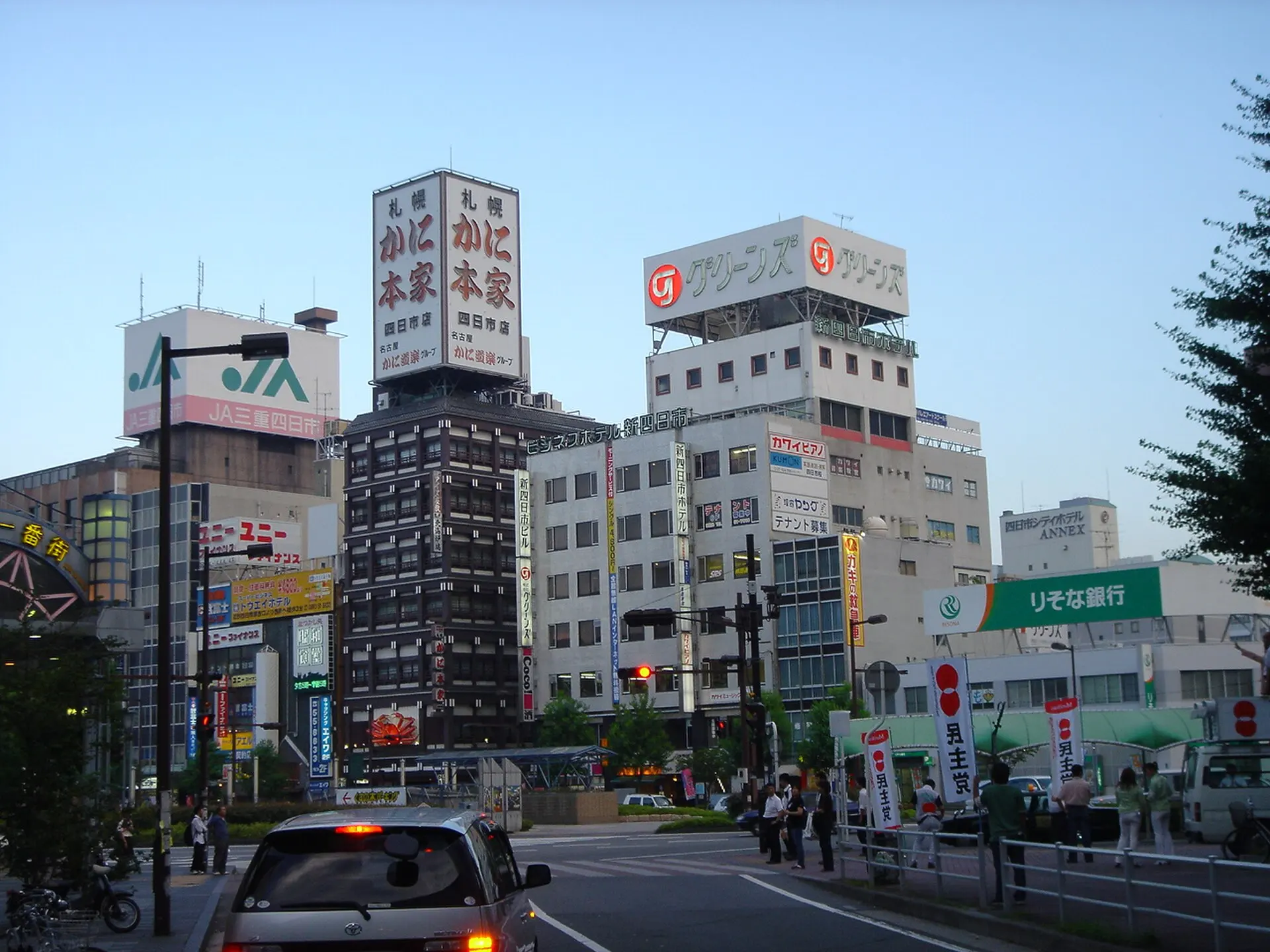
The local specialty is tonteki: a thick pork steak, cut in a fan shape, fried in a dark, sweet-and-savory sauce with plenty of garlic and served with cabbage. In the downtown area around Kintetsu-Yokkaichi Station, many restaurants have their own version. You'll also find seafood from Ise Bay, udon, and sake from breweries in the surrounding area. The entertainment district around the shopping arcades is lively in the evening, with izakaya and small bars. If you have a sweet tooth, try nagamochi, flat rice cakes with red bean paste, which travelers on the Tōkaidō already bought as trail food and which are still considered a typical souvenir from Yokkaichi.
Getting There and Day Trips
By Kintetsu train, you can reach Yokkaichi from Nagoya in about 30 minutes, and the JR Kansai Line runs in parallel. Motorsport fans can reach the Suzuka Circuit, home of the Formula 1 Grand Prix, in half an hour, and the Nagashima Spa Land amusement park with its roller coasters is only a few stops to the north. It takes about an hour to reach Ise with its great shrine. The best times to visit are spring and fall, when the air is clear and the factory lights shine especially sharp.