Discover Shimonoseki: Pufferfish, Strait, and Samurai
Travel guide · editorialAt the Kanmon Strait between Honshū and Kyūshū, the sea is so narrow that you can walk beneath it on foot. A trip to Shimonoseki on the western tip of Honshū takes you to the sites of fateful battles in Japanese history, to the country's most famous pufferfish market, and to one of Japan's most beautiful bridges.
History on the Strait
In 1185, the naval Battle of Dan-no-ura took place in the strait, ending the war between the Taira and Minamoto clans. The young Emperor Antoku, just six years old, sank beneath the waves with his grandmother. He is remembered at the Akama Shrine with its brilliant white and red dragon gate; next to it lie the graves of the Taira, around which the legend of the blind lute player Hōichi has grown. On the small island of Ganryūjima, Miyamoto Musashi and Sasaki Kojirō fought their duel in 1612. In 1895, the Treaty of Shimonoseki, which ended the First Sino-Japanese War, was signed at the Shunpanrō inn; a small museum next door displays the negotiating room.
Sights in Shimonoseki
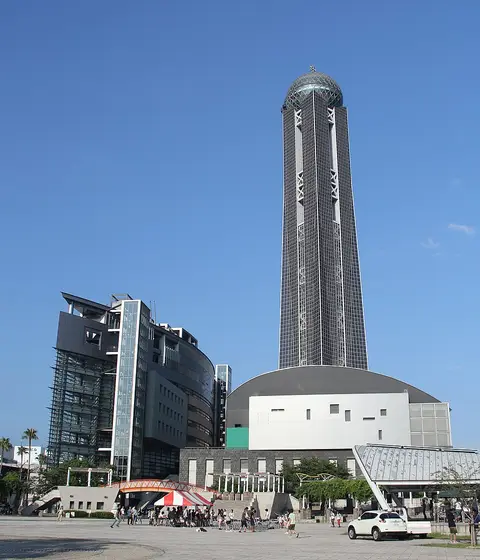
From the waterfront at Mimosusogawa, an elevator leads to the Kanmon pedestrian tunnel, which runs about 780 meters beneath the sea to Moji in Kyūshū; in the middle, a line marks the border between the prefectures. The Kaikyōkan aquarium shows more than a hundred species of pufferfish, and from the Kaikyō Yume Tower you can look out over the strait, where ships pass day and night. In the Chōfu district, samurai houses, earthen walls, and the garden of Kōzan-ji Temple have been preserved; its Buddha hall is a National Treasure. In the north of the city, the Tsunoshima Bridge stretches about 1.8 kilometers, connecting the coast with an island over emerald-green water.
Fugu and the Karato Market
Shimonoseki is the pufferfish capital of Japan, and a large share of the country's fugu is handled here. Locally it is called fuku, which also means good fortune. On weekends, the Karato Market at the harbor turns into a sushi bazaar, where you can buy fresh nigiri and fugu sashimi at the stalls and eat them on the quay. In restaurants, fugu is served as paper-thin sashimi, sliced so fine that the plate shows through, as a hot pot, or deep-fried; only licensed chefs are allowed to prepare it. Another specialty is kawara soba: green tea soba served on a hot roof tile.
Festivals and Excursions
From May 2 to 4, the Senteisai at the Akama Shrine commemorates Emperor Antoku: women in splendid Heian-period robes process across a bridge to the shrine, just as the court ladies of the fallen Taira once did. In August, a large fireworks display lights up the strait, launched from both shores at the same time. On the other side of the tunnel, Mojikō is worth a stroll for its restored brick buildings from the Meiji and Taishō eras, and it's also the place to try yaki curry.
Getting There and Best Time to Visit
The Shinkansen stops at Shin-Shimonoseki, and from there the JR line gets you to the city center quickly; the train takes only a few minutes to Kokura on Kyūshū. Ferries run to Moji and overnight to Busan in South Korea. The best time for fugu is from October to February, for beaches and the Tsunoshima Bridge it's summer, and for walks in Chōfu it's spring with the cherry blossoms.