Yamaguchi Prefecture: Between Two Seas at the Tip of Honshū
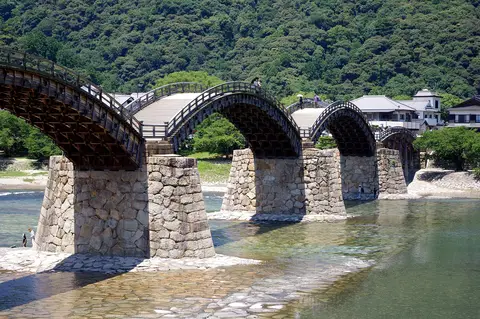
Travel guide · editorialYamaguchi lies at the western tip of Honshū, where only a narrow strait separates the main island from Kyūshū. A vacation in Yamaguchi Prefecture takes you to a wooden arch bridge, a chain of red torii gates above the sea, limestone caves, and the capital of pufferfish. In the 19th century, the prefecture was the starting point of the revolution that modernized Japan.
Landscape and Location
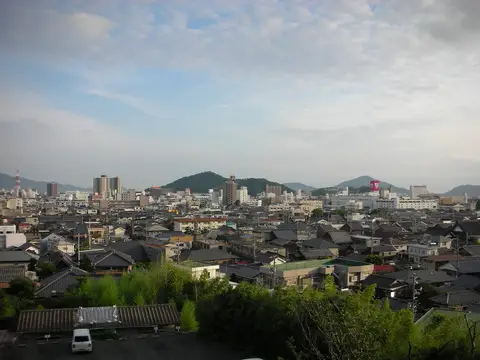
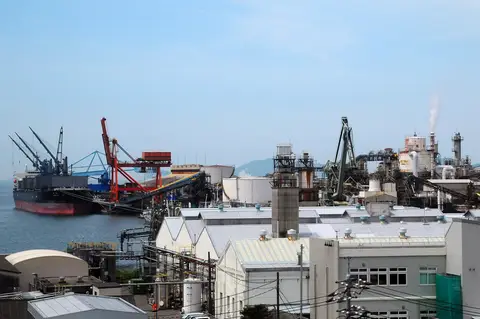
Yamaguchi is surrounded by three bodies of water: the Seto Inland Sea to the south, the Sea of Japan to the north, and the Kanmon Strait to the west. The south coast, with Iwakuni, Shūnan, Hōfu, and Ube, is shaped by industry, while the north coast around Hagi and Nagato is rugged and dotted with islands. Inland, the Akiyoshidai, Japan's largest karst plateau, stretches out with grasslands, sinkholes, and limestone outcrops. Small islands such as Tsunoshima can be reached by bridge.
Sights in Yamaguchi Prefecture
The Kintai Bridge in Iwakuni spans the Nishiki River with five wooden arches; it was built in 1673, faithfully reconstructed after a flood in 1950, and is framed by cherry trees in spring. Above it stands the rebuilt Iwakuni Castle. Beneath the Akiyoshidai lies Akiyoshi Cave, one of the largest limestone caves in Asia, with an underground river and terraced travertine pools. Near Nagato, the Motonosumi Shrine descends a cliff to the sea with 123 red torii; an offering box is mounted high up on one of the torii, and anyone who manages to hit it is said to be blessed with good luck. The Tsunoshima Bridge leads across turquoise water to a small island with a lighthouse. In Yamaguchi City stands the five-story pagoda of Rurikō-ji, one of the most beautiful in Japan.
Cities and History
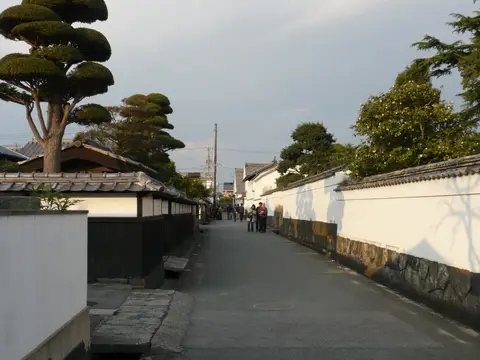
Yamaguchi City was founded in the 14th century by the Ōuchi family, modeled on Kyoto, and is therefore known as the "Kyoto of the West." The Jesuit Francis Xavier preached here in 1551; a memorial church commemorates the event. Hagi was the castle town of the Mōri lords of the Chōshū domain, which, together with Satsuma, overthrew the shogunate. Samurai districts, clay walls lined with mandarin orange trees, and the Shōka Sonjuku school, where Yoshida Shōin taught many future leaders of the Meiji era, are part of the World Heritage site of the Industrial Revolution. Hagi ware, with its soft glazes, is prized for the tea ceremony. Hōfu is home to Hōfu Tenmangū, one of the oldest Tenjin shrines. Shūnan, formerly Tokuyama, is an industrial city whose plants can be seen lit up at night on boat tours, and Ube has Tokiwa Park with outdoor sculptures by the lake. Nagato on the north coast has the old hot spring towns of Yumoto and Tawarayama, and the fishing village of Senzaki was the birthplace of the poet Misuzu Kaneko, whose children's poems almost everyone in Japan knows.
Shimonoseki and the Strait
Shimonoseki is the gateway to Kyūshū; a pedestrian tunnel beneath the Kanmon Strait leads across to Moji, so you cross the prefectural border on foot under the sea. In 1185, the naval Battle of Dan-no-ura raged here, marking the end of the Taira clan; the Akama Shrine honors the child emperor Antoku, who drowned in the battle. The Treaty of Shimonoseki ended the First Sino-Japanese War in 1895. The Karato Fish Market opens on weekends with sushi stalls. Ferries run from Shimonoseki to Busan in South Korea.
Food and Drink
Shimonoseki is the fugu capital of Japan, and a large share of the country's pufferfish is traded here; licensed chefs serve it sliced paper-thin as sashimi, in hot pot, or deep-fried. In Yamaguchi people say "fuku" instead of fugu, which also means "good fortune." Kawara soba, green tea noodles served on a hot roof tile, originated in Kawatana Onsen. Iwakuni-zushi is layered in large wooden boxes. The sake Dassai from Iwakuni has become famous worldwide and is an example of the prefecture's modern brewing scene. Uirō, a soft confection made from rice flour and beans, is the classic souvenir from Yamaguchi City. Hagi is also known for natsumikan, a tart citrus fruit that grows in the old samurai gardens and is made into jam and sweets.
Getting There and Best Time to Visit
The Sanyō Shinkansen stops at Shin-Iwakuni, Tokuyama, Shin-Yamaguchi, and Shin-Shimonoseki; Shin-Yamaguchi is about 30 minutes from Hiroshima. Yamaguchi Ube Airport and Iwakuni Airport, which is used by both civilians and the military, offer service to Tokyo. A rental car is practical for the north coast and the Akiyoshidai. The best times to visit are considered to be April, with cherry blossoms at the Kintai Bridge, and October through November. Fugu is in season from October to March, and in February the Akiyoshidai is burned off in a controlled fire to renew the grassland.