Discover Sakai: Imperial Tombs, Knives and Tea
Travel guide · editorialJapan's largest burial mounds sit right between residential streets and railroad tracks – and yet many travelers don't realize they have to come to Sakai to see them. A trip to Sakai is a short hop from Osaka to an old merchant city that shaped knife-making, tea culture and the imperial antiquity of Japan.
Kofun: World Heritage in the Shape of a Keyhole
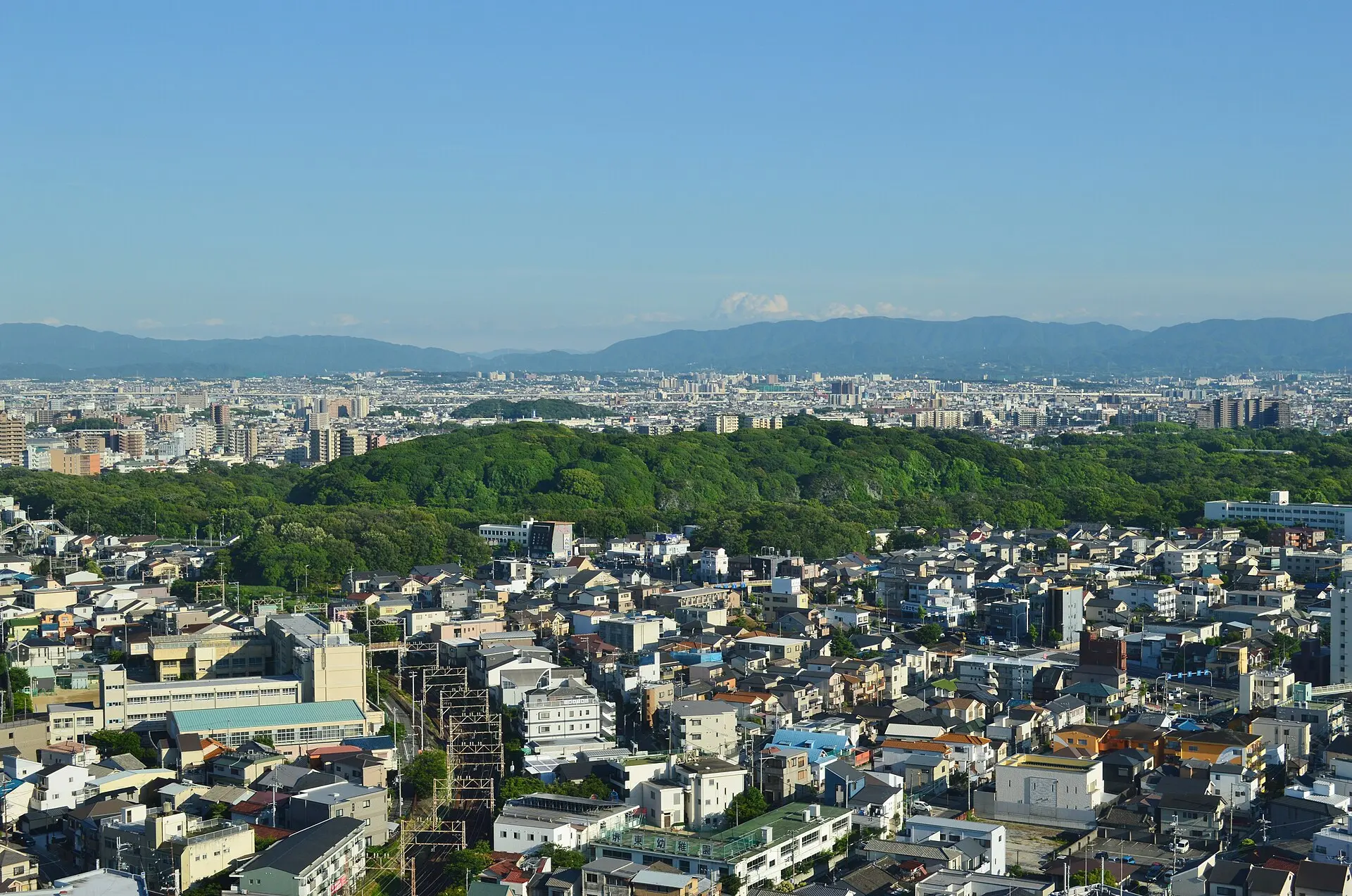
The Mozu-Furuichi Kofun Group became a UNESCO World Heritage site in 2019. Its core is the Daisen Kofun, attributed to Emperor Nintoku: a keyhole-shaped mound about 486 meters (1,594 feet) long, surrounded by three moats and densely wooded. You can't enter it, and from the ground you mostly see trees. The overall picture is easier to grasp from the free observation deck on the 21st floor of City Hall or at the city museum in neighboring Daisen Park, which displays grave goods and haniwa clay figures. A walking path of just under three kilometers (about 2 miles) leads around the mound.
The Merchants' City
In the 15th and 16th centuries, Sakai was a largely self-governing port city, surrounded by moats and ruled by wealthy merchants; Jesuit missionaries compared it to Venice. Firearms modeled on Portuguese designs were manufactured here, and Sen no Rikyū, who shaped the tea ceremony, was born here. The Sakai Rishō no Mori cultural center tells the story of him and of the poet Yosano Akiko, also a daughter of the city; in the teahouse you can enjoy a bowl of matcha.
Temples and a Lighthouse: Around the Old Town
Between the rail lines, much of old Sakai has survived. Myōkoku-ji temple is famous for a cycad more than a thousand years old, protected as a natural monument, and the Zen temple Nanshū-ji, closely tied to Sen no Rikyū, has a beautiful dry garden and a teahouse. At the former harbor stands the wooden lighthouse of 1877, one of the oldest surviving of its kind in Japan. A stroll from the lighthouse through the old town to the Rikyū Center takes barely an hour and shows you the city beyond the burial mounds.
Knives, Kombu and Sweets: Food and Crafts in Sakai
From weapon forges and tobacco knives developed a blade tradition that still attracts professional chefs around the world: Sakai knives are forged, sharpened and fitted with handles in workshops with a division of labor. At the Sakai Denshōkan, the museum of traditional crafts, you'll find demonstrations and a shop, and more forges are located in the alleys of the old town along the Hankai streetcar line. Also typical is the processing of kombu, which once arrived via the harbor, and, as a sweet, kurumi mochi, rice cakes under a green bean paste. For restaurants serving okonomiyaki, kushikatsu and izakaya fare, the neighborhoods around Sakai-Higashi and Sakai stations are the first place to look.
Getting Around Sakai and the Best Time to Visit
From Namba in Osaka, the Nankai line takes about 15 minutes to Sakai-Higashi or Sakai; for the Daisen Kofun, take the JR Hanwa Line to Mozu. Kansai Airport (KIX) is about half an hour away. The Hankai streetcar, the last of its kind in the Osaka area, rattles from Sakai all the way to Tennōji. For the scattered burial mounds, a rental bike is worthwhile, as the routes are flat. Spring and fall are pleasant; summer is humid and hot.