Discover Nara: Great Buddha, Deer, and Temples
Travel guide · editorialLong before Kyōto became the imperial capital, Japan's rulers governed from Nara. A trip to Nara takes you to the country's oldest wooden buildings, to a Buddha of enormous proportions, and into a park where deer bow to visitors – as long as they're expecting crackers.
Japan's First Permanent Capital
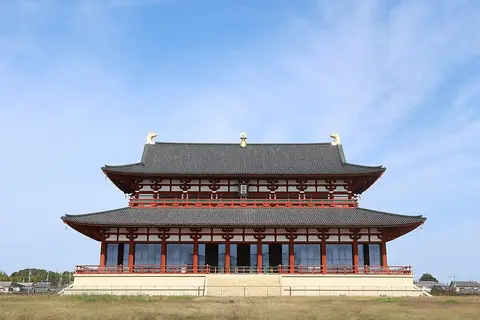
In 710, the capital Heijō-kyō was laid out on the Chinese model, with grid-like streets and a palace district in the north. Over the following decades, Buddhism, art, and writing flourished before the court moved on in 784. The temples stayed. On the sprawling grounds of the former Heijō Palace, you'll now find the reconstructed main hall, the Daigokuden, and the red Suzaku Gate, surrounded by meadows where you can get a sense of the dimensions of the ancient city. Eight sites have been protected as a World Heritage Site since 1998.
Sights in Nara
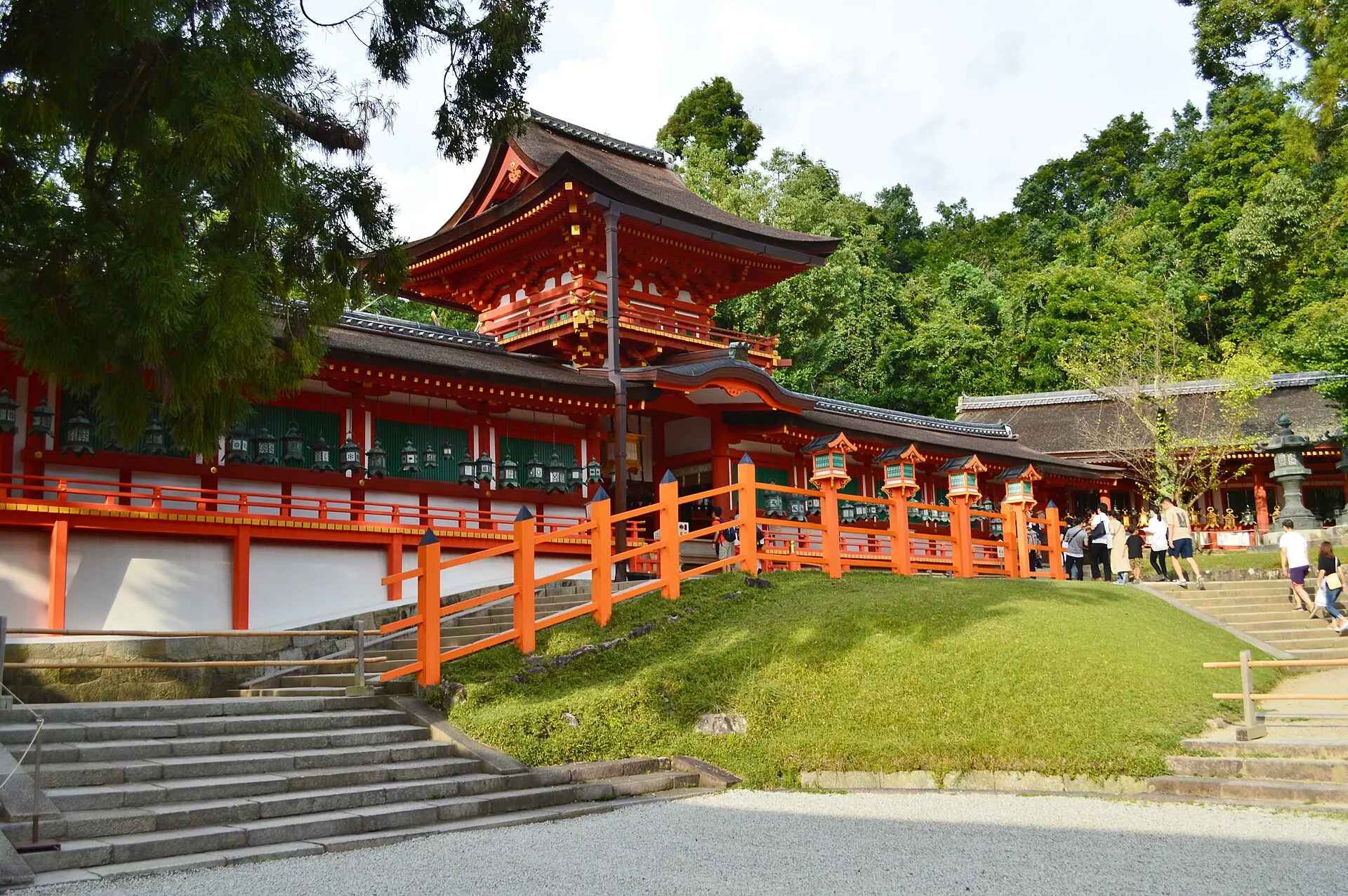
Tōdai-ji is the destination for most visitors. Its Great Buddha Hall is one of the largest wooden buildings in the world, and inside sits the bronze Daibutsu, about 49 feet tall. Anyone who crawls through the hole in one of the support pillars is said to attain enlightenment. At Kasuga-Taisha Shrine, hundreds of bronze lanterns hang among stone lanterns lining the forest paths, all lit during the lantern festivals in February and August. Kōfuku-ji with its five-story pagoda lies right next to the park; the pagoda is currently undergoing extensive restoration. The Nara National Museum displays Buddhist sculptures and, in autumn, treasures from the imperial storehouse Shōsō-in. A little farther out, Yakushi-ji and Tōshōdai-ji are worth a visit for their clean, elegant architecture.
Naramachi and Nara Park
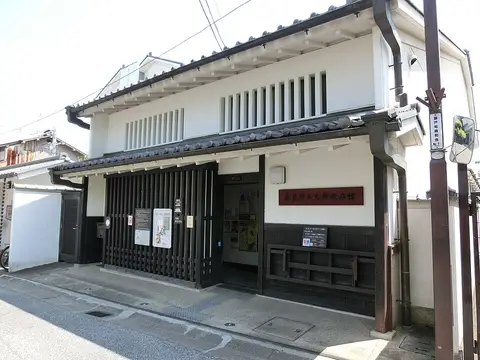
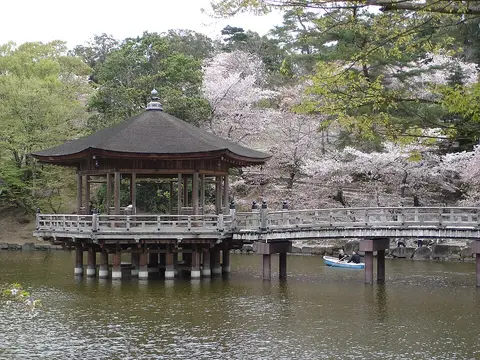
Around 1,300 sika deer live in Nara Park, where they roam freely and are considered messengers of the gods. They bow for deer crackers but can also get pushy. To the south lies Naramachi, the old merchant quarter with narrow wooden houses, cafés, sake breweries, and small museums. Isuien Garden near Tōdai-ji uses the temple's roofs as borrowed scenery. In late January, the grassy slope of Mount Wakakusa is set ablaze during Wakakusa Yamayaki, accompanied by fireworks.
Eating in Nara
Kakinoha-zushi, mackerel or salmon sushi wrapped in persimmon leaves, is the classic travel-food specialty. Narazuke, vegetables pickled in sake lees, tastes bold and slightly sweet. Gossamer-thin sōmen noodles, served cold in summer, come from nearby Miwa. Shōryaku-ji in Nara is considered one of the birthplaces of clear sake, and small breweries offer tastings. Restaurants in Nara are concentrated around the train stations and in Naramachi. The covered shopping streets Higashimuki and Sanjō-dōri, between Kintetsu Station and the park, offer snacks, teahouses, and shops selling kakigōri, shaved ice with syrup that has its own fan base in Nara. In the afternoon, a tea break in one of Naramachi's old wooden houses is worthwhile, where matcha is served with wagashi, small Japanese sweets. A mochi shop on Sanjō-dōri is also well known, where the rice cakes are pounded at lightning speed amid loud shouts – a spectacle that draws onlookers every day.
Getting Around and Best Time to Visit
The Kintetsu line takes about 35 to 45 minutes from Kyōto to Nara, and just as fast from Osaka-Namba; JR connects with Osaka and Kyōto. The main sights are within walking distance, and buses run to the temples in the west. The best times to visit are spring, with cherry blossoms, and November, with autumn foliage. If you go early in the morning, you'll have Tōdai-ji and the park almost to yourself.