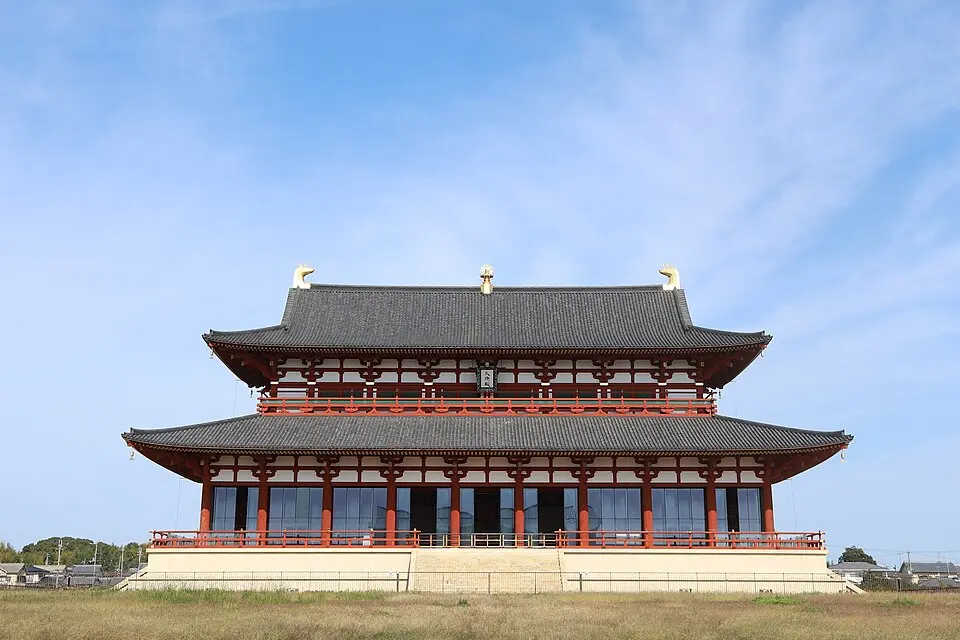
About Heijo Palace Remains
During the Nara period, from 710 to 794 AD, Heijō Palace served as the imperial residence and administrative center of Japan's capital at the time, Heijō-kyō, which stood on the site of present-day Nara. The complex lay in the north-central part of the city and followed the Chinese urban planning models adopted in the 7th century. It was not only the emperor's residence but also the seat of Japan's centralized government, including the major ministries. The palace was designed to bring together affairs of state, ceremonial functions, and the emperor's representative role in a fitting setting.
The history of the complex begins shortly after Empress Genmei's accession in 707, when it was decided to move the capital from Fujiwara-kyō to the northern edge of the Nara Basin. The new capital was officially established in 710, and the name Heijō was also pronounced Nara. The city layout was strongly based on Chang'an, the capital of China's Tang dynasty, and followed geomantic principles. The city spread across a rectangular area crossed by a grid of streets. The palace was placed at the northern end of the main axis, directly at the extension of Suzaku Avenue, which ran through the center of the city as its most important north-south thoroughfare.
The palace consisted of a large walled rectangle, known as the Daidairi, which housed numerous ceremonial and administrative buildings. Within this area lay the separately fenced living quarters of the emperor, the Inner Residence. It contained not only the ruler's living quarters but also the residences of the imperial consorts and buildings closely tied to the person of the emperor. The main buildings in the southern part of the palace complex included the Daigoku-den for affairs of state, the Chōdō-in for formal ceremonies, and the offices of various administrative bodies. This layout remained relatively stable over the centuries, as archaeological finds in earlier capitals show.
After the capital moved to Heian-kyō, present-day Kyoto, Heijō Palace was abandoned. Some buildings were carted away, while others were destroyed by fires and natural disasters. Over the centuries the site was used for farming, leaving hardly any visible traces of its former splendor above ground. Systematic excavations began only in the 1970s, uncovering the foundations and structures preserved underground. Since 1998, the site has been a UNESCO World Heritage Site as part of the "Historic Monuments of Ancient Nara."
Today, visitors can explore various reconstructed areas of the complex. Suzaku Gate, the largest of the palace's twelve gates, was rebuilt in 1998. It served as the main entrance and was part of a large two-story structure on a platform. The open plaza in front of the gate was used for ceremonies such as New Year celebrations. The East Palace Garden, located in the southeast corner of the palace, has also been reconstructed. Originally laid out in the Chinese style and later influenced by Japanese design, the garden surrounded a winding pond and contained several buildings, including the "Jewel Hall," where Empress Shōtoku held banquets.
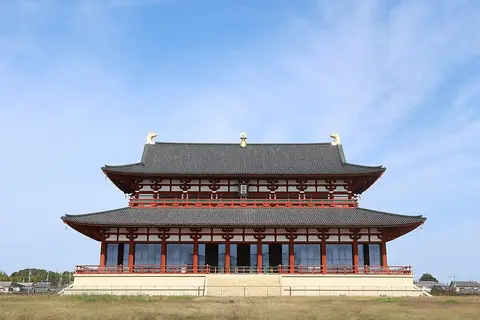
Another key sight is the Great Hall of State, the Daigoku-den, whose reconstruction was completed in 2010 for the 1,300th anniversary of the relocation of the capital. This was the most important state building and the venue for audiences and major ceremonies. At the center of the hall stood the throne, the Takamikura, a symbol of the imperial office. The reconstruction drew on archaeological finds, historical texts, and comparisons with other surviving buildings from the Nara period. The pillars and beams were painted vermilion, the walls white, and the interior was decorated with depictions of the Chinese zodiac and floral patterns.
In the area of the Inner Residence, you can find traces of the imperial living quarters, which were surrounded by a roofed corridor and an earthen wall. A large well was also discovered here, whose water was probably reserved for the exclusive use of the emperor and empress. The Office of the Imperial Household has also been reconstructed; it consisted of several buildings and was enclosed by an earthen wall. These reconstructions follow Nara-period building methods and offer a glimpse into daily life and administration at the imperial court.
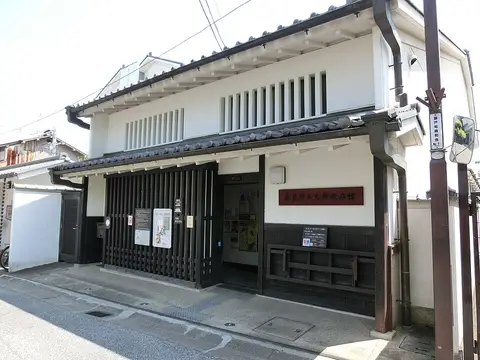
The Nara Palace Site Museum presents the results of the archaeological research that has been under way since 1959. Its galleries display artifacts and information on the palace's structure and administrative offices, as well as the archaeological sciences. The site gives visitors the chance to experience the historical significance of Heijō Palace as the center of Japanese government and culture during the Nara period and to view the reconstructed buildings in the context of the city planning of the day.
At a glance
- Category
- Sight › Historic sites
- Rating
- no reviews yet · write a review
- Address
630-8003 Nara, Japan- Phone
- +81742325106
- Website
- heijo-kyo.com
- —
- Coordinates
- 34.69072° N · 135.79429° E
- Data quality
- confidence 0.69
- Identifier
- ID 9f923b74-880…
Location & surroundings
Toggle layersRatings & comments
none yetNear Heijo Palace Remains
closest 5 per category · 2 kmCocktail bars
More:Historic sites in Nara (157)All sights in Nara (192)
147 places within 2 km loaded.
You need a free account to leave reviews and photos – that keeps comments genuine and lets you edit them later.