
Nara Prefecture: Japan's Cradle with Deer and Temples
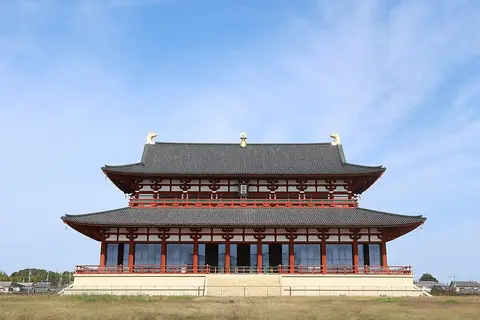
Travel guide · editorialBefore Kyōto became the capital, it was Nara: from 710 to 784, the imperial court resided here, and some of the oldest wooden buildings in the world date from that era. A vacation in Nara Prefecture means encounters with tame deer, enormous Buddha statues, and a landscape where the country's history began. To the south, mountain monasteries and pilgrimage routes await.
Landscape and Location
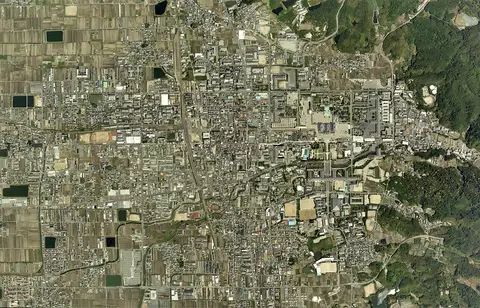
Nara is a landlocked prefecture in the heart of the Kii Peninsula. The north is the Nara Basin, home to the ancient capitals of the Yamato period; this is where you'll find Nara, Kashihara, Tenri, Yamatokōriyama, Kashiba, Yamatotakada, and Sakurai. To the west, the Ikoma and Kongō mountains separate the basin from Osaka. The south, about three-quarters of the prefecture's area, is a sparsely populated highland with deep valleys, cedar forests, and the Ōmine massif, which is part of the World Heritage pilgrimage routes in the Kii Mountains.
Sights in Nara Prefecture
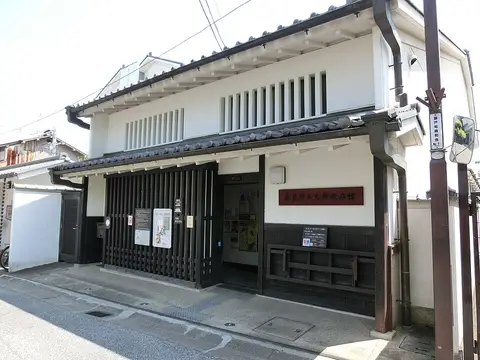
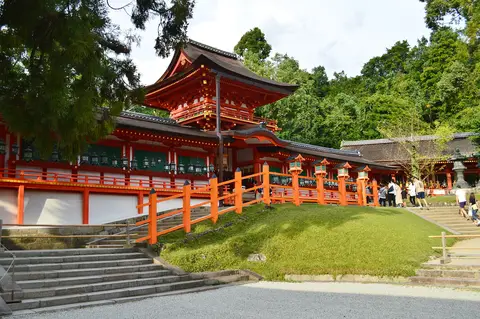
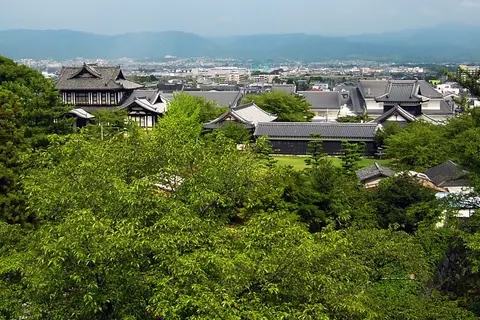
Nara Park is home to around 1,200 sika deer, regarded as messengers of the gods, which bow to visitors when they expect deer crackers. In one of the largest wooden halls in the world, Tōdai-ji houses a bronze Buddha about 15 meters (49 feet) tall; crawling through a hole in one of its pillars is said to bring enlightenment. Kasuga Taisha is lined with thousands of stone and bronze lanterns, which are lit in February and August during the lantern festival. Kōfuku-ji with its five-story pagoda and the old town district of Naramachi with its merchant houses are also worth a visit. Hōryū-ji in Ikaruga is considered the oldest surviving wooden building complex in the world and became Japan's first World Heritage site in 1993.
Destinations in Southern Nara
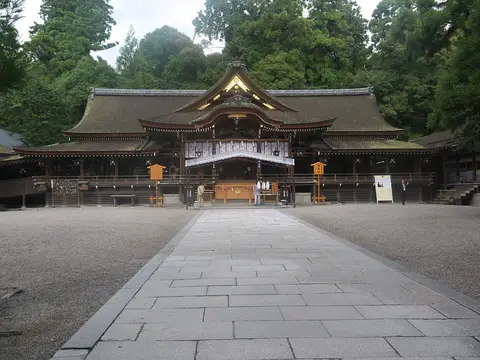
Asuka, the area around Kashihara and Sakurai, was the center of the emerging state in the 6th and 7th centuries; you can explore its burial mounds, stone figures, and rice fields by bicycle. Ōmiwa Shrine near Sakurai venerates an entire mountain as a deity, and Hase-dera, with its long covered staircase, is famous for its peonies. Tenri is home to the Tenrikyō religious community and Isonokami Shrine. Yoshino is the most famous place in Japan for cherry blossoms: around 30,000 trees bloom in April, progressing up the mountain from bottom to top. Farther south lie Dorogawa Onsen, the starting point for mountain ascetics heading to Ōmine, where women are still barred from the summit, and remote Totsukawa, with one of the longest pedestrian suspension bridges in Japan.
Culture and History
Nara was the eastern terminus of the Silk Road: the Shōsōin, the treasure house of Tōdai-ji, holds objects from Persia, China, and India, which are displayed at the National Museum every autumn. The city was a center of the early Buddhist schools, and Japan's first great poetry anthology comes from here. During Omizutori in March, Tōdai-ji monks swing burning torches over the railing of the Nigatsu-dō Hall at night, and in January an entire hill is set ablaze at the Wakakusa Yamayaki. Yamatokōriyama has been known for breeding goldfish since the Edo period; in the old town you'll see aquariums on house walls and tanks in front of shops.
Food and Drink
Kakinoha-zushi, mackerel or salmon on rice wrapped in persimmon leaves, was once carried into the mountains as long-lasting provisions. Narazuke, vegetables pickled in sake lees, has an intense flavor. Miwa-sōmen, fine wheat noodles from Sakurai, are eaten cold in summer. Nara is considered the birthplace of sake; the first clear sake is said to have been brewed at Shōryaku-ji. Kuzu starch from Yoshino is made into jelly and sweets, and chagayu, rice cooked in green tea, is a simple breakfast in the region.
Getting There and Best Time to Visit
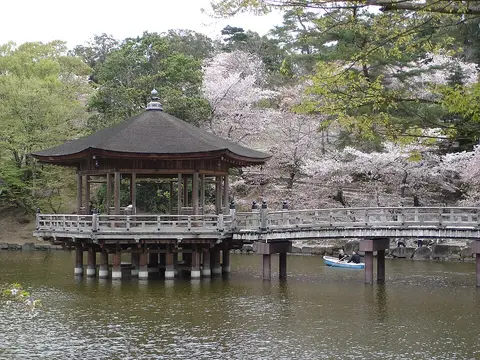
From Kyōto and Osaka, you can reach Nara on the Kintetsu line in 35 to 45 minutes; the JR lines stop a bit farther from the park. To get to Yoshino, take the Kintetsu Yoshino Line from Osaka-Abenobashi. For the south, a rental car or bus is recommended. Spring and fall are considered the best times to visit; in early April the cherry trees bloom in Nara Park and Yoshino, and in November maples and ginkgos blaze with color around the temples. In June the does give birth, and in October the stags' antlers are cut at Shika-no-Tsunokiri.