Discovering Maebashi: Silk, Poetry, and Mount Akagi
Travel guide · editorialIn winter, the dry "karakkaze" wind sweeps down from the mountains across the plain, and an old saying holds that in Gunma only two things are strong: the wind and the women. Maebashi, the prefectural capital, calls itself the city of water, greenery, and poetry – a trip to Maebashi leads you to silk history, rose gardens, and the volcano Akagi.
A Rise Built on Silk
In the 19th century, Maebashi became a center of the raw silk trade; after Japan opened to the world, silk from Gunma was exported in large quantities via Yokohama. At that time, the city had one of the country's first mechanized silk-reeling factories built. The wealth of that era is on display at Rinkōkaku, a Japanese-style guesthouse built to host distinguished guests. If you want to dig deeper into silk history, head to the Tomioka Silk Mill, a UNESCO World Heritage Site since 2014, about an hour away. Maebashi has been the seat of the prefectural government since 1881, a role it long contested with its neighbor Takasaki; the rivalry between the two cities is still a topic of conversation today. Takasaki has the Shinkansen station, Maebashi has the government offices and the literature.
Sights in Maebashi
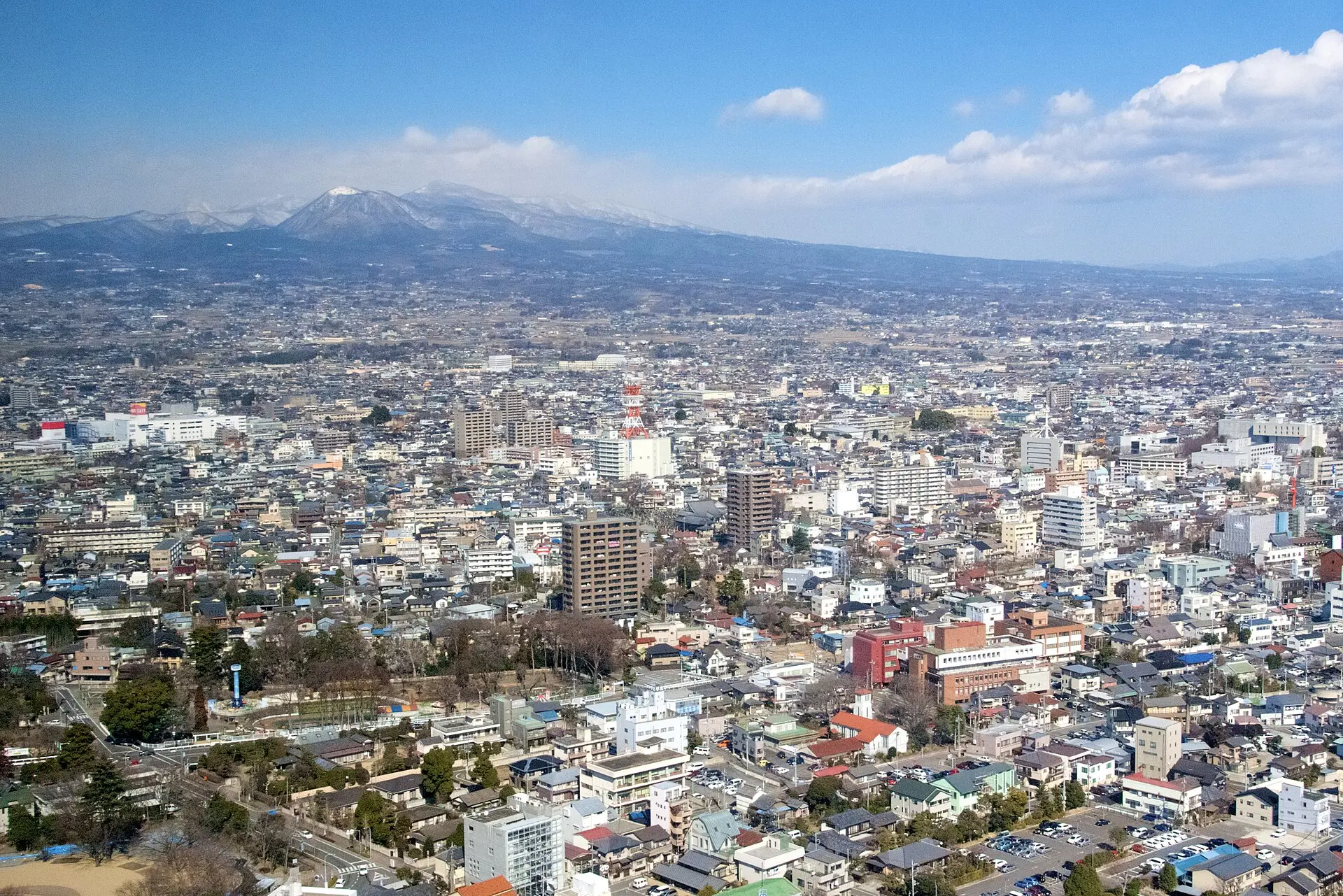
The Hirose River flows through the center, lined with willows, cherry trees, and a riverside promenade. Here you'll find the Museum of Literature, dedicated to the poet Hagiwara Sakutarō, the founder of modern Japanese colloquial poetry. In Shikishima Park, a large rose garden blooms in May and October. For a sweeping view across the Kantō Plain, visit the free observation floor on the top story of the Prefectural Government Building, one of the tallest buildings in the region; on clear days you can see Mount Akagi, Mount Haruna, and sometimes Mount Fuji. The downtown area has been enjoying a revival for several years now, visible for example at the Shiroiya Hotel, a converted old inn with a landscaped green hill designed by Sou Fujimoto.
Eating in Maebashi
Gunma is wheat country, so noodles play a big role. Okirikomi is a stew with wide, flat noodles and winter vegetables, ideal against the cold wind. Yaki-manjū, grilled steamed buns on a skewer with a sweet miso glaze, are sold at stands and festivals. You'll also find konjac from the prefecture and pork from regional farms, which many restaurants serve as tonkatsu.
Excursions to Mount Akagi
Mount Akagi is one of Gunma's three great mountains and is ever-present from the city. At the crater lake Ōnuma, the Akagi Shrine sits on a small peninsula with a red bridge; in summer you can hike through fields of azaleas, and in winter people go ice fishing on the frozen lake. The onsen towns of Ikaho and Kusatsu are also easy to reach from Maebashi.
Getting There and Best Time to Visit
Shinkansen travelers change to the Ryōmō Line at Takasaki and reach Maebashi after about 15 minutes. The Jōmō Electric Railway connects Chūō-Maebashi with Kiryū. Buses run to Mount Akagi, but a car is more practical. Spring with its cherry blossoms and roses, and autumn with the fall foliage on Mount Akagi, are the best times to visit.