Gunma Prefecture: Onsen Country in Northern Kantō
Travel guide · editorialFor many Japanese, a vacation in Gunma Prefecture means one thing above all: soaking. Hardly any region has as many famous hot springs, from Kusatsu to Ikaho to Minakami. Add to that volcanoes, gorges, a UNESCO-listed silk mill and the Daruma dolls of Takasaki – all just an hour from Tokyo by Shinkansen.
Landscape and Location
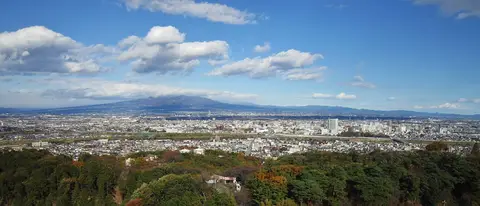
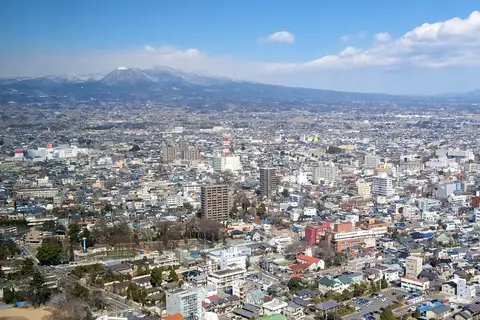
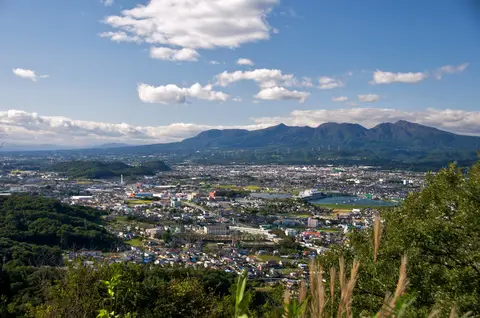
Gunma lies in the northwest of the Kantō Plain and is largely mountainous. Three mountains shape the skyline: Akagi, Haruna and Myōgi. On the border with Nagano, Mount Asama smokes, and in the north the peaks around Tanigawa rise above 1,900 meters. The Tone, one of Japan's major rivers, rises here and flows through the prefecture from north to south. The south, with Takasaki, Maebashi, Ōta, Isesaki and Kiryū, is flat and industrial; Ōta is home to the Subaru plant. Oze, a highland marsh on the border with Fukushima, is among the most beautiful natural areas in Japan.
Sights in Gunma Prefecture
The Tomioka Silk Mill was founded in 1872 with French assistance and was a symbol of Japan's modernization; its brick halls have been a UNESCO World Heritage Site since 2014. Takasaki has a giant white Kannon statue on a hilltop and Shōrinzan Daruma-ji temple, where the red-painted Daruma figures originated – you paint in one eye when you make a wish and the second when it comes true. On Mount Myōgi, via ferrata routes lead over bizarre rock spires, and in autumn the mountain road is lined with red maple leaves. The Fukiware Falls near Numata are called the "little Niagara." Near Tsumagoi, Onioshidashi Park shows hardened lava flows from the 1783 Asama eruption. Kiryū was a weaving town, and some of its sawtooth-roofed factories have been converted into cafés and galleries. Tatebayashi is known for the Tsutsuji-ga-Oka azalea hill and for Morin-ji temple, around which the legend of the teakettle tanuki revolves. In Shibukawa, which calls itself the navel of Japan, a boisterous belly festival is held in July.
Onsen Towns
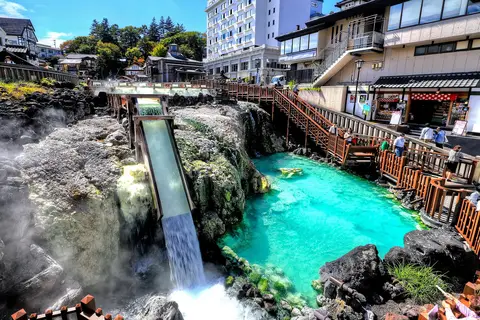
Kusatsu Onsen is considered one of Japan's best spa towns. In the town center, the Yubatake steams – an open spring field where strongly acidic, sulfurous water cools in wooden channels. In yumomi, women stir the hot water with long boards while singing. Ikaho Onsen on Mount Haruna is known for its 365 stone steps, lined with shops and inns, and for its iron-rich, brown water. Minakami offers riverside baths, and Shima Onsen has an old wooden inn said to be the inspiration for the bathhouse in the film "Spirited Away." Takaragawa Onsen has large open-air baths along a mountain stream.
Food and Drink
Gunma is flour country; more wheat is grown here than in most parts of Kantō. Mizusawa udon from near Ikaho is one of Japan's three best-known udon varieties. Okkirikomi is a stew with wide noodles and winter vegetables, and yaki-manjū are grilled yeast buns with a sweet miso glaze. Konnyaku, a jelly made from the devil's tongue plant, comes mostly from Gunma, as does Shimonita leek, which is especially sweet in winter. Kiryū and Isesaki are known for sauce katsudon, Tatebayashi for udon and noodle factories.
Nature and Activities
Minakami has developed into an outdoor hub: rafting on the Tone, canyoning, bungee jumping from bridges and, in winter, skiing and snowshoeing. The Tanigawa Ropeway takes hikers up Mount Tanigawa, whose north face is notorious among alpinists. In Oze, skunk cabbage blooms in June and daylilies in July, with boardwalks leading through the marsh. Mount Akagi has a crater lake where ice fishing takes place in winter. Cyclists appreciate the route around Lake Haruna.
Getting There and Best Time to Visit
From Tokyo Station, you can reach Takasaki on the Jōetsu or Hokuriku Shinkansen in just under an hour, and Jōmō-Kōgen near Minakami a little later. To get to Kusatsu, take the express to Naganohara-Kusatsuguchi and continue by bus, or take a direct long-distance bus from Shinjuku. There are no airports of its own. The best times to visit are spring and early summer for Oze and October and November for the fall foliage. In winter, the onsen towns are especially atmospheric and the ski areas in the north are open.