Discover Kurashiki: Canals, Storehouses, and Denim
Travel guide · editorialWeeping willows hang over a narrow canal, black-and-white warehouses are reflected in the water, and wooden boats glide slowly past. A trip to Kurashiki takes you to one of Japan's best-preserved merchant districts – and at the same time to the capital of Japanese denim.
The Bikan District
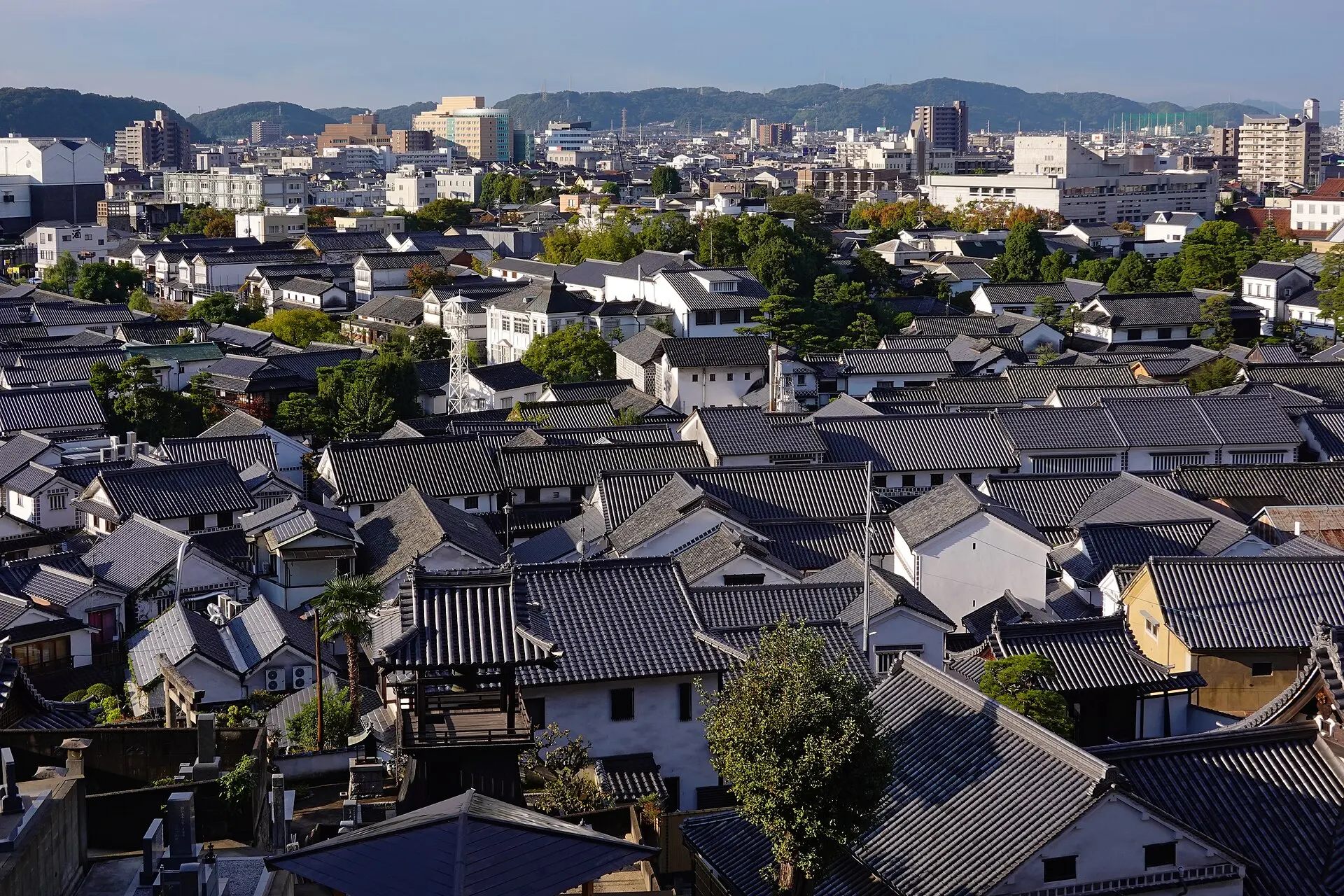
In the 17th century, Kurashiki was placed directly under the control of the shogunate and developed into a trading hub for rice and cotton. Goods were transported along the canal to the storehouses, whose walls are decorated with the typical grid pattern of white plaster on black tiles. This historic district, known as Bikan, is now the heart of any Kurashiki city trip. The old kura house cafés, galleries, and craft shops; in the evening, the facades are illuminated. From Achi Shrine on Tsurugata Hill, you look out over the tiled roofs of the district.
Sights in Kurashiki
Founded in 1930 by textile entrepreneur Ōhara Magosaburō, the Ōhara Museum of Art is considered the first museum of Western art in Japan. Behind its Greek-temple-style facade hang works by El Greco, Monet, Gauguin, and Modigliani, complemented by galleries of Japanese modern art and folk art. Just a few steps away, the former Kurabō spinning mill, built of red brick, has been converted into Ivy Square, with a hotel, shops, and ivy-covered walls. The folk craft museum and a toy museum round out the cultural offerings around the canal.
Kojima: Jeans and the Seto-Ōhashi Bridge
In the seaside district of Kojima, the first jeans produced in Japan were sewn in the 1960s. Today, Jeans Street is lined with shops of small brands that work with traditional looms and indigo dyeing; some offer alterations or workshops. From Kojima, the Seto-Ōhashi Bridge, opened in 1988, spans the sea to Shikoku. The viewpoint on Mount Washū offers a wide view over the islands of the Seto Inland Sea.
Eating in Kurashiki
Okayama Prefecture likes to call itself the Land of Sunshine, and you can taste it: white peaches and Muscat grapes are among the most expensive fruits in Japan and turn up in parfaits and sweets. Barazushi, sushi rice topped with seafood and vegetables, is the typical festive dish, and mamakari, small pickled fish, are a regional specialty. In Kurashiki itself, locals enjoy bukkake udon with cold broth. Restaurants in the Bikan district often serve sake and craft beer from the region alongside.
Getting Around and Best Time to Visit
From Okayama Shinkansen Station, you can reach Kurashiki on the JR Sanyō Line in about 15 minutes; from the station, it's a ten-minute walk to the Bikan district. Okayama Airport is connected by bus. Kojima lies on the Seto-Ōhashi Line. The best time to visit is spring and fall, when the willows are green and boat rides on the canal are especially pleasant. Many travelers come for just an afternoon from Okayama, but if you stay overnight in the Bikan district, you'll find the lanes almost deserted in the early morning. Kurashiki combines well with Kōraku-en Garden and the castle in Okayama, or with a day trip to the art island of Naoshima, whose ferries depart from Uno Port.