Discovering Hamamatsu: Pianos, Eel, and the Kite Festival
Travel guide · editorialPianos, motorcycles, and eel – hardly any Japanese city has such distinctive trademarks as Hamamatsu. If you're planning a trip to Hamamatsu, you'll find an industrial city between Lake Hamana and the mountains of the Tenryū Valley, with castle history, dunes on the Pacific, and a major kite festival.
From Ieyasu's Castle to the City of Inventors
Tokugawa Ieyasu lived at Hamamatsu Castle for 17 years before moving on to Sunpu and later to Edo. Because several later lords of the castle rose to high offices in the shogunate, it is known as the "Castle of Success." The present main keep is a 1958 reconstruction, but the roughly stacked stone walls still date from the 16th century. Later, Hamamatsu became a hotbed of inventors: Torakusu Yamaha built his first organ here in 1887, with Kawai and Roland following; Michio Suzuki started out with looms, and Sōichirō Honda opened his first workshops in Hamamatsu. Suzuki still has its headquarters here today. Since the municipal mergers of 2005, the city has extended deep into the mountains and ranks among the largest in Japan by area; since 2024 it has been divided into the wards of Chūō, Hamana, and Tenryū.
Sights in Hamamatsu
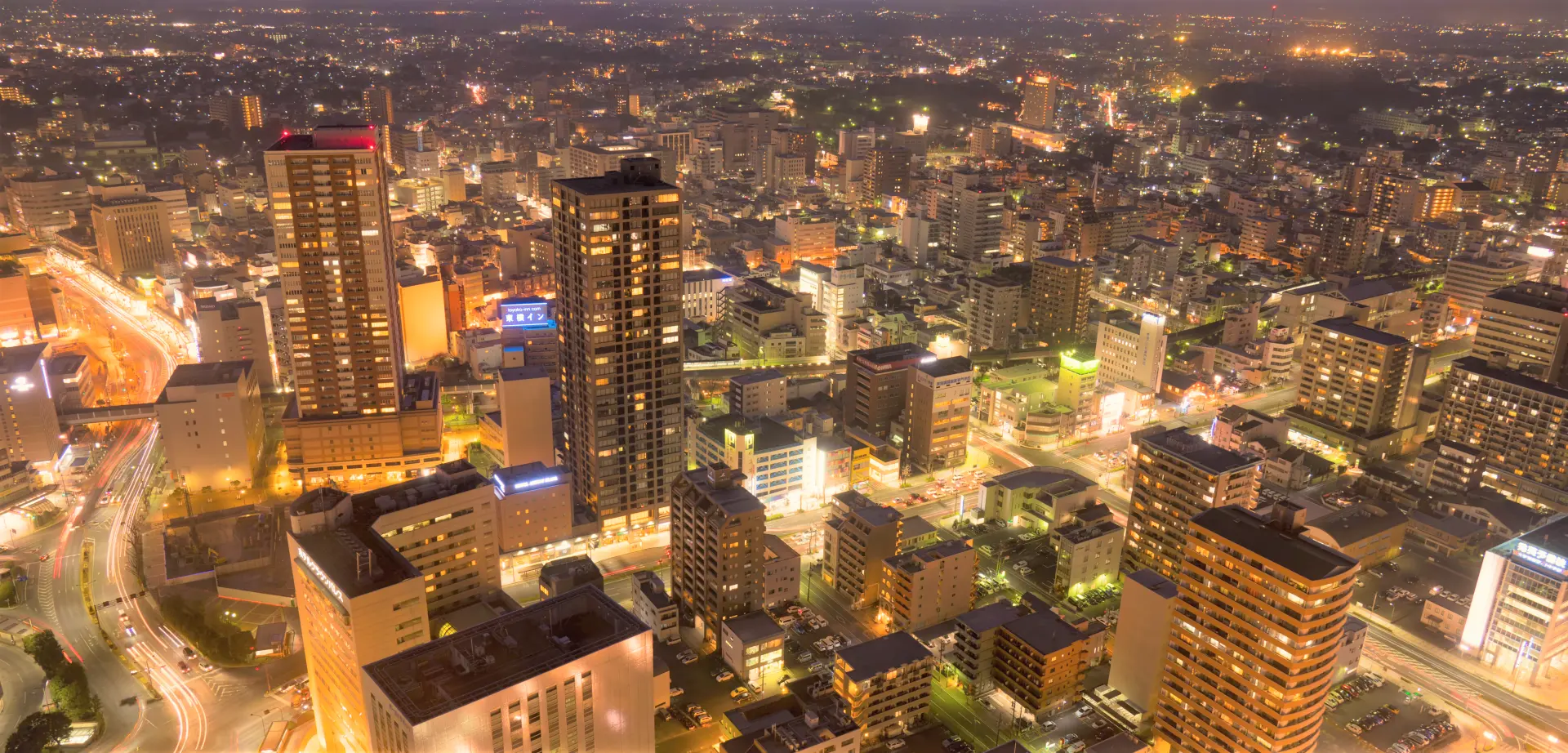
The Museum of Musical Instruments near the station was the first public museum of its kind in Japan and displays gamelan orchestras, African drums, and early fortepianos – many instruments can be tried out for yourself. Next to it, the Act Tower rises more than 200 meters; its shape is said to resemble a harmonica, and from the observation floor the view takes in the city and the coast. To the north lies Ryōtan-ji temple, with a garden attributed to the tea master Kobori Enshū. On the Pacific coast, the Nakatajima sand dunes stretch out, where sea turtles lay their eggs. Technology buffs can visit the Suzuki Museum or the Innovation Road exhibition at Yamaha's headquarters.
Around Lake Hamana
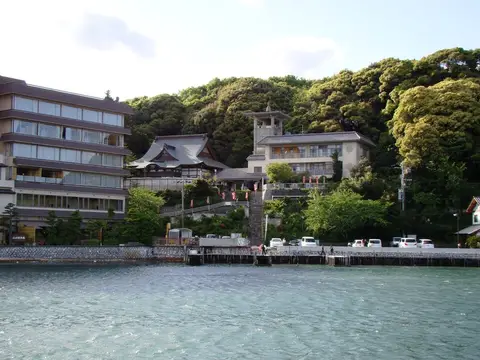
Lake Hamana, a brackish lagoon with a narrow opening to the sea, defines the west of the city. On the east shore lies Kanzanji Onsen with its hot spring hotels and a ropeway across the water up Mount Ōkusa, from which you can see as far as Mount Fuji in clear weather. Oysters are farmed in the lake – and above all eels: Japanese eel farming began at Lake Hamana in the 19th century. At Bentenjima, a large red torii stands in the water, the area's most popular photo spot at sunset.
Eating in Hamamatsu: Unagi and Gyoza
Grilled eel with sweet soy glaze over rice is the region's celebration dish; in the specialty restaurants it is sometimes steamed Kantō-style, sometimes grilled directly Kansai-style – culinarily, Hamamatsu sits right on the border. More everyday, and defended at least as proudly, are Hamamatsu gyoza: the dumplings are arranged in a circle in the pan and served with a small mound of boiled bean sprouts in the middle. For years the city has been engaged in a friendly rivalry with Utsunomiya over the highest gyoza consumption. As a souvenir, you can buy Unagi Pie, a crispy puff pastry treat made with eel extract. Thanks to the large Brazilian community that has worked in the factories since the 1990s, there are also churrascarias and Brazilian supermarkets.
Festivals and Nightlife
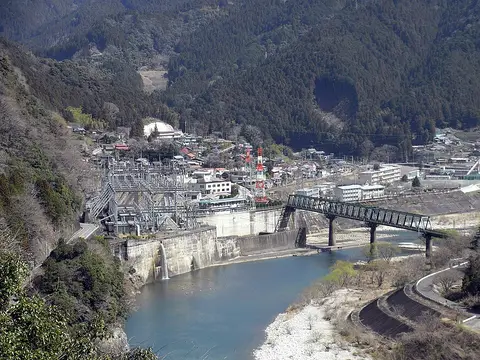
The Hamamatsu Festival, held May 3–5, is the highlight of the year: the city's neighborhoods have giant kites battle each other above the Nakatajima dunes, and in the evening magnificently illuminated festival floats parade through the center. The Hamamatsu International Piano Competition is also held every three years. For a night out, people gather in the izakaya and bars around Kajimachi-dōri, in Tamachi, and in Sakanamachi, not far from the station. In summer you can swim in Lake Hamana or watch the fireworks on the shore; in winter, the mountain villages in Tenryū ward offer hot springs and quiet.
Getting Around Hamamatsu and the Best Time to Visit
On the Tōkaidō Shinkansen, you can reach Hamamatsu from Tokyo in about 90 minutes and from Nagoya in a little over half an hour. The nearest airports are Mt. Fuji Shizuoka (FSZ) and Chūbu Centrair (NGO) near Nagoya. Locally, the red trains of the Enshū Railway connect the center with the north, and buses run to Lake Hamana and Nakatajima. Hamamatsu is most pleasant in spring and fall; winter is sunny but marked by the cold, dry northwest wind that locals call Enshū no Karakaze.