Shizuoka Prefecture: Mount Fuji, Tea, and the Izu Peninsula
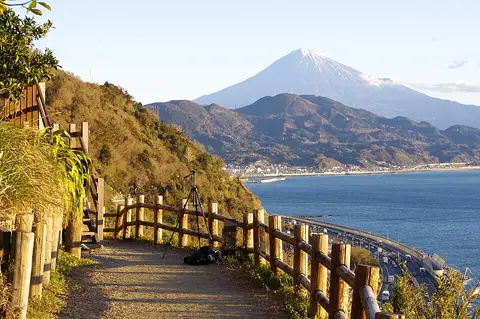
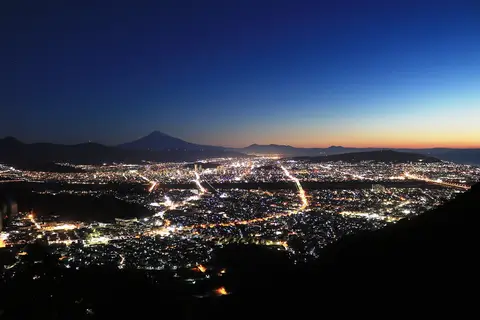
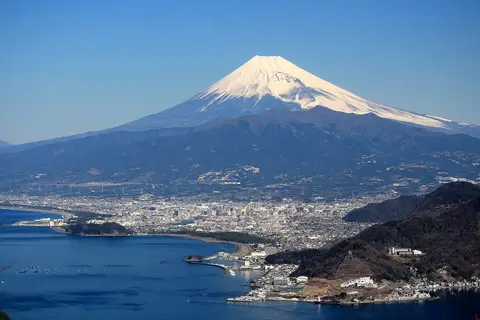
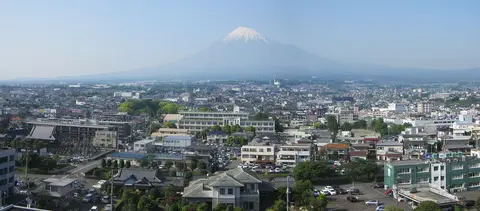
Travel guide · editorialIn Shizuoka, you can see Mount Fuji almost everywhere: rising above tea fields, behind fishing harbors, reflected in bays. A vacation in Shizuoka Prefecture pairs this view with hot springs on the Izu Peninsula, long stretches of coastline, and the largest tea production in Japan. The prefecture is also so well connected to the Shinkansen line that it makes a natural stopover on the Tokyo–Kyoto route.
Landscape Between Mount Fuji and the Pacific
Shizuoka stretches about 150 kilometers along the Pacific coast. In the northeast, it shares Mount Fuji with Yamanashi, while in the north the Southern Japanese Alps, with peaks above 3,000 meters, reach into the prefecture. Major rivers such as the Ōi, Abe, Tenryū, and Fuji flow from the mountains to the sea. Suruga Bay is the deepest bay in Japan, and to the west lies Lake Hamana, a brackish lagoon near Hamamatsu. The Izu Peninsula in the east is volcanic in origin and has been designated a UNESCO Global Geopark for its geology.
Sights in Shizuoka Prefecture
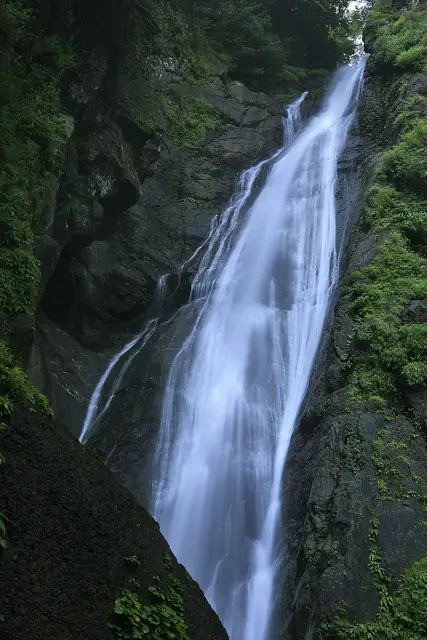
Mount Fuji has been a World Heritage cultural site since 2013, and its component sites include places in Shizuoka: Fujisan Hongū Sengen Taisha in Fujinomiya, the head shrine of the Fuji cult, and the pine-fringed beach of Miho no Matsubara near Shizuoka City, immortalized in woodblock prints by Hokusai and Hiroshige. One of the climbing routes to the summit starts from Fujinomiya, and the World Heritage Center explains the mountain. The Shiraito Falls cascade like a fine veil over a broad rock face. In Shizuoka City stands Kunōzan Tōshōgū, where Tokugawa Ieyasu was first buried; more than 1,000 steps lead up from the sea. The Ōi River valley offers steam locomotive rides and the Abt rack railway to suspension bridges and Lake Okuōi.
The Izu Peninsula
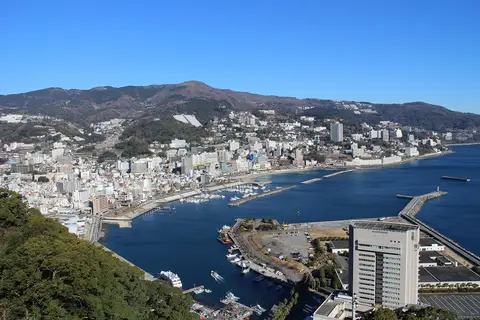
Izu has long been a getaway for Tokyoites. Atami, just 40 minutes from Tokyo by Shinkansen, has been rediscovered as a seaside resort in recent years and is home to the MOA Museum of Art, with art from Japan and China. Itō has numerous onsen hotels, and nearby is the extinct volcano Ōmuroyama, whose crater you can walk around. In Shuzenji, in the interior of the peninsula, a temple stands above a hot spring on the river, and Shimoda in the south commemorates the arrival of the American "Black Ships" in 1854. The west coast around Dōgashima impresses with rock arches and sea caves, as well as sunsets, with Mount Fuji rising above them on clear days.
Cities: Hamamatsu, Numazu, and Mishima
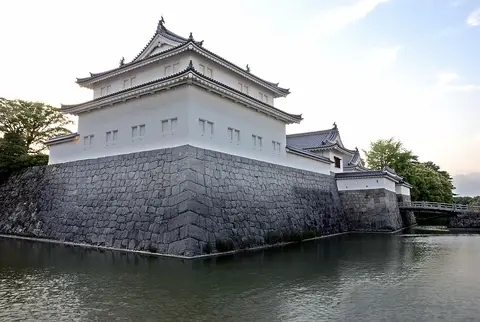
Hamamatsu is a city of music and industry; Yamaha, Kawai, and Suzuki all have their roots here, and the Museum of Musical Instruments displays pieces from around the world. Eels are farmed on Lake Hamana, and in spring giant kites take to the sky at the Hamamatsu Festival. Numazu has a fishing harbor with markets and restaurants as well as a deep-sea aquarium. In Mishima, crystal-clear Fuji meltwater flows through the city, and one waterway can be crossed on stepping stones; the Skywalk suspension bridge offers views of Mount Fuji. Shizuoka City itself has Sunpu Castle Park, where Tokugawa Ieyasu retired in old age, and a model-building industry that produces a large share of Japan's plastic model kits; a major model show takes place here in May. Fujinomiya is known for its yakisoba.
Food and Drink
Shizuoka produces about a third of Japan's green tea, and the tea terraces of Makinohara and Kawane are also scenic. Hamamatsu is known for unagi and gyōza, which are arranged in a circle in the pan and served with bean sprouts. Tuna and bonito are landed at the port of Yaizu, and in Yui fishermen catch the small pink sakura shrimp, eaten fried or raw. Shizuoka oden, made with dark broth and topped with fish powder, is a local specialty, and on Izu you can enjoy wasabi from Amagi and fresh kinmedai, a red deep-sea fish.
Getting There and Best Time to Visit
The Tōkaidō Shinkansen stops at Atami, Mishima, Shin-Fuji, Shizuoka, Kakegawa, and Hamamatsu. The small Mt. Fuji Shizuoka Airport serves domestic flights and a few Asian routes. You can reach Izu on the Odoriko express from Tokyo; for the west coast and the mountains, a rental car makes sense. The clear months from October to February are considered the best time for views of Mount Fuji. In February, early cherry trees are already blooming in Kawazu, and May is the time of the first tea harvest. Climbing Mount Fuji is officially possible only from July to early September.