Discovering Shizuoka: Tea, the Tokugawa, and Views of Mount Fuji
Travel guide · editorialThe capital of the prefecture of the same name lies between Mount Fuji to the north and Suruga Bay to the south, and if you only whiz past on the Shinkansen, you miss a lot. A trip to Shizuoka combines tea fields, Tokugawa history, and fresh fish from the port of Shimizu – ideal for a relaxed city break away from the big metropolises.
Ieyasu's retirement seat: a glimpse into history
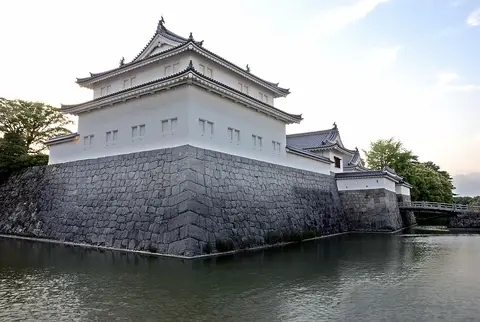
For centuries Shizuoka was called Sunpu, and its most famous resident was Tokugawa Ieyasu. The founder of the shogunate spent part of his childhood here as a hostage of the Imagawa clan and returned after his abdication in 1605 to keep pulling the strings from Sunpu Castle. He died in the city in 1616. Moats, stone walls, and reconstructed structures such as the Higashi-Gomon gate survive from the castle; in Sunpu Park, you can see the foundations of former castle towers at the excavation sites. In April, the Shizuoka Festival commemorates Ieyasu with a parade in historical costume while the cherry trees around the moats are in bloom. The city has only borne its present name since the Meiji era; the port city of Shimizu was added in 2003, and since 2005 Shizuoka has been divided into the three wards of Aoi, Suruga, and Shimizu.
Sights in Shizuoka
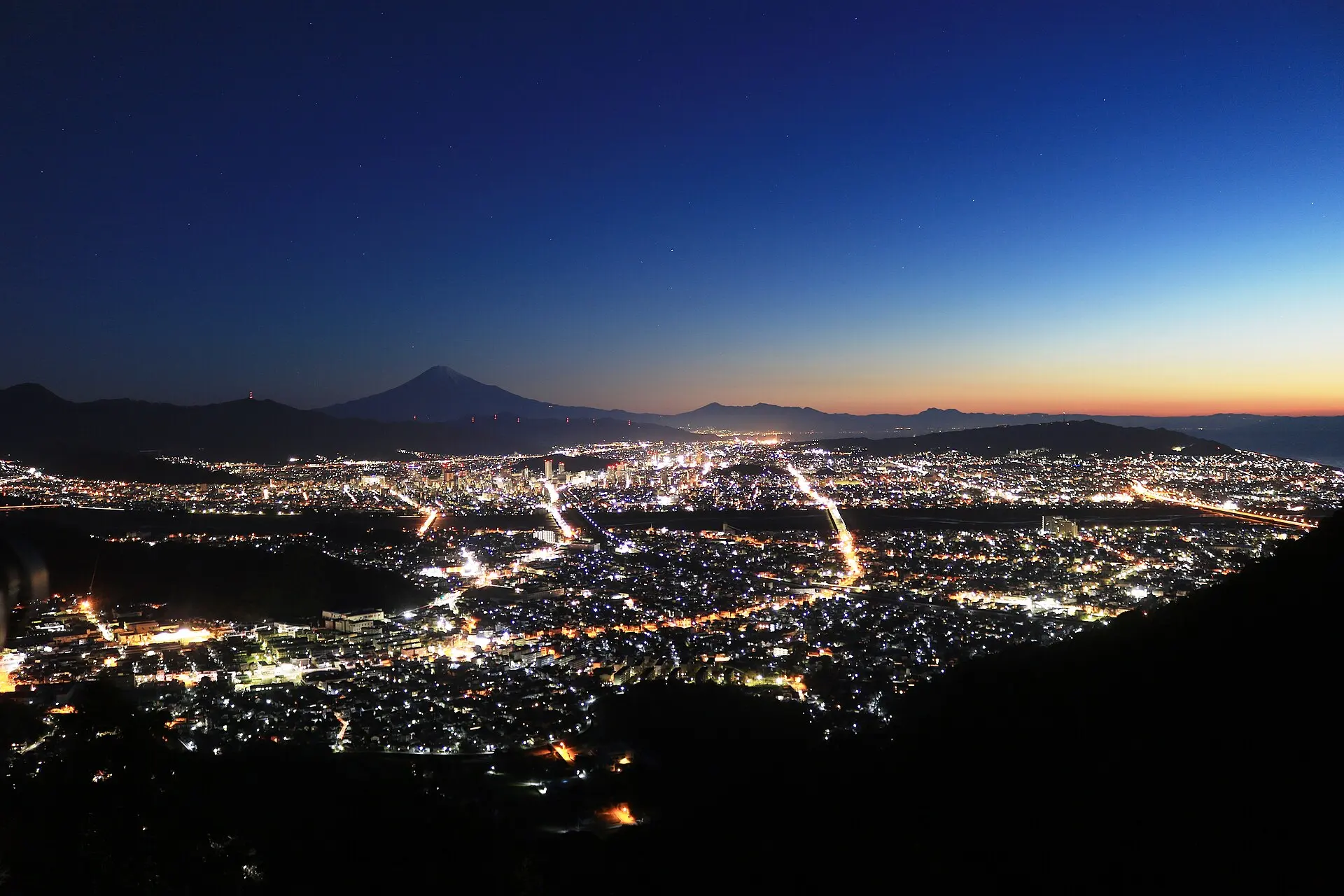
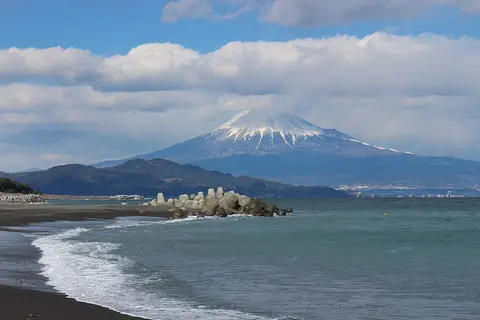
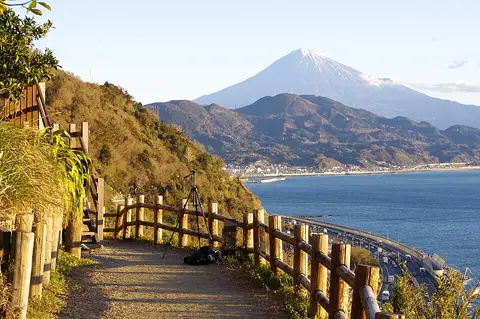
Ieyasu himself chose the most impressive spot: Kunōzan Tōshōgū, his first burial site, perches above the coast. If you come on foot, you climb more than a thousand steps up from the coastal road; the ropeway from the Nihondaira plateau is more comfortable. The shrine, finished in red lacquer and gold, is a National Treasure and older than the more famous Tōshōgū in Nikkō. On Nihondaira itself, the Yume Terrace observation deck, designed by Kengo Kuma, offers a panorama of Mount Fuji, the bay, and the port on clear days. The pine-covered beach of Miho no Matsubara, on a spit of land in Shimizu, is part of the Fuji World Heritage site and the setting of the legend of the celestial feather robe, the Hagoromo. In the city center, the Shizuoka Sengen Shrine with its colorfully painted halls and the Toro archaeological site are worth a visit; reconstructed storehouses and pit dwellings there show how rice was grown here some 2,000 years ago.
Tea, oden, and sakura shrimp: eating in Shizuoka
The slopes around the city are covered with tea bushes, and green tea is everywhere: in teahouses in Aoi Ward, as ice cream, in sweets, and as a souvenir at the train station. The prefecture is one of Japan's most important tea-growing regions, and the venerable Honyama growing areas lie right within the city limits. Typical of restaurants in Shizuoka is Shizuoka oden: fish cakes, eggs, and beef tendon simmer in a dark broth, are served on skewers, and are sprinkled with fish powder and green nori. You sit elbow to elbow at small counters for it, especially in the Aoba Oden-gai alley. In Shimizu, everything revolves around tuna – the port is one of Japan's most important hubs for frozen tuna, and at the Kashi no Ichi market you can get sushi and rice bowls as early as breakfast. Tiny sakura shrimp also come from Suruga Bay; they are caught in spring and fall and eaten as tempura or on rice. In the old post station of Mariko on the Tōkaidō route, tororo-jiru, a soup of grated yam, has been served for centuries – Hiroshige immortalized the restaurant in his famous woodblock print series.
Model building, soccer, and street art
Shizuoka is considered the capital of Japanese plastic model building: Tamiya is headquartered here, Bandai manufactures its Gundam kits in the city, and in May the scene gathers for the Shizuoka Hobby Show. Soccer has a long tradition in Shimizu, and the club Shimizu S-Pulse plays at Nihondaira Stadium. If you come in November, you can catch jugglers, acrobats, and clowns from around the world at the Daidōgei World Cup in the parks and streets of the city center. In the evening, life spreads out among the izakaya around the Gofukuchō shopping streets and the Ryōgaechō bar district, where you can order local sake or Shizuoka-wari, shōchū with green tea.
Getting around Shizuoka
The Tōkaidō Shinkansen connects Shizuoka with Tokyo in about an hour and with Nagoya in just under an hour; the fastest Nozomi trains don't stop here, however, so you take the Hikari or Kodama. Mt. Fuji Shizuoka Airport (FSZ) lies about 40 kilometers southwest and is served by bus, but most long-distance travelers arrive via Tokyo or Nagoya. In the city, the Shizutetsu Railway runs between Shin-Shizuoka and Shimizu, and numerous bus lines also go to Kunōzan, Nihondaira, and Miho. A rental car is practical for the tea villages and the valleys to the north.
Best time to visit and excursions
The best times to visit are late fall and winter, when the air is clear and Mount Fuji is most often visible, as well as late March and April for the cherry blossoms. The first tea harvest begins in late April, and the hills smell of fresh shincha. Summer is hot and humid, and June brings a lot of rain. Good excursions include the hot springs of Umegashima in the upper Abe Valley, the steam locomotives of the Ōigawa Railway farther west, or a side trip to the Izu Peninsula, which you can reach by ferry from Shimizu to Toi across the bay.