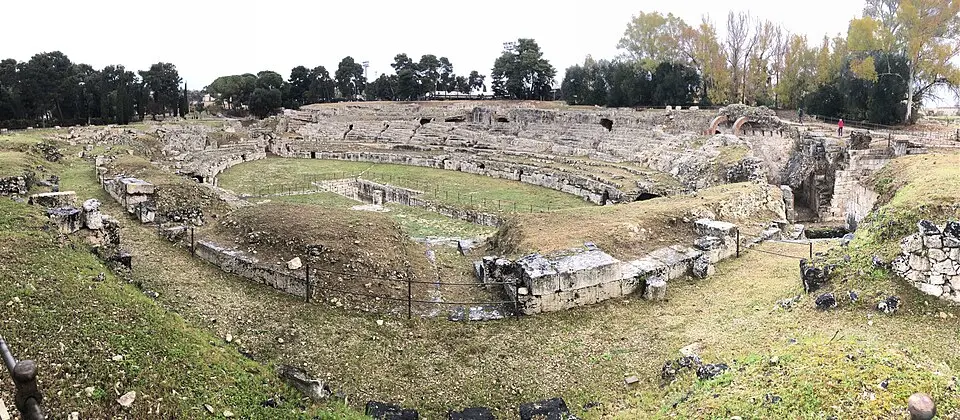
About Anfiteatro Romano
The Roman amphitheater of Syracuse is among the best-preserved structures of the early imperial era in Sicily and is part of a UNESCO World Heritage Site. It stands in the ancient Neapolis district, within an archaeological park near the Greek Theater. The monumental complex, which measures about 140 meters long and 119 meters wide, was largely carved out of the bedrock. You can explore the impressive layout of the seating tiers, which were separated from the arena by high platforms and underground passages. These subterranean corridors once served as the entrance route for gladiators and as a way to operate the machinery used in the performances. Although little of the above-ground masonry survives, inscriptions and the elaborate staircase hint at the amphitheater's former splendor. Access was through a triumphal arch from the Augustan period. Since the first excavations in the 19th century, the site has offered a vivid glimpse into Roman city life and ancient architecture.
At a glance
- Category
- Sight › Historic sites
- Rating
- no reviews yet · write a review
- Address
- Via Ettore Romagnoli
96100 Syracuse, Italy - Phone
- —
- Website
- www.siracusaturismo.net
- —
- Coordinates
- 37.07415° N · 15.27895° E
- Data quality
- confidence 0.99
- Identifier
- ID a6a7ee38-1db…
Part of the tour
Syracuse in One Day: Neapolis, Paolo Orsi, and Ortigia →Location & surroundings
Toggle layersRatings & comments
none yetNear Anfiteatro Romano
closest 5 per category · 2 kmSights
Restaurants
Museums
Hotels
More:Historic sites in Syracuse (73)All sights in Syracuse (93)
189 places within 2 km loaded.
Don't miss in Syracuse
All sights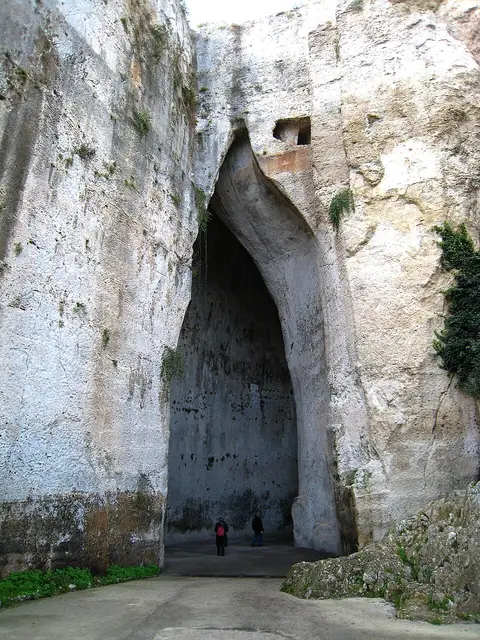 Historic sites01
Orecchio di Dionisio
Viale Giulio Emanuele Rizzo 10 · Syracuse● Website● Phone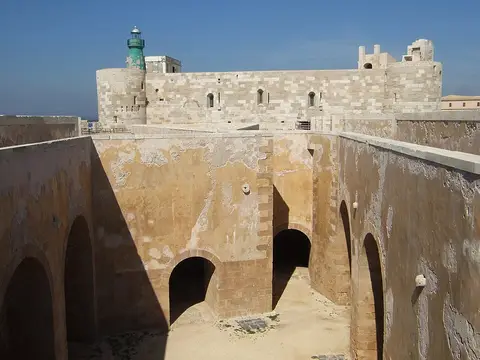 Castles02
Castello Maniace
Piazza Federico di Svevia, 5 · Syracuse○ Website● Phone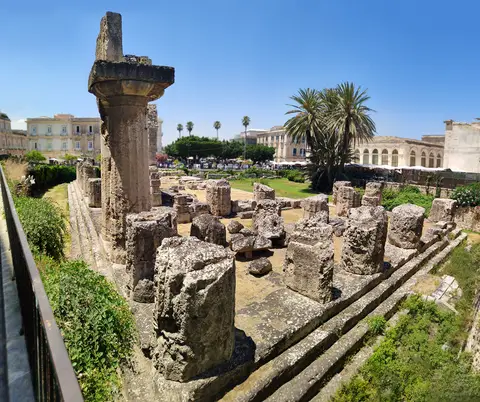 Monuments03
Temple of Apollo (Apollonion)
Via dell'Apollonion · Syracuse● Website● Phone Historic sites04
You need a free account to leave reviews and photos – that keeps comments genuine and lets you edit them later.
Built 60-40 BC under Augustus or Julius Caesar, this is mostly carved out of the hillside, with no superstructure surviving. So effectively it's a grassy pit 140 m long by 119 m wide, and you'll have to use your imagination to see the tiered seating and walkways. The pit in the centre held machinery for stage effects.
Source: Wikivoyage, „Syracuse (Italy)“ · authors per page history · CC BY-SA 4.0 · as of 4/4/2018