About Ostia Antica (archaeological site)
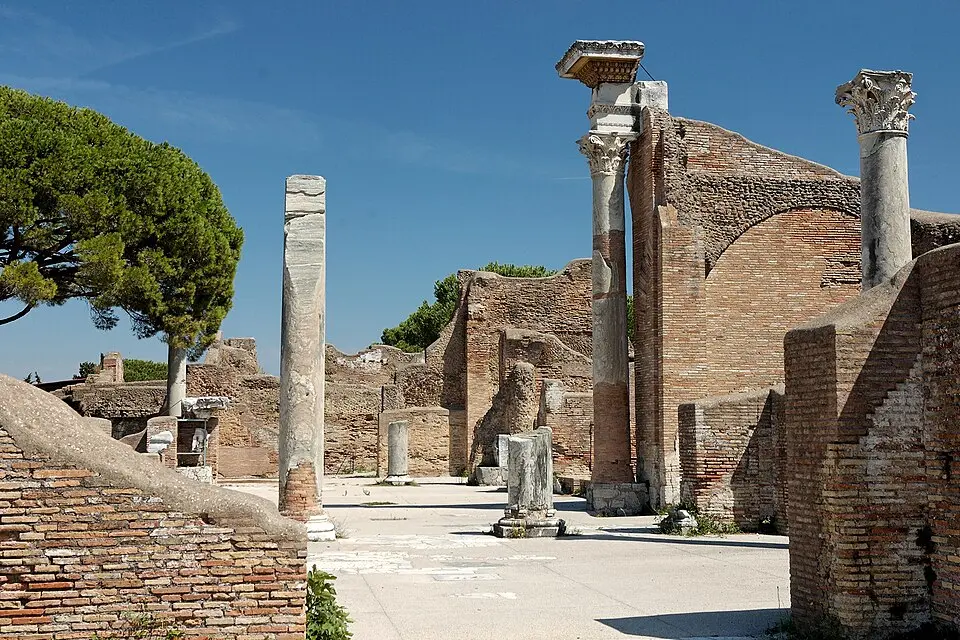
Ostia Antica is the excavation site of the ancient city of Ostia, which served as the original port city of ancient Rome and may have been its first colony. The name derives from the Latin word for entrance or mouth and refers to its location at the mouth of the Tiber. To distinguish it from the modern district of Ostia, which was founded in the 1920s, the historic area carries the addition Antica. The site lies about 23 kilometers (14 miles) southwest of central Rome and is easy to reach via the Ostia Antica station on the rail line to Lido. It sits between the Via del Mare and the Tiber, roughly five kilometers upriver from the river's present-day mouth.
Ancient tradition attributes the founding of the city to Rome's fourth king, Ancus Marcius, in the seventh century B.C. Archaeological evidence, however, only goes back to the fourth century B.C., and the oldest surviving buildings, such as the military camp and the Capitolium, date from the third century B.C. Because the historicity of the king is doubtful, it is now generally assumed that Ostia was founded after the Roman victory over Veii in the fourth century B.C. The settlement originally served as a military camp to protect Rome and control maritime trade, before developing into an important naval base and one of the city's main ports.
During the Second Punic War, Ostia played a strategic role in supplying the Roman armies in Spain. The city recovered quickly from being plundered by Gaius Marius in 87 B.C. Under Emperor Augustus, intensive building activity began, starting with the construction of a theater and a business square. Under Tiberius, the forum was laid out. Because the sea off the coast was already silting up around the turn of the era, Emperor Claudius had an artificial harbor built, which was inaugurated under Nero and later expanded under Trajan. This harbor, the Portus Romae, lay north of the city and initially served mainly for storage and administration, while Ostia remained the urban center.
Ostia reached its greatest heyday in the second century A.D., when the city had about 50,000 inhabitants. Many of the public and private buildings still visible today date from this period. Tanners, rope makers, shipbuilders, and merchants settled here, with grain from Africa the most important trade good. At the start of the third century, development stagnated as the new harbor of Portus took over the role of transport and trade hub. Emperor Constantine the Great raised Portus to an independent colony in 314, which led to Ostia's continued decline. Many buildings were abandoned and fell into ruin, while the city gained importance ecclesiastically and remained a bishop's seat.
In the fifth century, the population shrank further, and settlement concentrated around the forum and the harbor district. The last reliably documented construction work was a renovation of the baths on the coast, for which bricks bearing the name of the Ostrogothic king Theodoric were used. Burial areas were now also laid out within the former urban area. After the end of the Migration Period, Ostia was barely inhabited because of malaria epidemics in the silted-up marshes. In the ninth century, the last residents were resettled, and in the Middle Ages the ruins served mainly as a quarry. Systematic excavations began only in the 19th century, establishing the site as a major archaeological destination.
The city was divided into at least five regions, of which the second, east of the center, has been largely excavated. The public buildings testify to the diversity of religious life. The Capitolium, dedicated to Jupiter, Juno, and Minerva, stood on a high podium and was rebuilt under Hadrian. The Round Temple, possibly dedicated to the imperial cult, was a prominent place of worship in the city center. There were also sanctuaries for the cult of Mithras, such as the well-preserved Mithraeum of the Mithraic Baths, as well as a synagogue, which ranks among the oldest Jewish houses of worship outside Palestine and retains remains of the Torah shrine.
The bath complexes were a central element of urban life and were in part richly decorated with marble and mosaics. The Forum Baths, built around 160 A.D., were once adorned with marble walls and black-and-white floor mosaics. The Mithraic Baths impress with their well-preserved underground water-supply installations, which were operated by slaves. The Baths of Neptune and the Thermae Maritimae, also known as the seaside baths, were likewise important and featured rich mosaic decoration, including depictions of athletes. These baths served social interaction and the hygiene of the numerous residents.
The theater on the Decumanus Maximus originally held 3,000 spectators and was later enlarged and renovated several times, most recently under Septimius Severus and Caracalla. The semicircular facade faced the main street, and the seating area was once clad in marble. Today the restored structure is still used for performances. The forum at the heart of the city was rebuilt under Hadrian and dominated by four major buildings: the Capitolium to the north, the Temple of Roma and Augustus to the south, the basilica to the southwest, and the Curia to the northwest. The square was richly decorated with statues and served as a gathering place for political and social life.
Other important public buildings include the barracks of the fire brigade, which was rebuilt under Hadrian and had room for about 400 firefighters. The barracks had baths, latrines, and a temple for the imperial cult. The Square of the Corporations, directly behind the theater, housed offices of trade organizations and shipping companies, as inscriptions and mosaics show. The storage complexes, especially the Grandi Horrea, were essential for supplying Rome with grain, wine, and oil. These large warehouses followed a standardized layout with a central courtyard surrounded by storage rooms.
Ostia's residential buildings offer insight into the development of Roman domestic architecture. In the early phase, atrium houses dominate, such as the House of Jupiter the Thunderer, which is defined by a central courtyard with a marble basin. With population growth in the first century A.D., multistory apartment blocks, the insulae, appeared; in some cases they stood out for their large street-facing windows and luxurious appointments. In the fourth century, people returned to single-family houses, often characterized by nymphaea integrated into the home. The city gives visitors the chance to experience these different forms of housing and the everyday culture of the ancient Romans on the spot.
A museum on the excavation site displays significant finds, including the famous herm of Themistocles. About two-thirds of the ancient urban area has been excavated, so visitors can view well-preserved remains of streets, latrines, bakeries, taverns, and brothels. Many floor mosaics can still be seen, even though the ruins as a whole are in rather poor condition. A visit to the cemetery outside the city gate on the Via Ostiense rounds out the picture of ancient Ostia and gives an impression of the urban structure and daily life in one of the Roman Empire's most important port cities.
At a glance
- Category
- Sight › Historic sites
- Rating
- no reviews yet · write a review
- Address
- —
Rome, Italy - District
- Roma X
- Phone
- —
- Website
- www.ostiaantica.beniculturali.it
- —
- Coordinates
- 41.75405° N · 12.28829° E
- Data quality
- confidence 0.81
- Identifier
- ID 5595b38c-f4b…
Location & surroundings
Toggle layersRatings & comments
none yetNear Ostia Antica (archaeological site)
closest 5 per category · 2 kmSights
Restaurants
Hotels
Cocktail bars
More:Historic sites in Rome (1,014)Sights in Roma X (49)All sights in Rome (1,312)
117 places within 2 km loaded.
Don't miss in Rome
All sights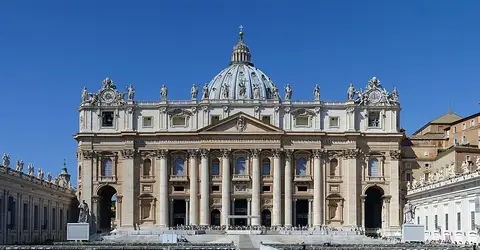 Historic sites01
The Dome at San Pietro Basilica
No address · Rome○ Website○ Phone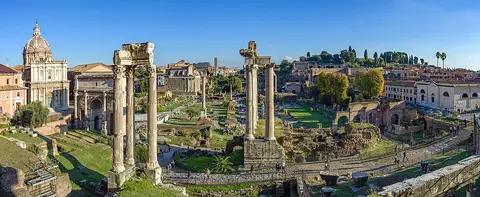 Historic sites02
Roman Forum
Via della Salara Vecchia, 5/6 · Rome● Website● Phone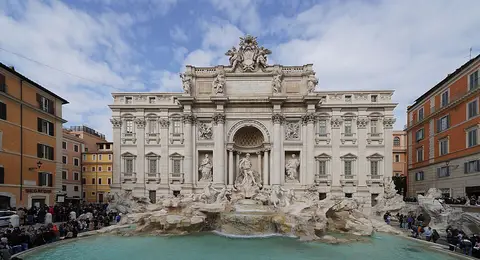 Historic sites03
Restauro Fontana di Trevi
Piazza di Trevi, 91 · Rome● Website○ Phone Monuments04
You need a free account to leave reviews and photos – that keeps comments genuine and lets you edit them later.