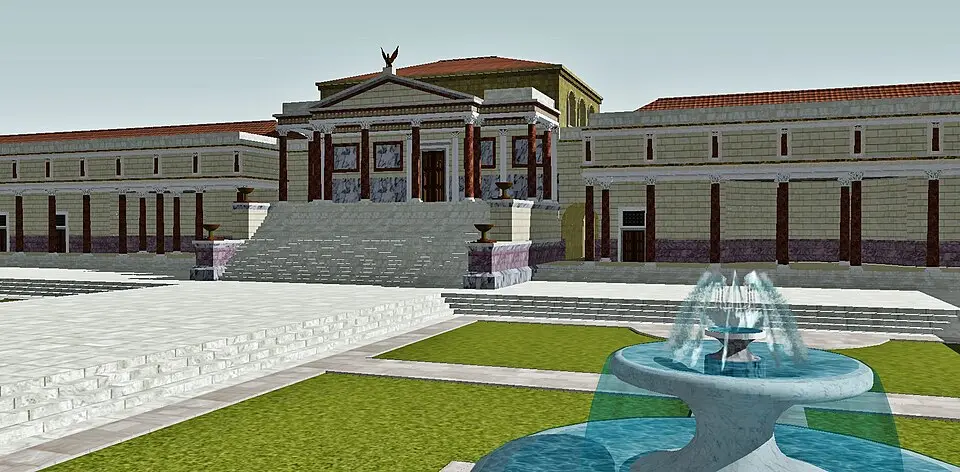
About Curia di Pompeo
The Curia of Pompey was an important assembly hall of the Senate in ancient Rome, located at the entrance to the Theater of Pompey. A Roman exedra with a curved back wall and several rows of seats, it served as a political showpiece for the general Gnaeus Pompeius Magnus, who had the building erected with the spoils of his military campaigns. Because Pompey, as consul, had to hold meetings outside the city limits, this private curia gave him the chance to convene Senate sessions close to home. The site is historically notorious above all as the place where the dictator Julius Caesar was assassinated on March 15, 44 B.C., falling at the foot of the statue of Pompey. After Caesar's death, his heir Augustus had the statue removed and later had the hall sealed off, after which it was for a time converted into a latrine. Today the foundations lie exposed in the Largo di Torre Argentina. Excavated since the 1930s, the site can be viewed from modern walkways, and you can trace the exact spot of the historic deed on the ground, though only the back wall of the original structure remains visible.
At a glance
- Category
- Sight › Historic sites
- Rating
- no reviews yet · write a review
- Address
- Largo di Torre Argentina
00186 Rome, Italy - District
- Roma I
- Phone
- —
- Website
- —
- —
- Coordinates
- 41.89546° N · 12.47654° E
- Data quality
- confidence 0.72
- Identifier
- ID 05b44b2c-f6f…
Location & surroundings
Toggle layersFAQ about Curia di Pompeo
quick answersWhat is the Curia of Pompey in Rome?
In ancient Rome, the Curia of Pompey was an important assembly hall of the Senate at the entrance to the Theater of Pompey. The general Gnaeus Pompeius Magnus had it built with the spoils of his military campaigns as a political showpiece. Architecturally, it was a Roman exedra with a curved back wall and several rows of seats, where Pompey could hold Senate meetings close to home.
Was Julius Caesar assassinated in the Curia of Pompey?
Yes, the Curia of Pompey in Rome is where the dictator Julius Caesar was assassinated on March 15, 44 B.C. He fell at the foot of the statue of Pompey. After Caesar's death, his heir Augustus had the statue removed and the hall later sealed off, after which it was used as a latrine for a time.
What can you see of the Curia of Pompey today?
Today, you can see the excavated foundations of the Curia of Pompey in the Largo di Torre Argentina area of Rome; of the original structure, only the back wall remains visible. The site has been under excavation since the 1930s. Modern walkways let you tour it and trace the exact spot of Caesar's assassination on the ground.
What can you visit around the Curia of Pompey?
Around the Curia of Pompey in Rome, several historic sites and museums are just a few minutes' walk away. travelguide195 lists, for example, the Largo di Torre Argentina at about 73 meters, the Biblioteca e Raccolta Teatrale del Burcardo at about 104 meters, the Palazzo Vidoni Caffarelli at about 139 meters, and the Baths of Agrippa at about 160 meters. Also close by are the Museo Nazionale Romano – Crypta Balbi at about 171 meters and the Palazzo della Valle at about 180 meters.
Are there restaurants near the Curia of Pompey?
Yes, there is a wide selection of restaurants around the Curia of Pompey at Largo di Torre Argentina in Rome. travelguide195 lists around 368 restaurants within 500 meters. The site is located in the central district of Roma I.
Ratings & comments
none yetNear Curia di Pompeo
closest 5 per category · 2 kmSights
Restaurants
Museums
Hotels
More:Historic sites in Rome (1,014)Sights in Roma I (642)All sights in Rome (1,312)
300 places within 2 km loaded.
Don't miss in Rome
All sights Historic sites01
The Dome at San Pietro Basilica
No address · Rome○ Website○ Phone Historic sites02
Roman Forum
Via della Salara Vecchia, 5/6 · Rome● Website● Phone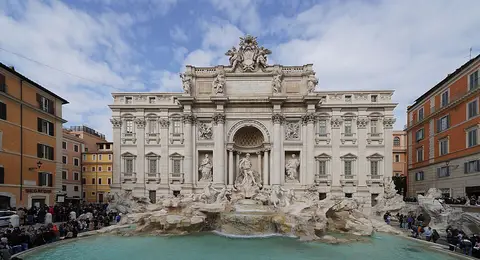 Historic sites03
Restauro Fontana di Trevi
Piazza di Trevi, 91 · Rome● Website○ Phone Monuments04
You need a free account to leave reviews and photos – that keeps comments genuine and lets you edit them later.