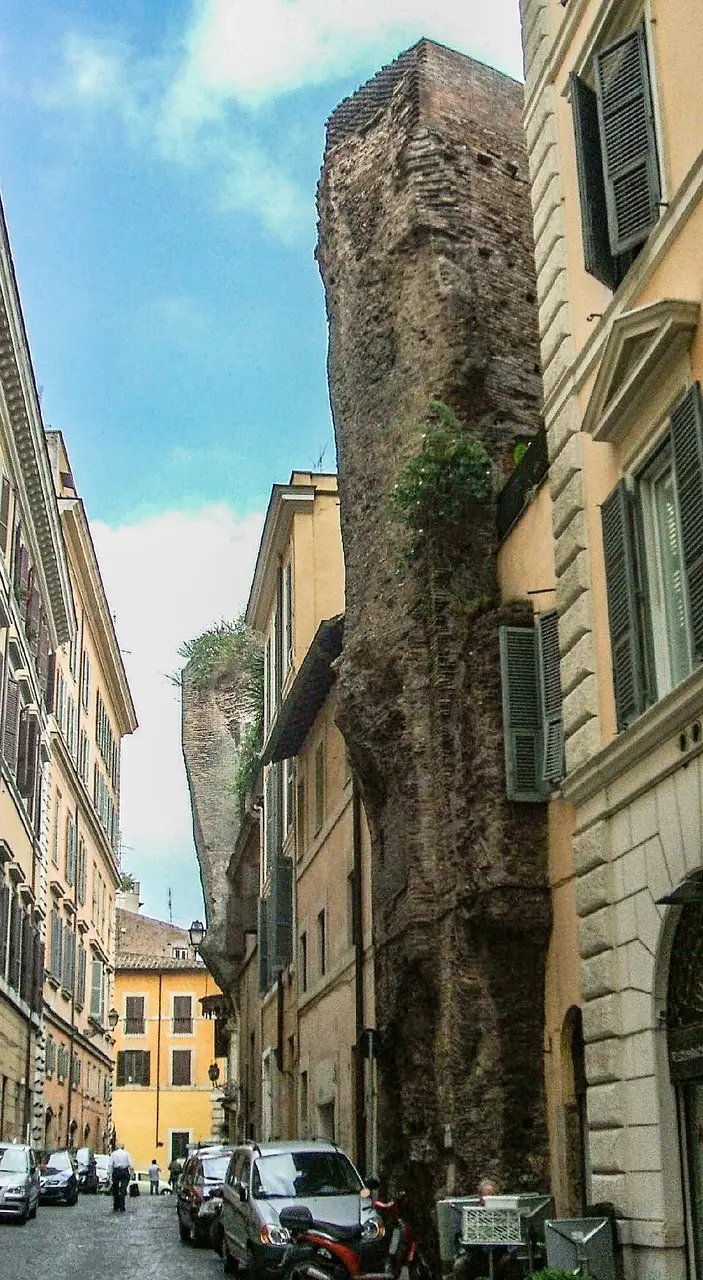
About Terme Di Agrippa
The Terme di Agrippa, or Thermae Agrippae in Latin, is considered the first large public bathhouse of ancient Rome. Built by Marcus Vipsanius Agrippa, son-in-law and closest confidant of Emperor Augustus, this structure marked a decisive turning point in the history of Roman public infrastructure. It was not only the first of the great bath complexes that would come to shape the city, but also the first place where bathing was made freely accessible to Rome's entire population. The complex was created as part of a comprehensive building program by Agrippa in the Campus Martius, or Field of Mars, and was closely tied to other major projects such as the original Pantheon and the Stoa of Neptune, which were completed in the same year.
The history of the complex begins in 25 BC with the completion of its first phase of construction. This early form consisted of a so-called laconicum, a room for hot-air baths that also served as a gymnasium. Here, young men could exercise after oiling their bodies, a practice named after the Spartans, who were known for their discipline in such exercises. At that time, the bath was still a private initiative of Agrippa, who was regarded as one of the richest men in the Roman world. Admission was initially charged, with the fee paid in a quadrans, a small coin. Only after Agrippa's death in 12 BC was the complex handed over to the Roman citizenry through his will. In return for the donation of various estates to Augustus, the bath was opened free of charge to everyone, laying the foundation for public bathing culture in Rome.
The complex became fully operational as a thermal bath only after the completion of the Aqua Virgo aqueduct in 19 BC. This aqueduct, financed and built by Agrippa, delivered the necessary water directly to the baths. Such a direct water supply from a public aqueduct was an innovation at the time, since private bath owners had previously often depended on wastewater from public troughs. The Aqua Virgo, whose water source lay eight miles from the city, is still in operation today and supplies, among other things, the Trevi Fountain. Around the bath, Agrippa laid out extensive gardens with walking paths, colonnades, and shaded shelters, giving the complex a character reminiscent of the Athenian gymnasiums or the Lyceum, though on a far larger and more magnificent scale.
The architecture of the baths was groundbreaking for its time and served as a model for later imperial bathhouses. The complex included the three classic bathing areas: the frigidarium with cold water, the tepidarium with lukewarm water, and the caldarium with hot baths and steam rooms. Archaeological finds such as hypocausts and hollow terracotta tiles attest to several heated rooms. A large rotunda 25 meters (82 feet) in diameter, which served as a social meeting place for bathers, stood on the north side of the building. Whether the caldarium already had window glass to retain heat better, as was the case in later buildings, cannot be said with certainty given the scant archaeological evidence. It is also remarkable that the baths were the first known complex to house monumental sculptures, including the famous Apoxyomenos by Lysippus, the court sculptor of Alexander the Great, which stood at the entrance.
Over the centuries, the complex was expanded and restored several times. After a devastating fire in AD 80 destroyed many buildings in the Campus Martius, Emperor Domitian had the baths quickly rebuilt. Under Emperor Hadrian, a further enlargement took place in the second century, and Emperors Constantius and Constantine also carried out extensive construction work in the fourth century. Despite this upkeep, the complex lost its original function over time. When the Ostrogoths cut the Roman aqueducts in the 6th century, the water supply failed and the baths fell out of use. In the 7th century, the structure began to be used as a quarry, and building materials were carted away. By 599, Pope Gregory I had already converted the complex into a convent.
Despite the destruction and later reuse, parts of the baths remained visible into the 16th century. During this period, prominent architects such as Baldassare Peruzzi and Andrea Palladio drew up plans of the still-standing ruins, which provide valuable information about the original structure. A fragment of the marble plan discovered in 1900 confirms the location and dimensions of the complex, which measured about 110 meters (360 feet) north to south and 90 meters (295 feet) east to west. Today, only a few remnants of the former splendor survive. The best known is part of the curved wall of the rotunda, often called the Arco della Ciambella, which has been incorporated into the modern urban fabric.
The surroundings of the baths also included the Stagnum Agrippae, an artificial lake, and the Euripus, a canal that carried water into the Tiber. These bodies of water served not only to adorn the gardens but also had practical functions. The Euripus, fed directly by the Aqua Virgo, provided cold water and possibly served as a plunge pool or swimming area, since the baths themselves had no large swimming pool. The lake, on the other hand, which was probably fed by wastewater from the baths, was large enough to host a banquet for Emperor Nero on a raft. It also helped drain the low-lying terrain of the Campus Martius, which was frequently flooded in antiquity.
The significance of Agrippa's baths goes far beyond hygiene alone. They were a central place for social interaction, sports, and culture. People from different social classes, from senators to slaves, met in the baths, representing an unusually egalitarian aspect of Roman life. Visitors could read, philosophize, do business, and enjoy themselves there. The complex was perceived as a place of art and knowledge that laid the foundation for the later development of Roman bathing culture. Although only fragments of the original structure can be seen today, the site remains an important witness to the architectural and social innovations of the early Roman imperial period. The remains are a reminder of how Agrippa, through his buildings, permanently changed the face of Rome and established the idea of the public bath as a mark of civilizational progress.
At a glance
- Category
- Sight › Historic sites
- Rating
- no reviews yet · write a review
- Address
- —
Rome, Italy - District
- Roma I
- Phone
- —
- Website
- —
- —
- Coordinates
- 41.89688° N · 12.47687° E
- Data quality
- confidence 0.71
- Identifier
- ID dd4a6368-1c2…
Location & surroundings
Toggle layersFAQ about Terme Di Agrippa
quick answersWhat are the Terme di Agrippa in Rome?
The Terme di Agrippa, or Thermae Agrippae in Latin, are considered the first large public bathhouse of ancient Rome. They lie in today's Roma I district on the site of the former Campus Martius, or Field of Mars. The complex included the three classic bathing areas: the frigidarium (cold water), the tepidarium (lukewarm water), and the caldarium (hot baths and steam rooms), and served as a model for later imperial bathhouses.
Who built the Terme di Agrippa, and when did admission become free?
The Terme di Agrippa in Rome were commissioned by Marcus Vipsanius Agrippa, the son-in-law and closest confidant of Emperor Augustus. The first phase of construction was completed in 25 B.C.: a laconicum for hot-air baths, which also served as a gymnasium. At first, admission cost one quadrans, a small coin. Only after Agrippa's death in 12 B.C. did the complex pass to the Roman people under the terms of his will, and from then on it was free for everyone.
Where did the Terme di Agrippa get their water?
The Terme di Agrippa in Rome were supplied by the Aqua Virgo aqueduct, which Agrippa himself financed and had built. The bath complex was fully operational only after the Aqua Virgo was completed in 19 B.C., with its source located eight miles from the city. Drawing water directly from a public aqueduct was an innovation at the time. The Aqua Virgo is still in operation today and feeds the Trevi Fountain, among other things.
What can you see around the Terme di Agrippa?
Around the Terme di Agrippa in Rome, several historic sites lie within a few minutes' walk. travelguide195 lists, for example, the Cappella del Transito di S. Caterina da Siena about 92 meters away, the Largo di Torre Argentina about 94 meters away, and the Sepolcro di Raffaello about 101 meters away. A bit farther, at about 150 meters, are the Palazzo Vidoni Caffarelli and the Palazzo della Minerva.
Are there restaurants near the Terme di Agrippa?
Yes, you'll find a very wide selection of places to eat around the Terme di Agrippa in Rome. travelguide195 lists around 484 restaurants within 500 meters. That makes it easy to combine a visit to the ancient baths in the Roma I district with a meal break.
Ratings & comments
none yetNear Terme Di Agrippa
closest 5 per category · 2 kmSights
Restaurants
Museums
Hotels
More:Historic sites in Rome (1,014)Sights in Roma I (642)All sights in Rome (1,312)
300 places within 2 km loaded.
Don't miss in Rome
All sights Historic sites01
The Dome at San Pietro Basilica
No address · Rome○ Website○ Phone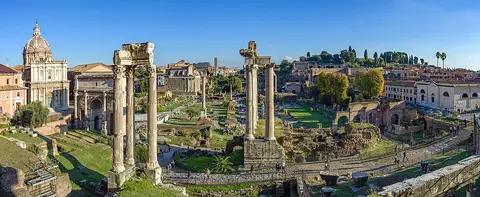 Historic sites02
Roman Forum
Via della Salara Vecchia, 5/6 · Rome● Website● Phone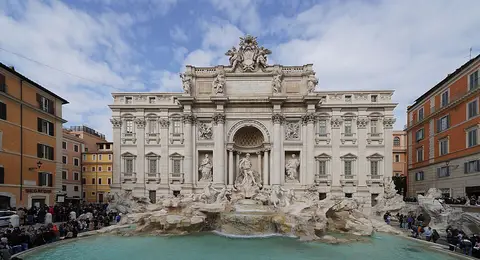 Historic sites03
Restauro Fontana di Trevi
Piazza di Trevi, 91 · Rome● Website○ Phone Monuments04
You need a free account to leave reviews and photos – that keeps comments genuine and lets you edit them later.