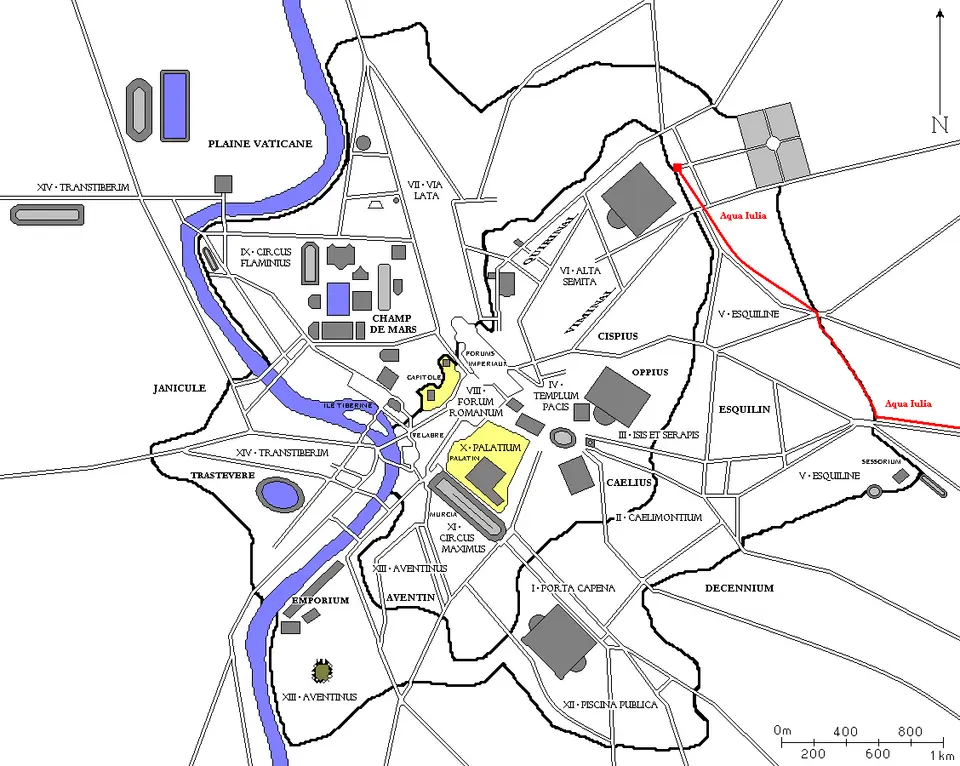
About Aqua Julia
The Aqua Julia is a significant ancient aqueduct built under Marcus Vipsanius Agrippa in 33 B.C. to meet Rome's rising demand for water. Stretching roughly 14 miles (23 km), it carried water from springs above the Abbey of Santa Maria di Grottaferrata, by way of a connection with the Aqua Tepula, to the Porta Maggiore. From there, it supplied the districts of Viminal, Caelius, and Aventine. One highlight was the monumental fountain on what is now Piazza Vittorio Emanuele, built by Emperor Severus Alexander. Although the water was of excellent quality, it was later used mainly for mills and irrigation, until Pope Callixtus II replaced the aqueduct with the Marrana Mariana canal in 1122.
At a glance
- Category
- Sight › Historic sites
- Rating
- no reviews yet · write a review
- Address
- —
Rome, Italy - District
- Roma I
- Phone
- —
- Website
- nl.wikipedia.org
- —
- Coordinates
- 41.89696° N · 12.51072° E
- Data quality
- confidence 0.75
- Identifier
- ID e71348fc-49f…
Location & surroundings
Toggle layersFAQ about Aqua Julia
quick answersWhat is the Aqua Julia in Rome?
The Aqua Julia is an ancient aqueduct in Rome, Italy, built in 33 BC under Marcus Vipsanius Agrippa. It was meant to meet the city's growing demand for water. Today the historic site lies in the Roma I district.
Where did the water of the Aqua Julia come from, and how long was the aqueduct?
The Aqua Julia was about 23 kilometers (14 miles) long and carried water from springs above the Abbey of Santa Maria di Grottaferrata to Rome. Along the way it was connected to the Aqua Tepula and reached the city at the Porta Maggiore.
Which parts of Rome did the Aqua Julia supply with water?
From the Porta Maggiore, the Aqua Julia supplied the Viminal, Caelian, and Aventine districts of Rome. One highlight was a monumental fountain on today's Piazza Vittorio Emanuele, built by order of Emperor Severus Alexander.
Until when was the Aqua Julia in Rome in operation?
In 1122, Pope Callixtus II replaced the Aqua Julia with the Marrana Mariana canal. Although its water was of excellent quality, in later times it was used mainly for mills and irrigation.
What can you see around the Aqua Julia in Rome?
Around the Aqua Julia in Rome, several historic sites and monuments are within walking distance. According to travelguide195, these include the Porta Tiburtina (also called Porta San Lorenzo) and the Torre piezometrica di Angiolo Mazzoni about 70 meters away, the remains of the Anio Vetus aqueduct about 170 meters away, the Arco di Sisto V about 190 meters away, and the Tempio di Minerva Medica about 360 meters away. For a break, travelguide195 lists around 142 restaurants within 500 meters.
Ratings & comments
none yetNear Aqua Julia
closest 5 per category · 2 kmSights
Restaurants
Museums
Hotels
More:Historic sites in Rome (1,014)Sights in Roma I (642)All sights in Rome (1,312)
300 places within 2 km loaded.
Don't miss in Rome
All sights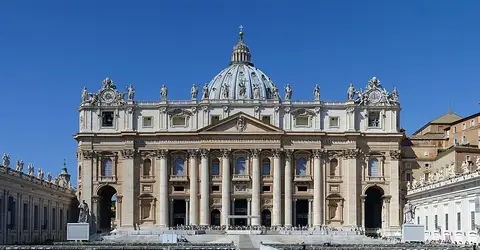 Historic sites01
The Dome at San Pietro Basilica
No address · Rome○ Website○ Phone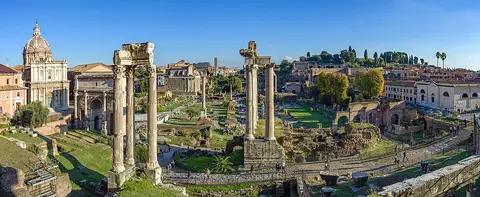 Historic sites02
Roman Forum
Via della Salara Vecchia, 5/6 · Rome● Website● Phone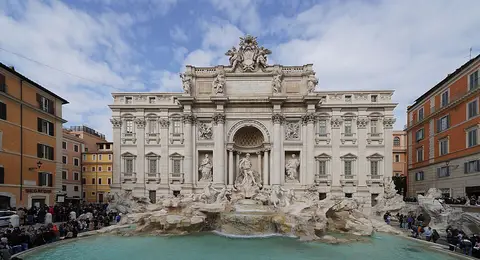 Historic sites03
Restauro Fontana di Trevi
Piazza di Trevi, 91 · Rome● Website○ Phone Monuments04
You need a free account to leave reviews and photos – that keeps comments genuine and lets you edit them later.